Luxury housing driven by lifestyle and wellness needs
Buyers value experience over just space
Rising incomes fuel premium housing demand
Luxury Homes A New Aspiration For Urban Homebuyers, No Longer Confined To Elite Segment
Luxury housing in India is rising, as buyers have new priorities, which makes premium homes a mainstream urban aspiration in 2026

Summary
Advertisement
The Indian real estate market is seeing a developmental switch in its stakeholder habits, especially in the residential segment. In 2026, the luxury housing segment is no longer confined to an ultra-elite buyer segment. Instead, this has slowly shifted to a mainstream option for urban homebuyers. A combination of changing buyer preferences, rising incomes, and aspirational homebuyers are contributing to this changing buyer trends and dynamics.
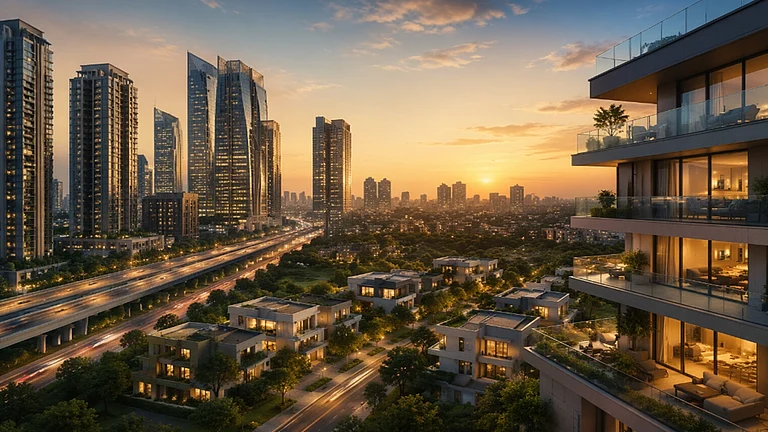
The core of this fast-changing market dynamic is the change in the buyer’s preferences. Says Dikshu C. Kukreja, managing principal, CP Kukreja Architects: “The current shift toward luxury housing is not merely a supply-side phenomenon, it is a response to a more discerning, globally exposed Indian buyer. Over the past decade, especially post-pandemic, there has been a fundamental recalibration of what “home” represents. It is no longer just a place of residence, but a space for work, wellness, privacy, and identity.”
Advertisement
Developers have responded to these buyer preferences well by focusing on three key notes: spatial generosity, assured quality of life, and trust and long-term value attached to the projects that they launch.
Another prime emphasis is on the quality of life; luxury projects today are designed in a way that offers a controlled, secure, and luxurious environment that aligns with the status quo. Buyers are willing to pay more as these developments offer an upgrade in living standards, not just an increase in the area the property covers. “Buyers are willing to pay a premium, but expect a commensurate upgrade in experience, not just in square footage,” adds Kukreja.
What Defines As Luxury To Homebuyers?
Another factor that contributes to this is that the buyers are looking at luxury projects differently; it’s not just confined to big-name developers anymore. It is shifting to privacy, wellness, time, and value over time. Homebuyers are increasingly moving towards projects that offer exclusivity with high-end amenities. “Luxury is becoming more context-sensitive. A well-crafted home that responds to its geography, culture, and climate is often valued more than a generic high-end product. In that sense, luxury is less about excess and more about thoughtfulness and restraint,” adds Kukreja.
Advertisement
Kukreja shares an insight into how this trend has taken hold in India’s major metropolitan regions like Mumbai, Delhi National Capital Region (NCR), Bengaluru, Hyderabad, and Pune. Each city is driven by different forces and is densely populated. What is noteworthy is that this is no longer a niche phenomenon. Luxury has moved into the mainstream of urban aspiration, reflecting both rising incomes and a deeper shift in how Indians perceive the idea of home.
Show comments
Published At: