NSE launches Electronic Gold Receipts
Gold ownership becomes fully dematerialised
Liquidity remains the biggest challenge
NSE’s Electronic Gold Receipts Are Live: Reasons Why They Could Permanently Change How India Buys Gold
In practical terms, investors can now buy gold in the same way they buy stocks — without physically handling the asset

Summary
Advertisement
By Chakrivardhan Kuppala, Cofounder & Executive Director, Prime Wealth Finserv Pvt Ltd
India does not merely consume gold - it operates one of the world’s largest gold economies. Indian households are estimated to hold over 25,000 tonnes of gold, while annual domestic demand routinely ranges between 700 and 900 tonnes, according to World Gold Council estimates. Yet despite this scale, India’s gold market has remained surprisingly fragmented, informal, and inefficient for decades.
That is precisely the gap the National Stock Exchange of India is now attempting to solve.
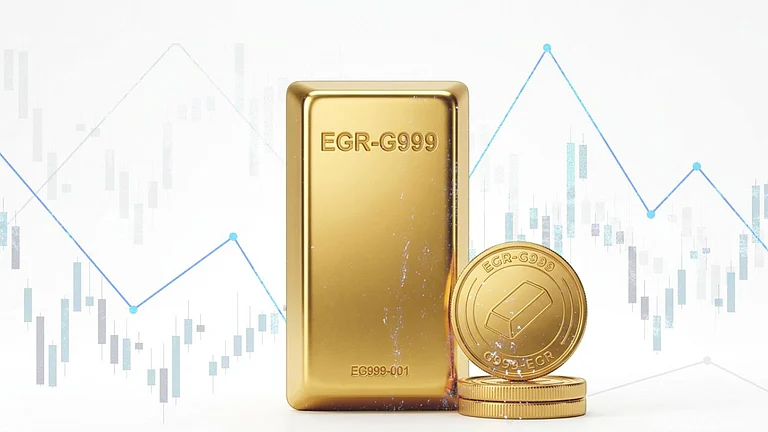
On May 4, 2026, NSE officially launched Electronic Gold Receipts (EGRs), introducing a regulated exchange-traded framework for physical gold ownership. As part of the launch, the exchange successfully dematerialised a 1,000-gram gold bar into an electronic receipt, marking the operational start of India’s formal spot gold ecosystem.
This is not another “digital gold” app.
Advertisement
EGRs represent something much larger: the financialisation of physical gold itself.

India’s Gold Market Was Massive - But Structurally Broken
India’s gold ecosystem has traditionally operated through local jewellers, bullion traders, and physical transactions. That created several persistent problems:
inconsistent purity standards,
fragmented pricing across cities,
high making charges,
storage and theft risks,
and limited transparency in resale pricing.
Even today, a large portion of gold transactions happens outside formal financial infrastructure.
EGRs are designed to change that structure.
Under the SEBI-regulated framework, physical gold is stored in accredited vaults, verified for quality, and converted into dematerialised securities that can be traded electronically on NSE. Each EGR is fully backed by physical gold and held through depositories in demat form.
In practical terms, investors can now buy gold in the same way they buy stocks — without physically handling the asset.
That may sound operationally simple, but structurally it is a massive shift.
For the first time, India is attempting to merge:
physical gold ownership,
exchange infrastructure,
SEBI regulation,
and nationwide price discovery
into a single formal market ecosystem.
Advertisement
Why EGRs Are Different From Existing “Digital Gold”
India already offers multiple forms of gold investing:
jewellery,
coins and bars,
Gold ETFs,
Sovereign Gold Bonds,
and app-based digital gold products.
But EGRs sit in a completely different category.
Unlike most digital gold platforms, EGRs function within the securities market framework governed by SEBI. The underlying gold is stored in SEBI-accredited vaults, settlements happen through clearing corporations, and receipts are maintained in demat accounts through depositories.
That solves one of the biggest trust deficits in India’s gold market: authenticity and standardisation.
According to NSE’s product framework, EGR-linked gold follows standardised purity specifications, particularly 999 purity gold.
For Indian investors, this removes several longstanding pain points:
no locker costs,
no purity disputes,
no transport risk,
and significantly lower friction while buying or selling.
Gold effectively moves from being a “stored physical asset” to becoming a liquid financial instrument.
The Real Ambition: India Wants a Formal Spot Gold Market
The launch of EGRs is not merely about retail investing convenience.
India has long remained one of the world’s largest gold importers, yet domestic pricing has historically depended on global benchmarks, import duties, local premiums, and regional fragmentation. Despite its enormous consumption base, India has never meaningfully influenced international gold price discovery.
EGRs are an attempt to change that equation.
NSE itself has stated that the framework aims to improve price discovery, market efficiency, and participation from jewellers, refiners, bullion traders, and institutional investors.
That matters because mature commodity markets depend on institutional liquidity and standardised trading infrastructure.
If EGR participation deepens over time, India could gradually build:
a transparent domestic spot gold market,
unified pricing mechanisms,
and stronger institutional participation in bullion trading.
In effect, gold could evolve from a largely offline consumption product into a nationally traded financial asset class.
Advertisement
Why Timing Could Work This Time
The timing of NSE’s launch is particularly important.
Globally, gold demand has remained elevated amid geopolitical uncertainty, central bank accumulation, and currency diversification trends. Domestically, India has witnessed an unprecedented rise in retail financial participation over the past five years.
India now has over 25 crore investor accounts linked to market infrastructure, according to recent NSE ecosystem data.
That behavioural transition changes the opportunity dramatically.
A younger generation of investors is increasingly comfortable holding assets digitally rather than physically. Demat accounts, online trading platforms, ETFs, and digital investing have already reshaped equity participation in India.
EGRs fit directly into that evolving financial behaviour.
For many urban investors, buying exchange-traded gold through a regulated infrastructure may eventually become more practical than purchasing jewellery or physical bars.
The Biggest Risk: Liquidity
Despite the optimism, the success of EGRs will ultimately depend on one factor above everything else: liquidity.
Exchange-traded products only succeed when enough participants actively trade them. Without strong volumes:
spreads widen,
pricing becomes inefficient,
and institutional adoption weakens.
India is effectively trying to build a nationwide regulated spot gold market from scratch — something no exchange can achieve through infrastructure alone.
It requires participation from:
jewellers,
refiners,
bullion dealers,
institutions,
and retail investors simultaneously.
Still, the launch marks one of the most important structural shifts India’s gold market has seen in decades. For centuries, India’s gold economy remained deeply physical, localised, and relationship-driven. Electronic Gold Receipts are attempting to bring that entire ecosystem into the formal financial system. And if adoption scales meaningfully, this may not just change how India trades gold. It could permanently change how India thinks about gold ownership itself.
Advertisement
(Disclaimer: Views expressed are the author’s own, and Outlook Money does not necessarily subscribe to them. Outlook Money shall not be responsible for any damage caused to any person/organisation directly or indirectly.)
Show comments
Published At: