Mumbai has over 1,000 redevelopment projects since 2020.
Redevelopment now accounts for 15% of housing sales.
Infrastructure expansion could unlock new redevelopment markets.
Redevelopment Takes Centre Stage As Mumbai Housing Supply Crosses 1,000 Projects
Mumbai’s redevelopment market is gaining momentum, with over 1,000 projects launched since 2020 as ageing buildings, limited land and infrastructure growth reshape housing supply

Summary
Advertisement
Mumbai’s housing market is increasingly turning to redevelopment to meet demand as the city runs out of fresh land for development. The latest report by JLL-NAREDCO, ‘Redevelopment in Mumbai: The Inflection Point’, states that more than 1,000 redevelopment projects have been launched since 2020. This accounts for 13 per cent of Mumbai’s residential supply. More notably, redevelopment’s share of total housing sales has risen to 15 per cent during 2025 and H1 2026, as compared with 6 per cent between 2016 and 2021. The report highlights that sales are not consistently exceeding new project launches; this suggests that redevelopment is moving way beyond the policy-led segment and becoming a more market-driven source of housing supply.
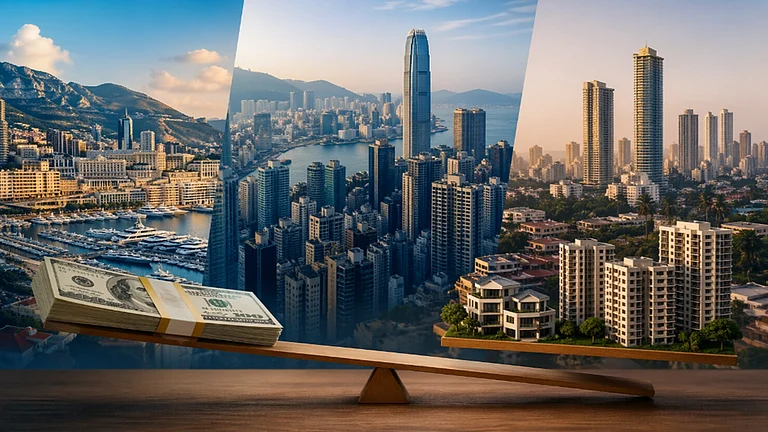
Why Is There Pressure In Housing?
The pressure for redevelopment is particularly acute as Mumbai has an estimated 13,500 cessed buildings that need urgent replacement and reconstruction. The Western Suburbs account for 22.4 per cent of the city’s ageing stock, while South Mumbai accounts for another 14.2 per cent. Areas like Worli, Bandra-Khar, and the wider Western Suburbs are emerging as one of many important redevelopment markets.
Advertisement
Values of property established across locations also highlight the demand that supports this redevelopment. Worli commands this segment with around Rs 1 lakh to Rs 1.15 lakh per square foot and has recorded 25 per cent to 28 per cent appreciation in the last three years. This is followed by Bandra-Khar, where appreciation was 25 per cent to 30 per cent, while Kandivali and Borivali have recorded 20 per cent to 25 per cent growth.
“Redevelopment has evolved from a policy initiative into the primary engine of the city’s housing supply, evidenced by sales now outpacing launches and securing a 15 per cent market share. This structural shift, marked by active slum rehabilitation acreage reaching nearly four times the total achieved in the prior 30 years, demonstrates how progressive policy interventions like DCPR 2034, reduced consent thresholds, and cluster-focused reforms are streamlining execution and restoring market momentum,” says Kamlesh Thakur, President, NAREDCO Maharashtra.
Advertisement

Infrastructure Drive: The Next Phase
Infrastructure expansion is expected to determine the next geography of redevelopment. Metro lines, Coastal Road, Borivali-Thane Twin Tunnel and Goregaon-Mulund Link Road are expected to improve connectivity and unlock opportunities in the area that can develop the neighbouring areas of the housing locality and the emerging locations.
For the aspirational buyers in the area, redevelopment could provide access to newer housing in established neighbourhoods without waiting for peripheral infrastructure to mature. For developers, the rising absorption of redeveloped homes strengthens the case for long-term investment. For Mumbai, redevelopment is increasingly becoming an important step for safety rather than just for improving the low inventory.
Show comments
Published At:
Tags