Usually, when you decide to buy an apartment in a gated society, it’s not just about owning a house. It’s about owning a house at a place where all your needs are taken care of, from security to maintenance to power back-ups to vetted vendors entering the premises, and so on. But what if these facilities are not seamless and you have to struggle at every step?
How RWAs Are Failing Residents
Several resident welfare organisations operate with little accountability. Improved governance could be the way out, but there’s no solution in sight yet

Advertisement
As India’s housing landscape changes rapidly, with high-rise apartments and gated communities spreading across urban areas, the need for strong, structured governance has grown. To manage these societies, the law has provisions to form a resident association, commonly known as resident welfare associations (RWAs), and apartment owners’ associations (AOAs).
The problem usually arises when resident organisations, which are entrusted with significant authority, operate with little accountability and transparency, and take arbitrary decisions, a problem we found exists in multiple societies. Ultimately, the residents aspiring for a certain quality of life have to bear the brunt.
Role Of Resident Associations
Resident associations are entrusted with managing civic work, including security, maintenance, utilities, fund collection, and vendor management.
Says Amit Wadhwani, partner at Khaitan & Co., a law firm: “With the enactment of the Real Estate (Regulation and Development) Act, 2016 (Rera), read with the respective state rules and regulations and local laws applicable to under-construction projects, certain uniform obligations have been imposed on developers across states. For instance, in Maharashtra, Delhi, Haryana, and Karnataka, a developer is required to form an association of residents within three months from the date the majority of allottees book apartments in the project.”
Advertisement
The purpose of forming RWAs and AOAs is to transfer the management of the society to representatives of the society’s residents
The purpose of forming these associations is simple: to transfer the management to the representatives of the society’s residents, who are elected from within. Once the resident association is registered, the promoter is expected to hand over the maintenance, sanitation, and financial control to it. Membership is voluntary as the roles do not involve any remuneration. However, board members are expected to function strictly in accordance with the society’s bylaws and state laws.
Their key responsibilities include conducting elections and getting financial statements audited annually.
Note that there is a difference between RWAs and AOAs. Says Alay Razvi, managing partner, Accord Juris, a law firm: “An RWA is a voluntary welfare body, usually formed under the Societies Registration Act, 1860, and mainly focuses on community welfare, security, and basic maintenance coordination. It has limited legal authority over the common areas and cannot enforce rules like a statutory body. On the other hand, an AOA is formed under the state’s Apartment Ownership Act and is made up mainly of flat owners. It has stronger legal powers to manage finances, enforce bylaws, and control over common areas.”
Advertisement
The Problems
When it comes to resident associations, especially AOAs, the list of issues is long and troubling, ranging from civic neglect and poor building upkeep to damaged exterior, frequently non-functional lifts, fire safety violations, and unauthorised commercial use of residential spaces. Besides, there is also lack of financial transparency, and absence of fair elections.
Security Threat Due To Unauthorised Construction: Many societies now have marketplaces, hospitals and other amenities within the premises, which could pose a security risk. A secure environment is one of the primary reasons why people choose to live in gated communities.
A Noida resident, aged 47, who works as a project manager in an IT company and requested anonymity for himself and the housing society in Sector 78, where he has been living for over seven years, says he is worried about the security aspect because an eating joint has opened within the premises. He says there is also ambiguity whether it’s authorised, as residents weren’t involved in the decision to open it. He said the issue is about the commercial use of common space and security concerns.
Advertisement
He says: “AOA members have allowed an eating joint inside the premises where outsiders are allowed, posing a threat to residents’ security. Residents have raised the issue; some active residents had approached the authorities in Noida, too, but nothing effective has been done.”
This is not uncommon. A high-rise society in Ghaziabad’s Kaushambi area has a full-fledged hospital in its premises. A 64-year-old resident, a retired regional manager from a private sector company, who has been living there for 20 years, says, on the condition of anonymity, that this was not communicated clearly at the time of purchase. Buyers were promised a host of modern amenities–jogging tracks, gym, clubhouse, and three floors dedicated to retail outlets, and food joints, positioning the society as a self-sufficient lifestyle destination. However, as shops failed to sustain business, the floors were given to the hospital, which eventually expanded and occupied the entire retail area.
Advertisement
He says: “Resident groups and early AOAs opposed this move of the builder citing deviation from the original project plan. They raised complaints with local administration, police, and central offices, but no effective action was taken.”
Strangely, ever since a new AOA team assumed charge around 2015, the situation worsened. He says: “There’s more unauthorised construction and control is shifting over common areas, including parking spaces and open zones. It was because the new AOA team became friendly with the builder and the hospital.” The builder finally handed over the full maintenance to the AOA around 2017-18.
Recently, the Supreme Court, in Loganathan vs State of Tamil Nadu & Ors., took serious note of the unauthorised use of residential properties for commercial use and violations of building bye-laws. Calling such practices contrary to law and harmful to residents, it ordered a pan-India inquiry of residential colonies, group housing societies, and similar developments to ensure accountability of the authorities.
Advertisement
Maintenance Issues: The Sector 78, Noida, resident quoted earlier also complains of lack of maintenance. “Maintenance has deteriorated over the last few years in terms of peeling exterior paint exposing walls to moisture damage, frequent lift breakdowns, parking area water leakage, neglected fire safety systems, poor upkeep of common areas and so on. The AOA board members don’t pay the required attention.”
A finance professional, 44, who lives in Sector 79, Noida, says the maintenance of his society is still in the hands of the builder and that’s a bigger problem. “As Noida authority has not allowed the registry of flats in our society due to payment owed by the builder, the residents’ association is also not registered. But there are 2-3 groups of residents who unofficially behave as AOA, and keep collecting money for something or the other, and whoever doesn’t contribute is named and shamed in the WhatsApp group.”
Advertisement
Unfair Elections: This is one of the biggest issues residents complain about, and causes most of the problems. The Sector 78 resident says: “Elections are a formality here as the same people keep coming back to the AOA. A case was filed a few years back in the Allahabad High Court related to the AOA board member election, but it is still pending.”
The resident of Kaushambi cited earlier also feels skeptical about the fairness of elections in his society. He says: “Instead of regular elections, office-bearers are selected through mutual agreement, resulting in the same people maintaining control. Those who raise objections are often discouraged or advised to move out.”
Provisions to form the association are defined in the law, but when it comes to performance, ambiguity prevails. For instance, according to the Model Bye-Laws of Uttar Pradesh, office-bearers of the Board cannot hold the same post continuously for more than two years. But there is no restriction on staying in the board in a different role. The legal loopholes make the well-intentioned system a ground for petty politics, whether between the builder and the society or the AOA and the residents, say experts.
Advertisement
Office-bearers see such positions as lucrative in many ways. Says Col. Ramesh Gautam (retd), a senior citizen Army veteran and former AOA president in a society located in Sector 137, Noida: “There are finances involved in the management and governance of societies, so there are lucrative factors. It is also about the taste of power and authority. Everybody wants to enjoy that. They look for ways to maintain their positions.” As such, the possibility of malpractices cannot be negated, he adds.
Is There A Way Out?
Dissatisfied residents have a way out but the grievance system is largely ineffective. Plus, the process can be long-drawn.
Prasad L.V.A., governing council member, Bangalore Apartments’ Federation (BAF), says that sometimes performance issues arise because the office-bearers lack knowledge and experience. “However, in cases of financial irregularities, residents have the right to seek account statements,” he adds.
There is a way to find out about irregularities. Vaibhav Suri, partner, Cyril Amarchand Mangaldas, a law firm, suggests that residents should check the audited financials of the AOA. He says: “Society members (apartment owners) can inspect the audited financial statements and books of accounts and also seek redressal under the concerned statute to cause the audit if the society has defaulted. The Registrar of Societies also has wide powers.”
Advertisement
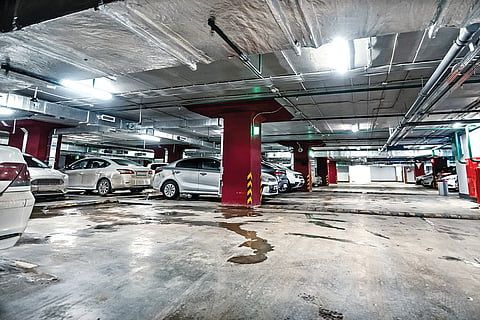
Maintenance issues such as leakage problems are a cause for concern.
However, one major problem is that misconduct within RWAs often falls into a regulatory grey zone, says Raheel Patel, partner, Gandhi Law Associates, a law firm. Authorities treat RWAs as private bodies, intervening only in clear cases of statutory violations. Jurisdictional overlaps and limited enforcement capacity further dilute accountability, leaving residents to seek remedies through courts.
Adds Suri: “The most appropriate course of action for members is to approach the Registrar of Societies if the society is registered. Both the Societies Registration Act, 1860 (a central law adopted by states) and relevant state-specific laws offer adequate remedies in the event of defaults or irregularities within the society. In other cases, redressal can be sought under consumer protection laws in cases involving deficiency of services.”
RWAs fall into a regulatory grey zone, with authorities treating them as private bodies, and intervening only in case of statutory violations
But it’s not simple. Says Wadhwani: “Generally, officers in these departments are overwhelmed with work and lack the requisite resources and infrastructure to act swiftly on any members or association’s grievance. Lack of ownership and motivation is another reason, because authorities generally have the impression that whatever order or directions they will pass will be challenged before the higher forum, and see it as a waste of time. Sometimes, the dominant group uses their position to build political influence over the officer, making it difficult for the members to secure a fair and transparent trial.”
Advertisement
In case the matter is not resolved at the stage of the Registrar of Society, it may be referred to the appellate court or civil court, and further to the high court. “Affected residents can challenge them in consumer forums or civil courts as a violation of rights or unfair trade practice,” says Razvi.
But these routes are time-consuming, legally complex, and often intimidating for individuals. Says Gautam, “People don’t have time because generally 99 per cent of the people in high-rise societies leave for work in the morning and come back late in the evening.”
The Way Forward
Unless there is transparency, accountability, and a sense of community living among the residents, including the elected members of the housing society, these issues will persist.
Prasad emphasises the need for a robust governance framework, clear processes, and transparency among association members. “People who are at the helm of affairs of the committee should be extremely transparent.”
Sensitisation of competent authorities, increasing the number of deputy registrars, and streamlined governance might improve the situation, says Gautam. For instance, he says, there’s only one Deputy Registrar’s office for housing societies in Noida and Ghaziabad, and due to the high workload, things often get stuck. “With the number of these societies increasing, there is a need for separate Deputy Registrars for both jurisdictions,” he adds.
Note that resident associations came into existence to fill the gap in urban governance. Now, the question is not whether they are necessary, but whether they can continue to operate with insufficient governance in a system where they significantly shape how millions of people live, behave, and interact.
In the interim, the governance, or the lack of it, in the housing society system is failing the residents.
versha@outlookindia.com
Step-By-Step Resolution Process
1. Dispute Arises
(Member vs Member/Member vs Society/Society-related issues)
2. Filing of Dispute
Submit application to cooperative court or other court/tribunal
3. Court Scrutiny
It will admit the case if it’s maintainable, otherwise reject it
4. Notice Issued To Opponent
Copy of dispute served and date for appearance is fixed
5. Filing of Reply
Opponent files written statement in defence
6. Framing of Issues
Court identifies key questions
7. Evidence Stage
Court examines witnesses; cross-examination happens
8. Final Arguments
Legal submissions by both sides
9. Final Order/Award
Court passes final order/injunction/direction/recovery/dismissal in the case
10. Filing of Appeal
Appeal can be filed in cooperative appellate court and further in high court (limited scope)
Source: Amit Wadhwani, Partner, Khaitan & Co
Show comments
Published At:
Tags