High Court denies eviction, allows maintenance under law
Tribunal lacks authority to evict children from property
Sons must pay Rs 25,000 monthly to mother
High Court Rejects Eviction But Confirms Monthly Support For Elderly Mother
Calcutta High Court clarifies that senior citizen tribunals can grant maintenance, but cannot order eviction of children from property under existing legal provisions

Summary
Advertisement
A dispute over a family home in West Bengal has reached the Calcutta High Court, where an elderly mother sought eviction of her sons and financial support after she was allegedly forced out of her residence. While the court has refused to enforce the eviction order, it has affirmed her right to receive monthly maintenance, drawing a clear line between property rights and financial responsibility under the law governing senior citizens.
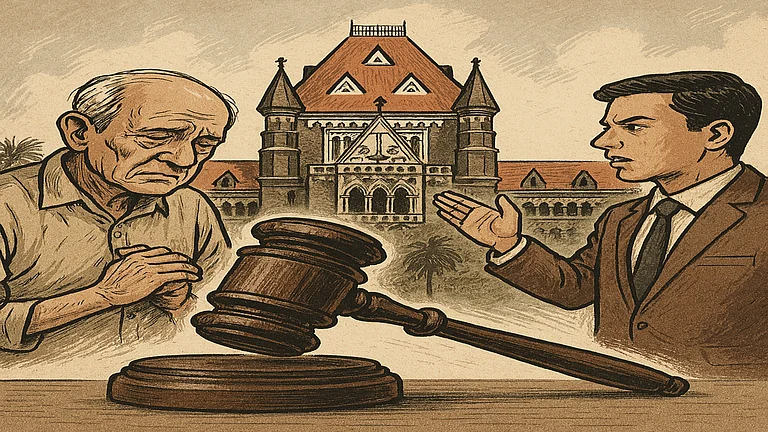
Dispute Over Family Home
The case was filed by Mrs. Sharma, a resident of Paschim Medinipur, who alleged that her two sons had evicted her from the three-storey house, built by her late husband, shortly after his death in 2018. According to her, the sons took possession of the property and refused to let her in, and demanded that she stay with her elder brother in Cuttack.
Earlier, the Sub Divisional Officer (SDO) had passed two orders in September and December 2024, ordering the sons to vacate the property and pay monthly maintenance. One son was asked to pay Rs 10,000; the other son, Bablu, was directed to pay Rs 15,000 every month, with payments due within the seventh day.
While one son complied with the maintenance order requested, both refused to vacate the house. The mother then moved to the High Court for enforcement of the eviction order. At the same time, Bablu challenged the SDO's direction, especially the section that his and his brother's need to vacate the property.
On February 18, 2026, the Calcutta High Court gave its judgment. It refused to accept the eviction plea, but ordered the sons to keep paying maintenance collectively at Rs 25,000 every month. The court also said that if the sons fail to pay, the mother may take proper steps before the Tribunal.
Advertisement
Limits Of Tribunal Powers Under Senior Citizens Law
A central issue before the court was whether the Maintenance and Welfare of Parents and Senior Citizens Act, 2007, gives powers to tribunals to order eviction.
The High Court looked into Sections 4 and 5 of the Act and held that these provisions are limited to maintenance. Section 4 provides parents with the right to claim maintenance if they cannot support themselves, and Section 5 specifies the process of a maintenance claim.
It has been pointed out by the court that eviction is not mentioned in these sections. It has been stated that tribunals can only determine on maintenance and cannot order the removal of individuals from property.
Based on this, the High Court has set aside the part of the SDO's order that directed eviction. However, it has upheld the order of maintenance stating that it is in line with the purpose of the Act, which is to ensure that senior citizens can live with dignity.
Advertisement
Property Rights Argument under Mitakshara Law
During the hearing, the son's counsel argued that according to the Mitakshara school of Hindu law, a child acquired a right in family property by virtue of birth. On the latter argument, it was contended that Bablu could not be evicted.
However, legal experts have clarified that this principle will only apply to ancestral or coparcenary property within a Hindu Undivided Family and not to property that is self-acquired by a parent.
In this case, the mother took possession of the house, showing that it is possibly not ancestral property. The court, however, has not gone into a detailed analysis of ownership, as the case was restricted to the extent of the Senior Citizens Act.
Maintenance Identified As Core Objective
The court has emphasised that the primary purpose of the 2007 Act is to provide financial support to the parents and senior citizens who are unable to maintain themselves.
Advertisement
It has been pointed out that the Tribunal did not overstep its jurisdiction when it ordered the sons to pay maintenance.
The High Court has also noted that under the Act, tribunals are quasi-judicial bodies and not civil courts. Their orders can be reviewed by the High Court under Article 226 of the Constitution.
It has also allowed the mother to seek further remedies in case the payments are not made.
Outcome Of The Case
The mother's plea for eviction has been rejected, but the order for maintenance remains unchanged. The ruling emphasises that while senior citizens can claim financial support through tribunals, issues of eviction and property disputes may have to be dealt with separately through civil law.
For the mother, the judgment has ensured financial relief, but not the restoration of residence, underlining the limits of protection available under the current legal framework.
Show comments
Published At: