India's senior living sector has reached an important inflection point and is emerging as one of the most promising growth segments within the real estate industry.
The strong market outlook is being driven not only by a growing elderly population but also by changing lifestyles, rising disposable incomes and greater awareness of retirement planning.
As India's population ages, senior living looks set to become one of the more durable, structurally-backed corners of the real estate market over the next decade.
India's Senior Living Market Enters High-Growth Phase; Gurugram Emerges As The Next Hub
Fuelled by an increasing geriatric population, shift in family dynamics and growing demand for healthcare-integrated housing, India's senior living sector is expected to expand from $3.55 billion in 2025 to $14.14 billion by 2031, with Gurugram being one of the top destinations for organised players.

Summary
Advertisement
India’s senior living sector has transitioned from a niche category to a growing residential asset class in the last few years, mostly driven by demographic shifts, evolving family setups, rising incomes and a growing appetite for healthcare-linked housing, which are pushing the segment into the mainstream. While Bengaluru, Chennai and Coimbatore built the early playbook, the northern cities, Gurugram in particular, are now drawing significant attention.
The numbers underscore the sector's momentum. According to Mordor Intelligence, India's senior living market was valued at USD 3.55 billion in 2025 and is projected to reach USD 14.14 billion by 2031, expanding at a 25.92 per cent CAGR during 2026–2031. Factors leading to the growth include India’s ageing population, decreasing prevalence of joint families and greater acceptance of professionally-managed retirement communities.
Ankur Gupta, JMD, Ashiana Housing, says that India's senior living sector has reached an important inflexion point and is emerging as one of the most promising growth segments within the real estate industry. The strong market outlook is being driven not only by a growing elderly population but also by changing lifestyles, rising disposable incomes and greater awareness of retirement planning.
Advertisement
“Today's seniors are looking beyond home ownership and are seeking communities that offer independence, safety, wellness, social engagement and a better quality of life. The demand for organised senior living is no longer limited to a few regions. We are witnessing increasing acceptance across North, West and South India, creating significant opportunities for organised developers with deep operational expertise and a long-term commitment to resident well-being,” Gupta adds.
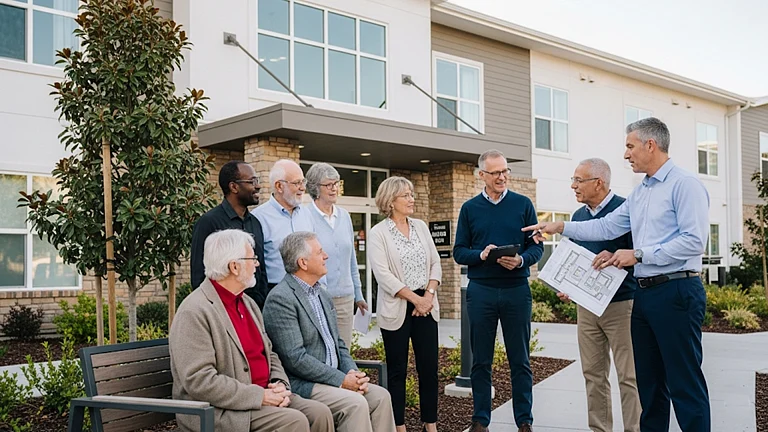
It may be noted that India's 60-plus population is set to more than double from 153 million in 2020 to 347 million by 2050, pushing its share of the population from 11 per cent to 21 per cent. The old-age dependency ratio is expected to nearly double, too, from 16 per cent to 34 per cent, which points to sustained, structural demand for senior housing rather than a passing trend.
Advertisement
The scale of the gap is striking: India could need close to 2.4 million new senior living units by 2030, yet organised penetration today sits at barely 1 per cent versus roughly 11 per cent in the UK and considerably more in other developed markets.
What Makes Gurugram A Natural Fit
Gurugram checks a lot of boxes that matter for senior residents and their families. It has one of the country's strongest healthcare networks, multi-speciality hospitals, preventive care centres, wellness facilities, plus a sizeable base of affluent retirees, returning NRIs, and parents of professionals working across Delhi-NCR.
Rishabh Periwal, Senior Vice President, Pioneer Urban Land and Infrastructure Ltd, says, “Gurugram’s luxury senior living market is defining retirement from a phase of compromise into a premium lifestyle choice. Driven by shifting demographics and affluent NRIs and HNIs seeking global standards for their parents, the demand for spaces blending high-end hospitality with premium healthcare has skyrocketed. Gurugram, through its various facilities, is positioned to lead this asset class, given its high-income demographic, world-class infrastructure, and futuristic policies, such as the Haryana government’s FAR increasing to 3.0. By allowing developers the spatial freedom to integrate advanced medical facilities with recreational hubs, we aren’t just constructing senior housing, but pioneering a dignified, secure, and deeply enriching ecosystem for India’s silver generation.”
Advertisement
Family patterns are shifting, too. Data from the Longitudinal Ageing Study in India shows more urban seniors choosing to live independently. As younger family members move for work, professionally-managed communities are increasingly seen as the middle ground between independence, social life and healthcare access, all in one place.
Large Developers Eye The Opportunity In Gurugram
The growing potential of the segment is attracting institutional capital and larger organised developers. Industry participants increasingly view senior living as a long-term residential category rather than a specialised housing product.
Reflecting this trend, DLF recently indicated during its financial results that it plans to enter the senior living segment with a dedicated project carrying an estimated development value of around Rs 2,000 crore in Gurugram. DLF’s entry into senior living could serve as an important validation point for the category, potentially accelerating investor interest and encouraging broader participation from other organised players.
In Gurugram, leading developers such as Pioneer Urban, Max Estate, Ashiana Housing, Antara, etc., have already laid the foundation of this segment.
Advertisement
Why Seniors Are Choosing This Lifestyle
The pull isn't just infrastructure; it's the way of life these communities enable. Today's retirees want active, dignified, independent living, not the traditional image of a retirement home. That means barrier-free homes, round-the-clock security, emergency response systems, housekeeping, wellness programming, fitness access, and a built-in social calendar through clubs and community events. Families get something too: the comfort of knowing their parents are in a secure, well-run setting with care available when it's needed.
Tanay Saboo, Co-Founder, Amaya Vera Vita Senior Living, says, “The growth of India’s senior living market signals a clear shift in how retirement is being imagined. Today’s financially independent seniors are not simply looking for housing. They are looking for a way of life that gives them comfort, community, safety, wellness and the freedom to remain in control of their everyday routines. For India’s growing middle and upper middle-income households, senior living is increasingly becoming a considered lifestyle decision rather than a compromise. The demand is being shaped by seniors who want independence, but also want the reassurance of care, support and social connection when they need it. This is pushing developers to think beyond real estate and build communities that are more experience-led, service-oriented and responsive to daily life.”
Advertisement
A long-standing perception of senior housing being a need-based option is finally giving way to a sought-after lifestyle aspiration, favoured by today’s independent-minded seniors who seek wellness and purpose-driven community living.
"Developers have begun to notice an increasing demand for well-designed neighbourhoods that offer quality housing built along with healthcare facilities coupled with parks, recreational activities and social engagement opportunities. There’s an opportunity to reimagine retirement living by creating neighbourhoods that are better suited to residents’ lifestyles beyond their traditional years. Senior living of the future will be synonymous with communities that provide secure and dignified living for seniors who want to continue to age healthily and with a sense of purpose in their daily lives,” says Anil Godara, Founder and Managing Director, J Estates.
Healthcare-Led Communities Become the New Standard
The next wave of senior living looks quite different from the retirement homes of the past - wellness, preventive care and community are now central to the model.
Advertisement
Nearly 70 per cent of Indians over 60 live with at least one chronic condition, which is why developers are folding in on-site clinics, telemedicine, emergency response and fitness and wellness programming as standard, not add-ons. Many projects are also moving toward a continuum-of-care model, letting residents shift from independent living to assisted care without ever leaving the community.
That's opening doors for established developers with the scale, brand strength and delivery experience to build these integrated ecosystems.
Anantharam V Varyur, Co-Founder, Manasum Senior Living, says, “As life expectancy increases and expectations around ageing change, seniors and their families are seeking communities that combine healthcare, wellness, social engagement and personalised support within a single environment. This reflects a broader shift in retirement planning, where quality of life is becoming as important as the home itself. Going forward, the sector's growth will be defined not just by the number of new communities developed, but by their ability to deliver continuity of care, meaningful engagement and a resident experience that adapts to changing needs over time."
Advertisement
As India's population ages, senior living looks set to become one of the more durable, structurally-backed corners of the real estate market over the next decade - powered by longer lifespans, higher disposable incomes, greater healthcare awareness and shifting social norms.
For Gurugram - already the country's marquee luxury residential market - senior living could be the next big chapter. With major developers gearing up to enter and public perception steadily catching up, the city looks poised to become one of India's key senior housing hubs in the years ahead.
“Going forward, success in this segment will depend on building trust, delivering consistently high service standards and creating vibrant communities that evolve with the changing needs of seniors. We believe senior living will become an increasingly important pillar of India's residential real estate market over the coming decade,” says Gupta.
Show comments
Published At: