Many health insurance policies limit the type or cost of hospital rooms you can choose.
So, buy a plan with no room rent cap. These plans might have a higher premium but will save you from proportionate deductions.
Since the tariffs at hospitals increase every year, review your health insurance cover every year to ensure that you have enough coverage.
Room Rent Capping: The Overlooked Health Insurance Rule That Impacts Your Claim
A higher hospital room category can trigger proportionate deductions across multiple treatment costs, leaving policyholders with unexpected out-of-pocket expenses despite having adequate sum insured.

Summary
Advertisement
Most people believe their health insurance cover amount is the real protection. If you have a Rs 5 lakh policy, you assume the insurer will pay up to Rs 5 lakh during hospitalisation. But one small clause can significantly reduce your claim long before you reach that limit: room rent capping. And the impact goes far beyond the hospital room bill.
What Is Room Rent Capping?
Many health insurance policies limit the type or cost of hospital rooms you can choose. The cap is usually:
1 per cent of sum insured per day for normal hospital rooms
2 per cent of sum insured per day for ICU
So, if your policy cover is Rs 5 lakh:
Eligible room rent = Rs 5,000/day
Eligible ICU rent = Rs 10,000/day
Anything above this can trigger additional out-of-pocket expenses.
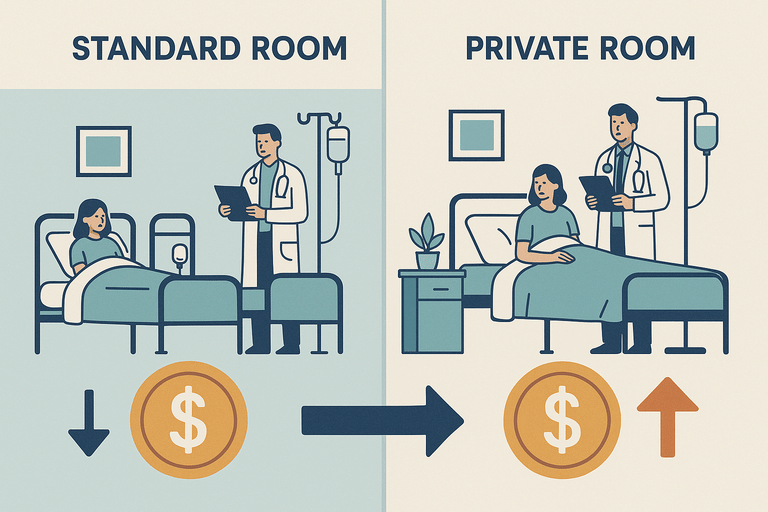
The Biggest Problem: Proportionate Deduction
This is where most policyholders get caught. If your policy allows a Rs 5,000 room but you choose a Rs 10,000 room, the insurer treats many associated expenses proportionately.
In simple terms:
Eligible room = 50 per cent of actual room cost
Insurer may pay only 50 per cent of several linked charges
This reduction can apply to:
Doctor consultation fees
Nursing charges
OT charges
Surgeon fees
ICU-related costs billed on room category
So, even if your total bill is well within the sum insured, your payout may still reduce sharply.
Example
Suppose:
Policy room eligibility = Rs 5,000/day
Actual room selected = Rs 10,000/day
Doctor fee billed = Rs 80,000
Since your eligible room is only 50 per cent of the actual room cost, the insurer may pay only:
Rs 40,000 of the doctor fee
The remaining Rs 40,000 comes from your pocket even though your overall sum insured is not exhausted.
What Usually Does NOT Get Reduced
Not every hospital expense faces proportionate deduction. Typically covered at actuals:
Medicines
Pharmacy bills
Diagnostic tests
Blood tests and scans
Implants and consumables
The cuts mainly affect room-linked charges.
Advertisement
Why This Matters More In Metro Cities
Hospital room tariffs have risen sharply. In many metro hospitals:
Private rooms can cost Rs 8,000–20,000/day
ICU charges may go even higher
A policy with older room rent caps can become inadequate very quickly, especially during longer hospital stays.
How To Protect Yourself
One way to prevent such unpleasant surprises is to buy a plan with no room rent cap. These plans might have a higher premium but will save you from proportionate deductions. Under this clause, the insurer cuts down on reimbursement of various hospitalization expenses if you avail a room that is above your room rent eligibility.
Always check the room rent capping amount while buying a policy. Also, enquire if proportionate deduction clause is applicable or not. You can also buy a higher sum insured as room rent eligibility will increase with a higher sum insured. It’s best to meet the hospital’s insurance desk before your admission to know about room categories they will cover under your plan.
Since the tariffs at hospitals increase every year, review your health insurance cover every year to ensure that you have enough coverage. Some insurers also provide room rent waiver as add-on benefit to your policy. You can also upgrade your room category if your policy permits.
These can help reduce future claim gaps. Room rent capping sounds like a small technical clause, but it can create one of the biggest surprises during a hospital claim. The issue is not the room itself, it is the chain reaction it creates across the entire bill. In health insurance, understanding the fine print before hospitalisation can matter just as much as the sum insured itself.
Advertisement
Show comments
Published At: