Term insurance is exactly what it sounds like. You pay a fixed premium for a fixed term, and if you pass away during that period, your nominee receives the full sum assured.
The most common mistake isn’t not buying term insurance, it's buying too little.
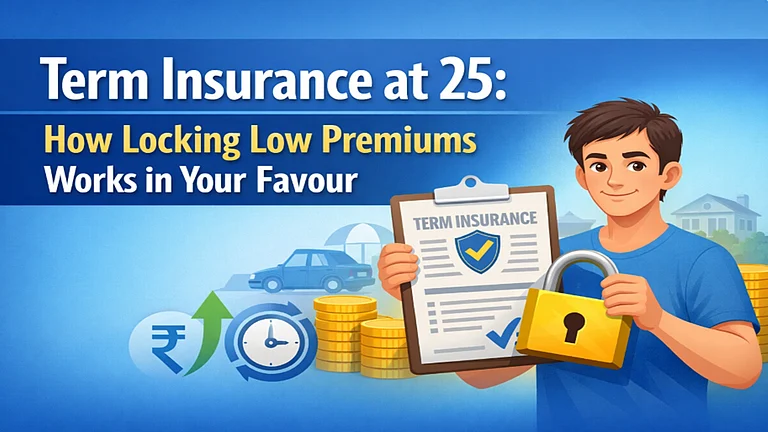
The earlier you buy, the lower your cost and the less likely you are to face medical restrictions later.
Term Insurance: Everything You Need To Know Before Buying A Policy
In India, life insurance isn’t legally mandatory, but financially, it’s one of the first things you should get right. And within life insurance, term plans are the most straightforward way to do it.

Summary
Advertisement
A single income often supports an entire household, like EMIs, school fees, daily expenses, and future plans. If that income suddenly stops, the impact is immediate. Term insurance exists to ensure that one event doesn’t turn into a long-term financial setback. In India, life insurance isn’t legally mandatory, but financially, it’s one of the first things you should get right. And within life insurance, term plans are the most straightforward way to do it.
Pure Protection, Nothing Else
Term insurance is exactly what it sounds like. You pay a fixed premium for a fixed term, and if you pass away during that period, your nominee receives the full sum assured.
There are no returns, no maturity benefits, no investment component. It’s not designed to grow your money - it’s designed to replace your income when your family needs it most.
That simplicity is also what makes it affordable. A healthy 30-year-old can typically get a Rs 1-crore cover for under Rs 1,000 a month.
Advertisement
How Much Cover Is Actually Enough
The most common mistake isn’t not buying term insurance, it's buying too little.
A simple rule is 15–20 times your annual income. But don’t stop at a formula. Think through what your family would actually need:
Outstanding home or personal loans
Children’s education costs
Monthly expenses for the next 10–15 years
The goal is continuity. Your family shouldn’t have to compromise on essentials if you’re not around.
What’s Covered (And What’s Not)
A term plan pays out if the policyholder passes away during the policy term, regardless of the cause (with standard exceptions).
Typically covered:
Death due to illness
Accidents
Natural causes
Typically Not Covered:
Non-disclosure of medical conditions
Death under the influence of alcohol or drugs
Suicide within the initial policy period
High-risk activities not declared upfront
The fine print matters here. Most claim rejections happen because something important wasn’t disclosed at the time of purchase.
How Your Premium Is Calculated
Your premium is locked in at the start and depends on:
Age (younger means cheaper)
Health and medical history
Smoking habits
Policy term and coverage amount
The earlier you buy, the lower your cost and the less likely you are to face medical restrictions later.
Four Things Worth Doing Before You Buy
Don't be under-insured. Cutting your cover to reduce premium defeats the purpose.
Be completely honest. Disclose every medical detail, even if it increases your premium slightly.
Check the insurer’s claim settlement record. This is one place where reliability matters more than price.
Make sure your nominee knows. A policy that no one knows about doesn’t serve its purpose.
Add-Ons That Can Make A Difference
Basic term plans can be strengthened with riders:
Critical illness rider: Pays on diagnosis of major illnesses
Accidental death benefit: Increases payout in case of accidental death
Waiver of premium: Keeps the policy active if you can’t pay due to disability
These cost extra, but can significantly improve overall protection.
Term insurance doesn’t feel urgent until it suddenly is. It’s not about returns or tax savings. It’s about making sure your family’s financial life continues, even if you’re not there to support it.
FAQs
1. How does term insurance work?
Term insurance is a pure life insurance plan that provides financial protection to your family. On the unfortunate event of death of the insured during the term, the nominee gets the sum assured.
2. How much cover should I get?
You should ideally get a term insurance cover that is worth 15–20 times your annual income. Take into account loans you have taken, your children’s education and long-term household expenses as well.
3. Why should I buy term insurance early?
You should buy term insurance early. That helps lock in low premiums while reducing your chances of medical rejection or higher premiums as you grow older.
Advertisement
Show comments
Published At: