Most customers focus on premium savings of a few hundred or a few thousand rupees. But they don't evaluate what those savings are costing them in terms of coverage.
Among all motor insurance add-ons, zero depreciation remains the most valuable - and the most commonly skipped.
If zero depreciation protects against repair cost deductions, engine protection addresses one of India's most common claim surprises.
The Rs 4,000 Insurance Decision Most Car Owners Regret After An Accident
While more vehicle owners are buying insurance than ever before, many are unknowingly renewing policies that meet legal requirements but leave significant financial gaps.

Summary
Advertisement
When Rajat renewed his car insurance last year, he did what millions of Indians do. He compared premiums online, selected the cheapest option, skipped a few add-ons he didn't fully understand, and saved roughly Rs 4,000. It felt like a smart financial decision.
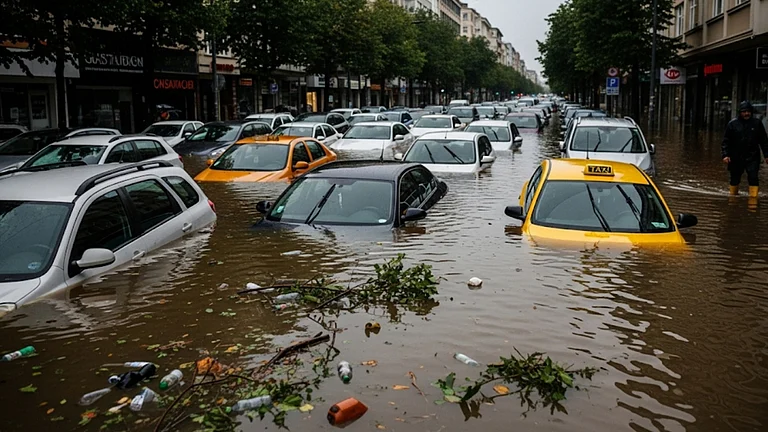
Eight months later, a waterlogged road in Gurugram turned that saving into a Rs 1.8 lakh repair bill. The engine had suffered hydrostatic damage after floodwater entered the vehicle. Rajat assumed his comprehensive motor insurance would cover it. It didn't. Engine protection wasn't part of his policy.
"I couldn't understand how the engine wasn't covered in car insurance," he recalls. "It was only after the claim was rejected that I realised what I had actually bought."
His experience reflects a growing reality in India's motor insurance market. While more vehicle owners are buying insurance than ever before, many are unknowingly renewing policies that meet legal requirements but leave significant financial gaps.
Advertisement
The Protection Gap Hidden In Renewals
For most customers, motor insurance renewal has become a transaction rather than a review. A reminder arrives. A premium appears. A payment is made.
What's rarely examined is whether the policy still provides adequate protection.
According to Venkatesh Naidu, CEO, Bajaj Capital Insurance Broking Ltd, the biggest mistake motorists make is treating insurance as a price comparison exercise. "Most customers focus on premium savings of a few hundred or a few thousand rupees. But they don't evaluate what those savings are costing them in terms of coverage. The cheapest policy often becomes the most expensive policy when a claim arises."
The issue becomes particularly relevant as vehicles age.
A three-year-old car, for example, faces significantly higher depreciation deductions during claims than a brand-new vehicle. Yet many owners continue renewing the same policy structure year after year without adding protection features that become increasingly important.
Advertisement
Why Zero Depreciation Matters
Among all motor insurance add-ons, zero depreciation remains the most valuable - and the most commonly skipped. Under a standard policy, insurers apply depreciation on replaced parts during claim settlement. Plastic, rubber, fibre and metal components are settled after depreciation deductions, leaving the policyholder to bear part of the repair cost.
Zero depreciation eliminates those deductions.
"A customer may save 8–10 per cent on the premium by not choosing zero depreciation. But during a major repair claim, that saving can translate into deductions worth Rs 15,000 to Rs 30,000 or more. The math rarely works in the customer's favour," says Naidu.
For vehicles up to five years old, industry experts generally consider zero depreciation one of the most important add-ons to carry.
The Monsoon Risk Most Drivers Underestimate
If zero depreciation protects against repair cost deductions, engine protection addresses one of India's most common claim surprises. Engine damage caused by water ingress is typically treated as consequential loss under standard motor insurance policies and is therefore excluded. In cities such as Mumbai, Bengaluru, Delhi-NCR, Chennai and Hyderabad, where seasonal flooding and waterlogging have become recurring realities, that exclusion can prove costly.
"Every monsoon, we see customers discovering that engine damage isn't covered under their base policy. They only learn about the exclusion after the claim is filed. By then, it's too late," says Naidu.
Engine repair or replacement costs can easily range between Rs 1 lakh and Rs 4 lakh, depending on the vehicle.
What Drivers Should Check Before Renewing
Insurance advisors suggest reviewing five items before clicking "renew":
Is the IDV appropriate, or has it been reduced to minimise the premium?
Is zero depreciation included?
Does the policy have engine protection?
Is return-to-invoice cover available for newer vehicles?
Is your preferred garage still part of the insurer's cashless network?
The review takes less than fifteen minutes but can significantly improve claim outcomes.
Motor insurance renewal is often treated as an annual payment obligation. In reality, it is an annual opportunity to reassess risk. The difference between the two can be measured not in premiums, but in the size of the cheque you may have to write after an accident.
Advertisement
Show comments
Published At: