RBI website faced 61 million cyberattacks, all blocked
AI tools now used to detect and prevent threats
tokenisation and recurring payments show strong adoption growth
Cyberattack Attempts On RBI Website Rise To 61 Million In Q3 Of FY26
Rising cyber threats target the central bank's website, even as artificial intelligence-led defences and payment reforms continue to build resilience and efficiency of the systems and transactions

Summary
Advertisement
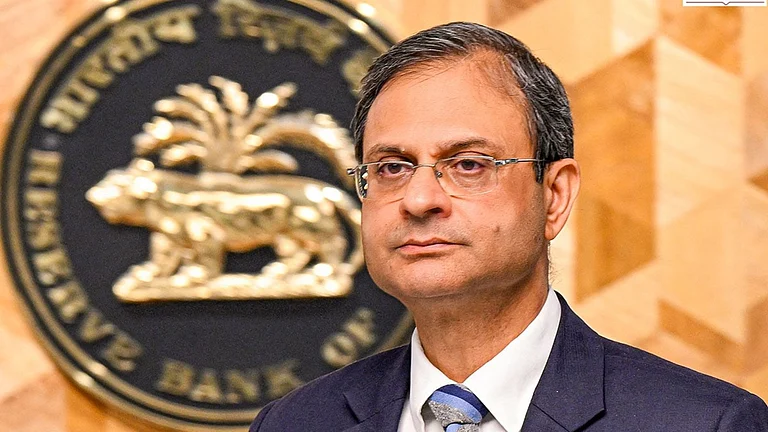
The Reserve Bank of India (RBI) has recorded more than 61 million attempts of cyberattacks on its website in the October-December 2025 quarter. According to the Executive Director, P. Vasudevan, all such attempts were thwarted, and no breach was reported.
Sharp Rise In Cyber Threats
The scale of cyberattacks has been rapidly increasing over the year. As of April to June of 2025, the number of attempts was 19 million. This rose to 31 million in the July-September quarter, before soaring to 61 million in the next three months. The trend points to a sharp increase in targeting of financial infrastructure.
The central bank's website is targeted almost regularly by such activities because of its visibility and importance, officials said. Despite the increase in volume, currently, safeguards in place, such as firewalls and monitoring systems, have thwarted any successful intrusion to date.
Advertisement
AI Boosts Cyber Defence
To better prepare for such incidents, RBI has also begun incorporating technology in the form of artificial intelligence (AI) in its cybersecurity framework. These systems work to analyse inbound traffic, identify unusual patterns and help to trace the origin of threats. This way, preventive action can be taken at an initial stage, and the risk of attacks getting worse is reduced.
Regulatory Measures Grow in Scale
RBI also highlighted the importance of the role of the regulatory measures in the development of digital payment systems. The standing instruction system, which was introduced in October 2021, was initially met with some hesitation on the part of the industry participants. The success of the system has been significant.
In February 2026, some 876 million such mandates were executed, with a success rate of over 99 per cent. The framework has also experienced international adoption, with nearly 45,000 global merchants now using the framework.
Advertisement
Tokenisation Gets More Accepted
Card tokenisation has also grown steadily. So far, 117 crore tokens have been created. These have supported 119 crore transactions of a total value of about Rs 15 lakh crore. The system has been used with little delay and no major disruptions.
RBI is looking forward to an increased role for AI in digital systems. Beyond cybersecurity, it's likely to help with fraud management, transaction matching, and customer support. It may also allow payment services via voice commands, as well as regional languages, which will improve ease of use for a broader user base. Cyberattack Attempts On RBI Website Rise To 61 Million In Q3 Of FY26
Rising cyber threats target the central bank's website, even as artificial intelligence-led defences and payment reforms continue to build resilience and efficiency of the systems and transactions.
RBI has recorded more than 61 million attempts of cyberattacks on its website in the October-December 2025 quarter. According to the Executive Director, P. Vasudevan, all such attempts were thwarted, and no breach was reported.
Advertisement
Sharp Rise In Cyber Threats
The scale of attacks has been rapidly increasing over the year. As of April to June of 2025, the number of attempts was 19 million. This rose to 31 million in the July-September quarter, before soaring to 61 million in the next three months. The trend points to a sharp increase in targeting of financial infrastructure.
The central bank's website is targeted almost regularly by such activities because of its visibility and importance, officials said. Despite the increase in volume, currently, safeguards in place, such as firewalls and monitoring systems, have thwarted any successful intrusion to date.
AI Boosts Cyber Defence
To better prepare for such incidents, RBI has also begun incorporating technology in the form of artificial intelligence (AI) in its cybersecurity framework. These systems work to analyse inbound traffic, identify unusual patterns and help to trace the origin of threats. This way, preventive action can be taken at an initial stage, and the risk of attacks getting worse is reduced.
Advertisement
Regulatory Measures Grow in Scale
RBI also highlight the importance of the role of the regulatory measures in the development of digital payment systems. The standing instruction system, which was introduced in October 2021, was initially met with some hesitation on the part of the industry participants. The success of the system has been significant.
In February 2026, some 876 million such mandates were executed, with a success rate of over 99 per cent. The framework has also experienced international adoption, with nearly 45,000 global merchants now using the framework.
Tokenisation Gets More Accepted
Card tokenisation has taken a similar route. In spite of initial apprehension, it has grown steadily. So far, 117 crore tokens have been created. These have supported 119 crore transactions of a total value of about Rs 15 lakh crore. The system has been used with little delay and no major disruptions.
RBI is looking forward to an increased role for AI in digital systems. Beyond cybersecurity, it's likely to help with fraud management, transaction matching, and customer support. It may also allow payment services via voice commands, as well as regional languages, which will improve ease of use for a broader user base.
Advertisement
Show comments
Published At:
Tags