RBI keeps the repo rate unchanged at 5.25 percent.
A neutral policy stance signals economic wait and watch.
Different RBI stances directly impact your loan EMI payments.
RBI Monetary Policy Explained: What Do Neutral, Hawkish, and Dovish Stances Mean
After the RBI’s MPC announces its monetary policy decision, economists scrutinise the policy stance maintained by the bank. The stance is typically explained in specific terminology to indicate the bank’s intentions regarding changing the interest rates

Summary
Advertisement
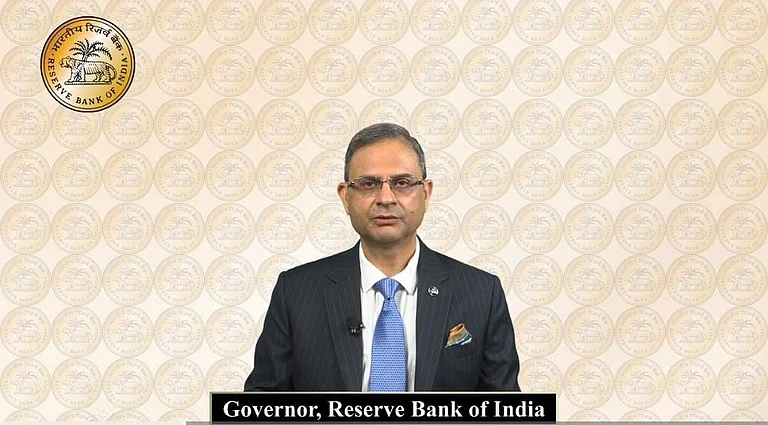
On August 5, 2026, the Reserve Bank of India’s (RBI’s) Monetary Policy Committee (MPC) announced its decision to keep the repo rate unchanged at 5.25 per cent. The central bank has also kept its policy stance neutral. This marks the fourth consecutive meeting where the rate has remained untouched.
Notably, the last change in repo rate was announced in December 2025 when the RBI decreased it from 5.50 per cent to 5.25 per cent. Before adopting a neutral stance, RBI focused on a gradual withdrawal of accommodation, but has shifted to a neutral stance to monitor how inflation and economic expansion play out in the coming months.
What Do Neutral, Hawkish, And Dovish Mean?
After the RBI’s MPC announces its monetary policy decision, economists scrutinise the policy stance maintained by the bank. The stance is typically explained in specific terminology to indicate the central bank’s intentions regarding changing the interest rates.
Advertisement
Thus, both the repo rate and the policy stance adopted by the central bank have a macroeconomic impact and also control the lending side for commercial banks.
The rate and the stance decide how banks borrow money, which in turn determines how much borrowers and businesses pay for their loans. In turn, this dictates everything from how much you end up paying for your equated monthly Instalments (EMIs) to the interest you earn on fixed deposits (FDs). Therefore, it is important to understand what the terms hawkish, dovish, and neutral mean.
What Is A Neutral Stance?
A neutral stance, means that policymakers are neither actively trying to stimulate the economy nor attempting to restrict it. Adopting a neutral stance means that the RBI is on a ‘wait and watch’ mode and is monitoring economic data without decisively moving in one direction for future rate changes.
Advertisement
A neutral stance gives the central bank flexibility to respond to sudden global shocks or domestic shifts. For individuals and businesses, this leads to a period of stability where loan rates and deposit yields remain relatively flat. Notably, RBI’s current stance is neutral wherein the rates have remained unchanged as the central bank awaits the release of fresh economic data.
What Is A Hawkish Stance?
A hawkish stance indicates that the central bank is trying to mitigate rising inflation. When prices rise rapidly in a short span of time the purchasing power of each individual drops, and the cost of living goes up.
To ease this problem, policymakers adopt a hawkish approach. Adopting a hawkish stance involves raising interest rates. When interest rates are high, borrowing becomes more expensive for both individuals and businesses. On the other hand, consumer spending and corporate expansion slow down.
The reduction in overall demand helps the economy in dealing with rising costs and the subsequent inflationary pressures. For the average individual, a hawkish stance translates to higher interest on loans and costlier mortgages. However, it can also result in higher returns for individuals who have bank deposits.
Advertisement
Earlier in May 2022, the RBI adopted a hawkish stance. The decision was taken as the bank tried to mitigate the impact of rising global crude oil prices. To ease inflationary pressures, RBI shifted its priority from economic growth to inflation control. At the time this stance was adopted, the repo rate stood at 4 per cent and the RBI raised it by 40 basis points to 4.40 per cent. The hawkish stance started a rate-tightening cycle, which led to a total repo rate increase of 250 basis points over the next few months, eventually increasing the rate to 6.50 per cent by February 2023.
What Is A Dovish Stance?
When the RBI adopts a dovish stance it shows that the bank is aiming to bolster economic growth. Typically, the RBI adopts this stance when the economy is sluggish and the economic growth rate is stagnant or low.
In a dovish stance, RBI decreases interest rates. When borrowing rates are low, borrowing becomes cheaper for banks. This also makes borrowing cheaper for individuals, as banks offer loans at relatively lower rates of interest. These lower rates boost the economy as demand increases once individuals spend more money.
Advertisement
For the common person, a dovish stance results in lower interest rates on retail loans, making purchases easier to finance. However, it also decreases returns on bank-related savings instruments.
Earlier in February 2025, the RBI adopted a dovish stance, as it decreased the lending rate after keeping it elevated. RBI adopted the stance to boost economic growth and demand amid an economic slowdown.

At the beginning of the easing cycle, the RBI reduced the repo rate to 6.25 per cent from 6.50 per cent. The cut announced in February 2025 was followed by a series of rate reductions throughout the year, representing a total decrease of 125 basis points which reduced the repo rate to 5.25 per cent by December 2025.
What Is An Accommodative Stance?
Apart from the three key stances, banks also adopt an ‘accommodative stance’. An accommodative stance communicates that the central bank is willing to cut rates or inject liquidity to support growth, virtually ruling out immediate rate hikes. The opposite of this is the withdrawal of accommodation, a stance used when the central bank is preparing to pull back excess liquidity.
Advertisement
Notably, RBI adopted an accommodative stance in March 2020. It said it would continue with an accommodative stance as long as necessary to revive growth and mitigate the economic impact due to the Covid-19 pandemic. At the time, RBI reduced the repo rate by 75 basis points, bringing it down to 4.40 per cent from 5.15 per cent.
Show comments
Published At: