Rising prices are pushing home-loan ticket sizes higher
SBI’s real estate loans rose 13.66%
Affordability increasingly depends on income and borrowing
Home Loan Ticket Sizes Moving Up: How Rising Property Prices Are Changing Affordability For Homebuyers
Rising property prices are pushing homebuyers towards larger loans, changing how affordability is measured across India’s housing market

Summary
Advertisement
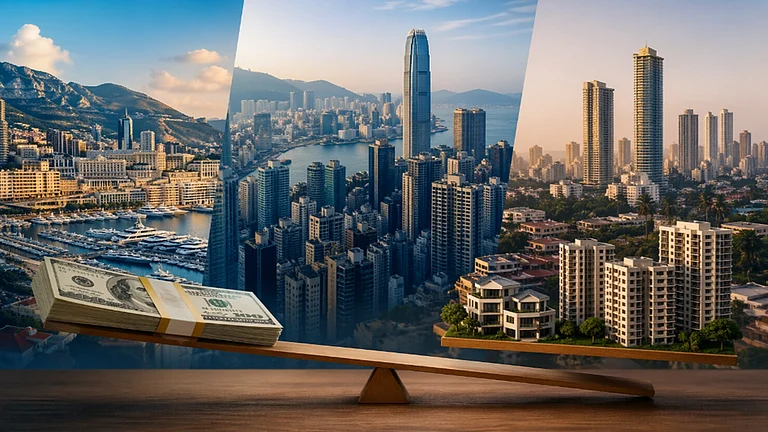
For homebuyers in India, the affordability question is no longer simply about whether they can find a home they like. It is increasingly about whether their income can keep pace with the amount they need to borrow to buy their home of choice. Rising property prices, especially in major urban markets, are pushing buyers toward larger home loans. This does not necessarily mean that they are buying bigger, better and more luxurious homes. In many cases, buyers are borrowing more as a way to simply purchase the kind of property they would have considered a few years ago.
What The Numbers Reveal
The scale of housing finance highlights how important borrowing has become for the market. According to State Bank of India’s FY2025-26 Annual Report, the real estate loan portfolio stands at Rs 9.44 lakh crore as of March 2026. In the previous year, this number stood at Rs 8.31 lakh crore; this shows an increase of 13.66 per cent in one year.
Advertisement
Home loans accounted for 22.54 per cent of SBI’s domestic advances and 34.15 per cent of its retail advances during the year. The bank also disbursed Rs 2.59 lakh crore in home and home-related loans in the financial year 2025-26.
Incidentally, SBI chairman C.S. Setty has also said that the bank’s average home-loan ticket had risen to around Rs 51 lakh, from about Rs 35-40 lakh two years ago. However, this does not reflect a nationwide average, he said.
Vishal Valecha, COO, Easy Home Finance, said: “This jump isn’t simply about people buying bigger homes. Loans above Rs 75 lakh now account for nearly 40 per cent of total loan value originated, pushing past the smaller brackets that used to dominate the market. Meanwhile, loans over Rs 1 crore make up roughly a fifth of all disbursals, a figure that would have looked out of place even three years ago.”
Advertisement

In the last few years, the meaning of affordability has changed: a loan amount that once corresponded to a relatively accessible home may now only stretch to a modest apartment; this is quite significant for expensive metro markets, even those that are developing.
“This suggests the market needs a real rethink of what ‘affordable’ even means anymore. A loan size that used to sit comfortably in the affordable housing bracket barely stretches to a modest apartment in most big cities today. For lenders, this isn’t just a pricing shift; it’s an underwriting one, too, since bigger loans change how income gets assessed, how tenures get structured, and how risk is priced in. Borrowers are moving faster than the definitions meant to serve them, and that gap is worth paying close attention to as it keeps widening,” he added.
However, one cannot say that the opportunity for housing and ownership is moving away. There’s also a rise in people’s incomes. The pressure is significant in markets where price rises have outpaced the income growth of individuals. Buyers in other localities would be facing a different equation.
Advertisement
For prospective buyers, the important question is not if the banks will sanction huge loans, but if taking a huge loan will benefit the borrower in the end, and also be an easy repayment journey. India’s dream of homeownership is generations old; having a home in your name is a sign of stability and security. However, the financial gap between wanting a home and comfortably affording continues to widen.
Show comments
Published At: