Sales by foreign portfolio investors contribute to a major reason for fall in rupee
Importers also engage in speculative trading, leading to sharper fall in rupee
Rupee Plunges To Record Lows: How FPI Outflows Impact Rupee
The rupee fell to a record low of 90.42 against the dollar in the previous session. A major reason touted for the fall is foreign investors selling Indian assets. Here are the reasons why

Summary
Advertisement
The rupee has broken all previous records and is trading above 90 to a dollar. A combination of factors has led to the fall in the rupee. Though reports suggest that the fall does not signify weakness in the rupee, it has left investors worried about the outlook of money flowing into the economy and in capital markets.
A major reason for the fall in rupee is overseas investors selling Indian assets. Here are the major reasons why investors are selling and the outlook for rupee, according to experts.
Why Are Foreign Investors Selling?
The rupee has fallen over 5.40 per cent so far this year, underperforming most other major Asian currencies. The fall signifies the growing divergence between India’s domestic position and its macroeconomic position.
While India’s gross domestic product (GDP) growth remains strong at 8.20 per cent in the second quarter of the ongoing financial year, US tariffs on Indian goods have put pressure on the rupee due to weakening export position. India’s trade deficit has widened, hitting a record of over $40 billion in October.
Advertisement
According to HDFC Bank, India’s current account deficit is expected to rise to nearly 1.10 per cent of the GDP in FY26. Madhavi Arora, chief economist at Emkay Global said exports into the US could fall by nearly 25 per cent in the current financial year.
Indian companies have also highlighted the impact of US tariffs while announcing their corporate earnings. Sectors like IT and pharma, in which India is a major exporter to the US, have shown significant beating due to the punitive tariffs. The US had imposed a 50 per cent tariff on all Indian goods, and industry experts suggest the longer the tariffs are in place, the more the impact will be on corporate and the overall competitiveness of the economy.
Foreign portfolio investors (FPIs), often considered liquid capital investors, have also sold off Indian assets, particularly equity and equity derivatives, as they move to other safer assets.
Advertisement
Foreign investors have pulled out nearly $17 billion from Indian equities so far this year. In addition to this, foreign direct investment (FDI) has also slowed down, increasing the strain on the rupee.
When foreign investors exit from Indian markets, the flush of rupee liquidity increases while the demand for the dollar rises. This increases the fall in rupee against the dollar.
Economists and traders say that any relief on rupee could only come if there is a breakthrough in trade negotiations between India and the US.
“If the trade deal is not achieved by end of December we will see the pressure on rupee continue…but I think the first part will be to remove the penalty and reduce the tariffs to 25 per cent (25 per cent additional tariffs was imposed due to India’s purchase of Russian oil),” Arora said.
“But even if that happens, we (India) are worse off than other Asian peers,” she added.
Advertisement
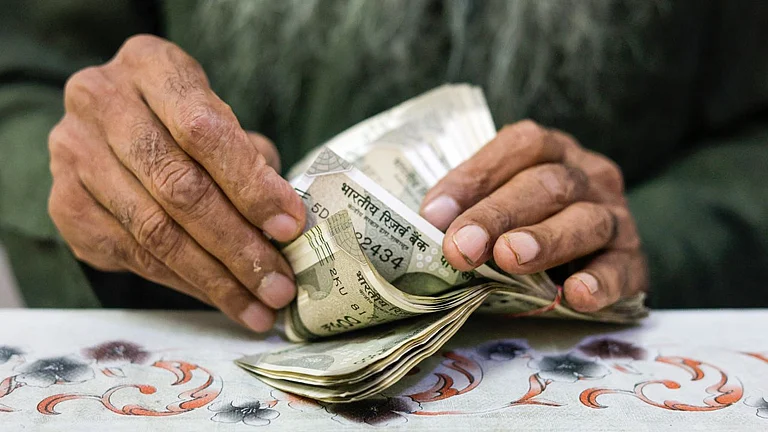
Another reason for the fall in rupee is also the rise in speculative bets by traders and importers in rupee futures. The central bank, which often intervenes in the foreign exchange market by selling dollars when there is a sharp fall in rupee, has also limited their interference in the market, leading to a sharper fall in rupee and increasing speculative bets by traders.
“It’s also a policy call and the RBI is letting the rupee fall because it sort of sees that there should be a natural stabilisation of the currency,” Arora said.
Some traders expect the RBI to step in the foreign exchange market if rupee breaches 92 to a dollar, while others said that the intervention could come sooner if volatility in rupee increases.
"I'm not losing sleep over it," V Anantha Nageswaran, chief economic adviser, said at an event on Wednesday. Nageswaran said that fall in rupee has had no impact on inflation, and that he expects the currency to recover in 2026.
Advertisement

Experts suggest that as the rupee breaches fresh lows, despite continued foreign outflows, a disciplined investing and strategic positioning to avoid a knee-jerk reaction should be the focus area for domestic investors. Diversifying portfolios and increasing allocation in safer assets like debt, which could offer a lower, but a stable income could also be a solution for investors to tackle the volatility in markets caused by FPI outflows, they said.
Show comments
Published At: