CAS launches August 3 for F&O eligible equity stocks.
Continuous trading for CAS stocks ends at 3:15 PM.
F&O derivatives trading is now extended to 3:40 PM.
Stock Market Timings Set To Change? Everything Investors Must Know About the Closing Auction Session
The CAS is a mechanism introduced by the Securities and Exchange Board of India (Sebi) to calculate the closing price of equity shares that have active futures and options (F&O) contracts

Summary
Advertisement
Trading activity is set to resume on D-Street on Monday, August 3. However, investors must note that market timings are set to change with the introduction of the Closing Auction Session (CAS).
The change is expected to alter how official closing prices are determined for select equity stocks. Notably, with the introduction of the CAS, the daily trading schedule will change, bringing in a staggered closing process as opposed to a uniform closing time across stock categories.
What Is CAS?
The CAS is a mechanism introduced by the Securities and Exchange Board of India (Sebi) to calculate the closing price of equity shares that have active futures and options (F&O) contracts. Prior to the introduction of the CAS, the closing price for all stocks was determined by calculating the volume-weighted average price (VWAP) of trades executed during the last thirty minutes of the trading session. However, from tomorrow’s session, the computation will shift to a single equilibrium price discovery system for eligible stocks.
Advertisement
With the introduction of the CAS, the closing time is set to change. Notably, the timing changes will take place across the different market segments. For eligible derivative-linked cash stocks, continuous trading will now halt at 3:15 PM. Following the halt, a twenty-minute auction session will be conducted till 3:35 PM. During this 20-minute window, buy and sell orders will be gathered. In the first five minutes, the reference price will be calculated, then orders will be accepted, freezing at a random time between 3:28 PM and 3:30 PM. An algorithm will then match the orders to discover a single equilibrium price. At this point, the price at which the maximum volume of shares traded successfully will become the official closing price.
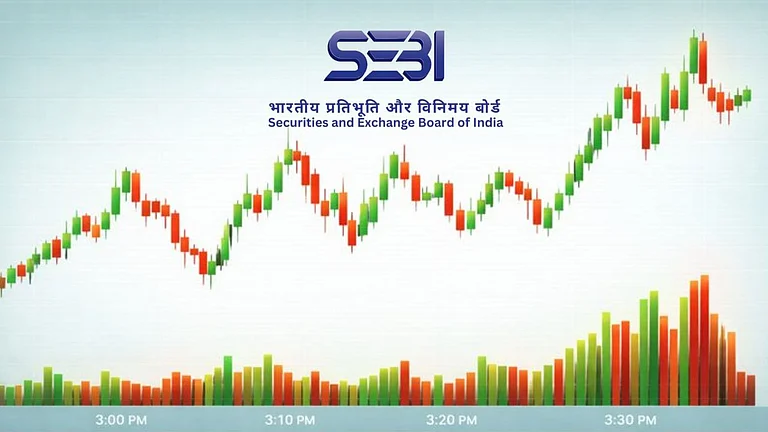
While eligible stocks will enter the auction, the closing price for all other regular non-derivative cash stocks will continue to be determined by the standard VWAP method, and they will trade continuously till 3:30 PM. Furthermore, trading for equity derivatives will be extended, officially closing at 3:40 PM.
Advertisement
Sebi has introduced this mechanism to align Indian stock exchanges with established global standards. The mechanism has been introduced to improve the accuracy of price discovery when the market closes. Currently, closing prices are susceptible to price manipulation or significant distortion if a big institutional order is executed late in the day. The single price auction mechanism aims to mitigate this by factoring in large orders more transparently.
How Does The Introduction of CAS Affect Investors?
The implementation of the CAS impacts a wide spectrum of active market participants. For retail intraday traders, the most immediate impact is the adjustment in timing. Since continuous trading for these stocks ends earlier, intraday positions will need to be squared off sooner.
On the other hand, brokers will have to revise automatic square-off timings, moving them forward by 10 to 14 minutes. Additionally, traders will no longer rely on the final minutes of the traditional trading session to manage open positions in specific stocks. The extended close for derivatives provides extra time after the underlying stock price is announced to adjust hedging strategies.
Advertisement
Since the closing price is crucial for calculating the net asset value of mutual funds, a mechanism that is less prone to large trades changing the closing price can potentially provide more accurate daily valuations.
The CAS is also expected to have a spillover effect on retail investors in the cash segment, as well it improves transparency. A closing price that accurately reflects supply and demand for a stock, rather than being skewed by last-minute volatility, can improve overall investor confidence.
Show comments
Published At: