






Summary of this article
NSE, BSE will conduct mock trading on July 18 and 25 ahead of CAS rollout
CAS will determine closing prices through an auction, replacing the current VWAP method
Sebi expects the change to improve price discovery and market transparency
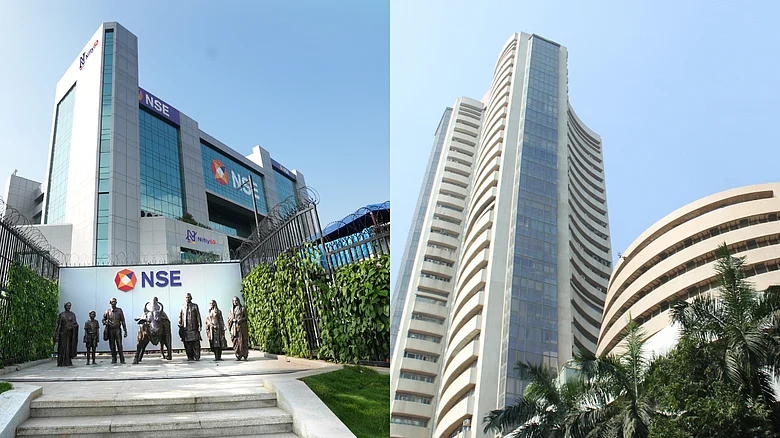
With less than three weeks left for the rollout of the Closing Auction Session (CAS), both the NSE and the BSE have begun testing the new framework through mock trading sessions. The drills are aimed at ensuring that brokers, trading members and exchange systems are fully prepared before the auction-based closing price mechanism comes into effect on August 3, 2026.
In a circular issued on July 15, NSE said that it would conduct a mock trading session on July 18 to test the operational readiness of the CAS in the equity cash segment. For the first session, the exchange will deploy NEATPlus version 7.8.9, the latest version of its front-end trading software used by brokers to place and manage orders. The second session will run on the existing NEATPlus version 7.8.8 to ensure compatibility with the current trading setup.
The exchanges have also scheduled another mock trading session on July 25 as part of the implementation process. Exchanges have asked trading members to actively participate in the mock sessions and re-login to the live trading environment afterwards to ensure systems are fully operational before trading resumes on July 20. This follows the circular issued by the Securities and Exchange Board of India (Sebi) in January 2026.
Sebi wants stock exchanges to switch from the current methodology of determining closing prices to an auction-based mechanism that is already followed in several global markets.
Why Is Sebi Changing The Way Closing Prices Are Calculated
At present, the closing price of a stock is calculated using the volume weighted average price (VWAP) of trades executed during the last 30 minutes of the continuous trading session. Sebi, in its circular dated January 16, 2026 had noted that major global markets determine closing prices through a CAS because it pools buy and sell interest into a single liquidity pool, resulting in a fairer and more transparent closing price.
According to Sebi, the closing price is an important benchmark because it is used for derivatives settlement, index calculation, and mutual fund net asset value (NAV) computation. It also said the mechanism provides equal access to all categories of investors and helps passive funds reduce tracking error while executing trades at the closing price.
After considering feedback from stock exchanges, clearing corporations, mutual funds, foreign portfolio investors (FPIs) and other stakeholders, Sebi decided to introduce CAS in the equity cash segment in a phased manner. Initially, the new mechanism will apply only to stocks that have listed derivatives, while the remaining cash market securities will continue to use the existing VWAP-based methodology until they are brought under CAS.
What is a Closing Auction Session
CAS will introduce a new way of arriving at the official closing price of eligible stocks. Instead of relying on the VWAP of trades executed during the last 30 minutes of trading, the closing price will be discovered through an auction.
Once the regular trading session ends at 3:15 PM, the market will then enter into a separate 20-minute auction session that will continue until 3:35 PM. During this time, investors can place fresh market and limit orders. The order entry window will close randomly anytime between 3:28 PM and 3:30 PM to prevent last-minute manipulation.
After the order window closes, the exchange will match all eligible buy and sell orders and determine a single closing price for each stock. This price will then be used during the post-close session, which will run from 3:50 PM to 4:00 PM.
The regulator expects this to improve price discovery and make the closing price a better reflection of actual market demand and supply.
How Will The Closing Price Be Decided
The exchange will first calculate a reference price using the VWAP of trades executed between 3:00 PM and 3:15 PM. If there are no trades during this period, the last traded price of the day will become the reference price. If there has been no trading in the stock during the day, the previous day’s adjusted closing price will be used.
The final closing price will then be determined using what Sebi calls the equilibrium price mechanism. In other words, the exchange will identify the price at which the highest number of shares can be matched between buyers and sellers. If more than one price qualifies, the exchange will choose the one where the gap between buy and sell orders is the smallest. If there is still a tie, the price closest to the reference price will be selected as the official closing price. If no equilibrium price is discovered, the reference price itself will be treated as the closing price.
What Kind Of Orders Will Be Allowed
Only market orders and limit orders will be accepted during CAS, and both will be considered while determining the equilibrium price. Iceberg orders and stop-loss orders will not be permitted during the auction. Market orders will receive execution priority over limit orders. Any eligible limit orders that remain unexecuted during the continuous trading session will automatically move into CAS and will retain higher time priority than fresh limit orders entered during the auction.
What Information Will Investors See During The Auction
Throughout the CAS, exchanges will disseminate real-time auction data to help market participants gauge how the closing price is evolving. This will include the indicative equilibrium price, cumulative buy and sell quantities, indicative order imbalance, and indicative index values.
According to Sebi, the information is designed to give investors greater visibility into the auction process before the final closing price is discovered. As buying and selling interest changes during the auction, the exchange will keep updating these values in real time. This will allow investors to track how the auction is progressing and get an indication of where the stock’s closing price is likely to settle before the final price is determined.





