RBI announces new medium-term strategy under Utkarsh 2.0
RBI new strategy rests of six key pillars to reinforce its position in global policymaking
RBI Utkarsh 2.0 Explained: Know How Reserve Bank of India's New Strategy Seeks To Simplify Digital Lending
The new strategy aims to help the RBI govern multiple pillars such as regulations, customer centricity, inclusive finance, competitive markets, and effective technology while making it a future-ready organisation and putting focus on India globally

Summary
Advertisement
The Reserve Bank of India (RBI) has launched a new initiative under Utkarsh 2.0 with an aim to reinforce the RBI’s position as a world-class, full-service central bank. The strategy was launched on a medium-term framework on April 10. The strategy is set to be in effect from April 2026 to March 2029.
The new strategy aims to help the RBI govern multiple pillars such as regulations, customer centricity, inclusive finance, competitive markets, and effective technology while making it a future-ready organisation and putting focus on India globally.

The strategy prioritises long-term initiatives of the RBI such as Project Sa-Mudra for modernising currency management, widening the scope of central bank digital currency (CBDC), and scaling up the unified lending interface (ULI) system to broaden credit access. It also aims to act on regulatory frameworks for emerging technologies such as artificial intelligence (AI) and quantum computing in the financial sector.
Advertisement
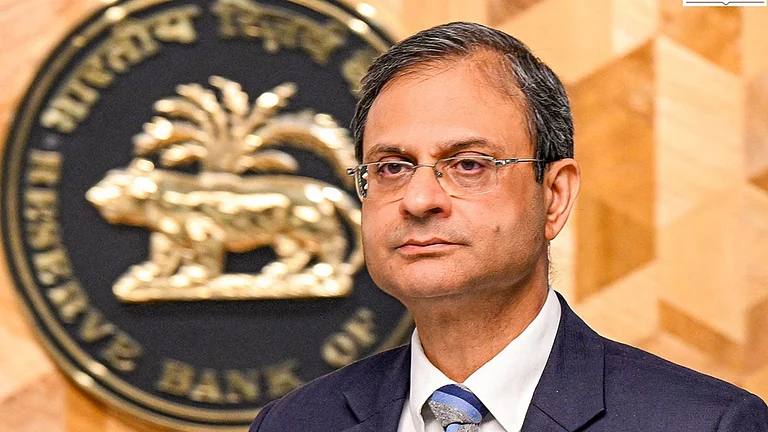
“In an era marked by rapid technological advancements, evolving geopolitical dynamics, and emerging climate-related imperatives, Utkarsh 2029 focuses on areas such as simplifying regulations, adopting a customer-centric approach, deepening financial markets, upgrading technology, and upskilling staff. It also endeavours to expand and globalise the reach of payment systems, strengthen the financial ecosystem, establish robust metrics to benchmark the services offered by RBI, and thereby position RBI as a world-class full-service central bank,” RBI Governor Sanjay Malhotra said.
The framework also seeks to focus on simplifying regulations and deepening the financial markets by boosting accessibility while prioritising digitisation and innovation across different internal processes. The RBI said that these processes will be periodically reviewed with updated directions to reflect evolving economic conditions. This will also help reduce the compliance burden for RBI-regulated entities and provide ease of doing business.
RBI also plans to assess customer service standards in scheduled commercial banks while streamlining grievance redressal mechanisms for all regulated entities. Widening ULI systems is expected to improve access to credit and lower borrowing costs while supporting financial inclusion. The RBI will also strengthen risk assessment systems and periodically review its services under the Citizen’s Charter in order to enhance accountability and public service delivery systems.
Advertisement
The RBI also aims to deepen India’s financial markets through infrastructure modernisation via automation and expand central clearing systems while improving price transparency in government securities. The framework also proposes to shorten turnaround times for auctions and increase retail participation in them.
Show comments
Published At: