Know your total debt before planning repayments and financial goals.
Clear high-interest loans first without affecting essential household expenses.
Build savings alongside debt repayment to avoid borrowing again.
Independence Day 2026: 5 Smart Strategies To Achieve Freedom From Debt
Lowering your debt takes more than just large payments; it begins with simple financial habits which can improve cash flow and cultivate long-term financial stability

Summary
Advertisement
We often tend to equate financial freedom with having a higher income. But financial freedom is not only about having enough assets to cover your living costs and choices without stress, but also having more control over money, and reducing the burden of debt.
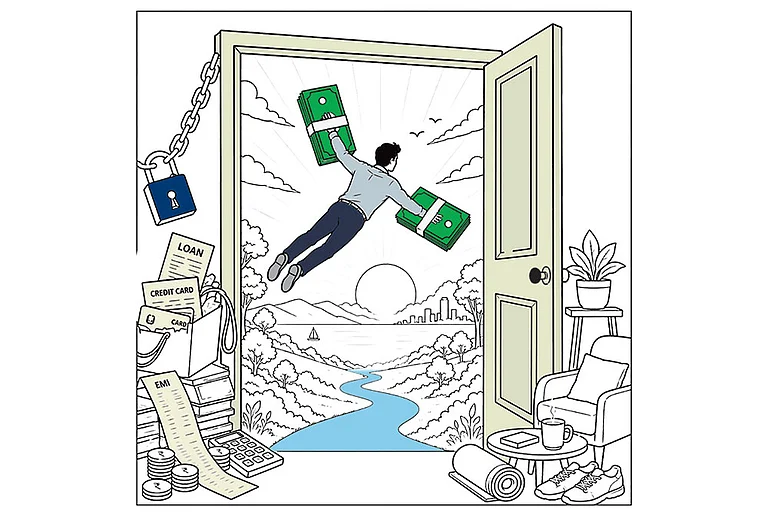
While loans can help achieve some important goals, such as buying a car or a home, or funding education, carrying too much debt can make it difficult to save, invest and prepare for the future.
With Independence Day 2026 right around the corner, here are five simple strategies which can help reduce the burden of debt.
Understand Your Debts
The very first step which you can take is to know exactly how much you owe. To start with, make a list of all your loans, along with the outstanding amount, the rate of interest on each loan (in case of multiple loans), your equated monthly instalments (EMIs), and the repayments periods. This will help you get a clear overview of your immediate financial commitments.
Advertisement
Target High-Interest Debts First
Not every loan will cost the same. Ramesh Vishwanathan, CEO of FPSB India, says, “The next step is to determine which debts are the biggest financial burdens. High-interest debts, such as credit card debt and unsecured loans are usually the ones to be tackled first as they can mount up rapidly.”
Paying off such liabilities can help reduce the overall burden and free up funds to cater to other financial goals.
An Emergency Fund Is A Must Have
Life can face a standstill when hit by an unforeseen event. Unexpected expenses can drive an individual to borrow again, even when they are already in debt. Having an emergency fund at an arm’s length can mitigate this problem.
Even while paying off debt, setting aside a small amount regularly towards an emergency fund can provide a financial cushion, by reducing dependence on credit during difficult times. Financial experts usually suggest saving for at least six months’ worth of living expenses for an emergency fund.
Advertisement
Adds Vishwanathan: “A phased approach is often effective. Individuals can begin by building a basic emergency fund while looking after the high-cost debt, then gradually increase long-term investments as their debt burden reduces.”
Repaying Loans Should Not Cost Essential Expenses
Clearing your debt should, however, not come at the cost of everyday necessities. Daily living expenses, such as rent, healthcare, education expenses, and insurance should be prioritised.
One option is to automate your loan payments and allocate a portion of your extra income, such as bonuses, for paying off remaining debt without interfering with your daily necessities.
Adds Vishwanathan, “The objective is not merely to become debt-free, but to improve long-term financial resilience.”
Spending Habits Play A Bigger Role
Achieving freedom from debt is not just about clearing your existing loans. It also calls for a change in spending habits. Spending without gauging your financial situation, falling prey to lifestyle inflation, spending before saving, are only some of the underlying causes that can hold you back from achieving financial freedom.
Advertisement
“Ultimately, financial success is not determined by how quickly one repays debt or how aggressively they invest. It’s determined by the ability to create a financial structure that can withstand uncertainty, support life goals, and remain sustainable over time,” Vishwanathan further says.
Show comments
Published At: