RBI’s currency-printing arm BRBNMPL has invited global bids for opacified polymer substrate sheets, signaling a pilot for polymer banknotes in India.
The proposed notes are likely to start with Rs 10 and Rs 20 denominations and must carry integrated security features like clear windows, metallic numerals, and pseudo threads.
Polymer notes are expected to last longer than paper notes and may help reduce the cost of replacing soiled currency, though the plan is still in the pilot stage.
RBI Plans To Introduce Polymer Currency Notes, Likely To Start With Rs 10 And Rs 20
The Reserve Bank of India (RBI) seeks a global expression of interest for manufacturing and supplying opacified polymer substrate sheets for printing Indian banknotes. The move is to pilot polymer currency notes in India as a replacement for the traditional paper currency notes

Summary
Advertisement
The Reserve Bank of India (RBI) plans to introduce polymer currency notes soon. It has initiated the process for a pilot rollout of polymer banknotes, likely to start with Rs 10 and Rs 20 denominations. The Bharatiya Reserve Bank Note Mudran Private Ltd (BRBNMPL), the RBI's currency-printing arm, has invited a global Expression of Interest (EoI) on July 17, 2026, seeking to supply polymer substrate sheets. These sheets are intended to replace paper-based currency notes, which are currently used for all Indian banknotes. Per the EoI, RBI has sought an indicative supply of 68,000 reams of opacified polymer substrate with security features for printing of Indian banknotes, with each ream containing 500 sheets.
“We seek competitive offers from manufacturers and suppliers of Opacified Polymer Substrate with security features suitable for printing banknotes. The indicative requirement in this EOI is meant for immediate requirements. Once our field trials are successful, we intend to go for procurement of a larger quantity of substrate across different denominations, and the same is likely to be shared in the upcoming RFP/Final tender or in future tenders which shall follow this EOI”, reads the EoI.
Advertisement

EoI Asks For Integrated Security Features In Polymer
To ensure the security of these polymer notes, the invitation for EoI specifically mentions that the polymer substrate must integrate the security features, including a clear window featuring a portrait, metallic numerals, a magnetic pseudo thread, shadow images, and iridescent patterns. It requires the material to be compatible with the BRBNMPL’s and the government-owned Security Printing and Minting Corporation of India Ltd’s (SPMCIL) existing printing facilities.
Durability Of Polymer Currency Notes
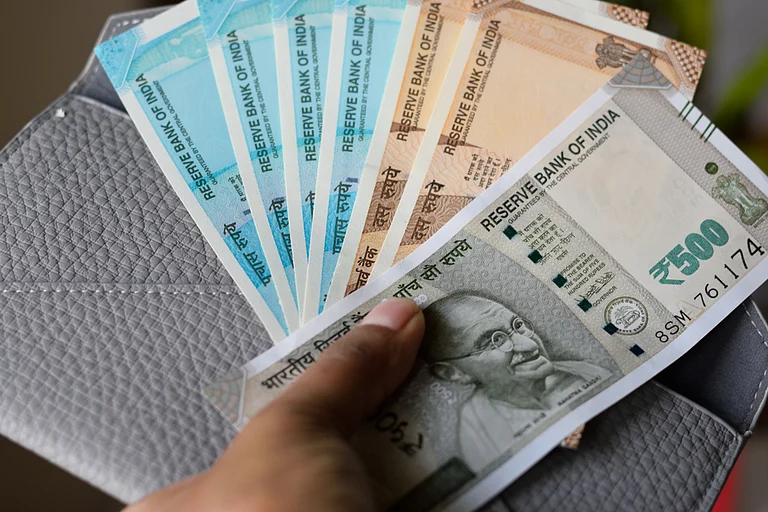
The transition from paper currency notes to polymer currency notes is primarily driven by the durability of polymer. While paper currency remains the core of the Indian financial landscape, it is prone to soiling and tearing through regular use. The notes that are soiled are then removed from the system, and new notes are printed. This is a regular exercise, and the replacement of old notes by printing new notes involves costs.
Advertisement
Compared to the conventional paper-based currency notes, polymer notes are estimated to last four to five times longer, which effectively means saving on replacement costs. Several countries, including Australia, the UK, Canada, and New Zealand, are already using polymer currency notes, as they offer higher resistance to moisture, dirt, and general wear and tear.
Cost Of Soiled Notes Replacement
In Financial Year 2024, the replacement of soiled notes by printing new notes cost the RBI around Rs 5,101 crore. In FY2025, the cost was even higher, at around Rs 6,373 crore, due to a higher number of soiled notes. A total of 23.8 billion pieces were disposed of in FY25.
First Pilot Run In 2012
While this would be the pilot to check the feasibility of the initiative, it is not the first time for such a pilot. In 2012, a pilot for Rs 10 polymer notes was run in a few cities, but it had to be stopped due to technological constraints. Now, with the modern solution, it is no longer an issue. Most importantly, the automated teller machines (ATMs) can now identify the polymer notes and dispense with accuracy.
Advertisement
Last Date For Bidding
The potential applicants must have at least three years of experience in supplying polymer substrates to other central banks. They can send their bids (expressions of interest) by August 18, 2026.
Show comments
Published At: