Smart buildings are not just about advanced technology; they are about making everyday life easier and more comfortable.
Sensors and smart systems can help cut energy waste, spot equipment problems early and bring down running costs.
A truly smart building is one that keeps its occupants comfortable while using less energy and resources.
Smart Buildings: When Does Technology Actually Add Value To Real Estate?
Smart buildings deliver real value when technology moves beyond automation to improve energy efficiency, reduce operating costs and create more comfortable, responsive workplaces.

Summary
Advertisement
What if a building could sense a problem before it became one? An empty floor that stops consuming energy, a chiller that flags a fault before it breaks down, and a workspace that responds to changing air quality before occupants start feeling uncomfortable. This is where technology can add real value to real estate: not by making buildings more complicated, but by making them more responsive.
The conversation around smart buildings often begins with the technology itself: Artificial intelligence (AI), Internet of Things (IoT), sensors, digital twins and intelligent building management systems. But the more important question is what these technologies enable a building to do differently.
Says Rajat Kapur, regional managing director, The Executive Centre: “The real benefit of technology for real estate is achieved when it goes beyond being a component to becoming an instrument for creating better business outcomes. In a smart building, instead of wondering how many technological innovations are used, we should think about how effective it makes a company's workplace.”
Advertisement
Take a hypothetical Grade-A office building. Even with a LEED Platinum certification, nearly 25 per cent of its HVAC expenditure could be wasted if floors continue to be cooled when they are unoccupied. “The building may have the infrastructure and the credentials, but if its systems do not respond to actual patterns of use, there is still a gap between being certified and being truly intelligent,” says Koheli J Puri, founder and managing director, Studio XP.
It also points to a bigger question about what we expect from our buildings. For Puri, the future is not about adding technology for its own sake. It is about creating what she calls “sustainable luxury”: greater comfort, convenience and performance without simply consuming more.
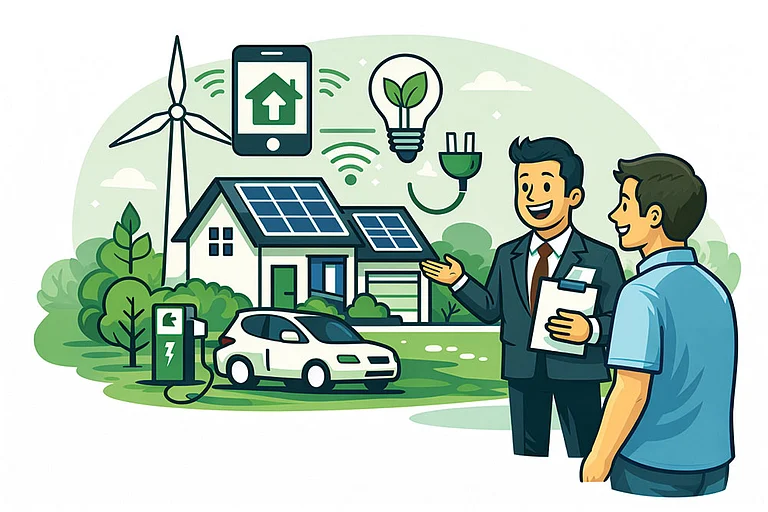
From Automated To Responsive
A building can be automated without being intelligent. A fixed HVAC schedule may automate cooling, but it does not understand whether a floor is occupied. An energy dashboard may show consumption, but it does not necessarily change it.
Advertisement
“The real opportunity lies in connecting data to action. Occupancy sensors can reduce wasted cooling and lighting. Predictive maintenance helps identify equipment problems before they disrupt operations. Facility teams can also use real-time monitoring to see where energy or water is being used and respond as needed,” says Puri.
For office occupiers, these capabilities can have a direct bearing on how effectively a workplace operates. Smart building management systems can improve energy use, support data-led office planning and make the workplace more convenient for employees. But the benefits depend on how well the technology is integrated with tenants’ needs, says Kapur.
The scale of the opportunity is significant. Buildings account for around 30 per cent of global final energy consumption. In India, cooling is also becoming an increasingly important driver of electricity demand. Smart, grid-interactive buildings can help improve efficiency, manage peak demand and integrate renewable energy more effectively.
But technology alone cannot deliver these outcomes. Data has to feed into decisions, decisions have to translate into action, and the technology has to work alongside the people and processes responsible for operating the building.
Advertisement
The Building Should Work For Its Occupants
There is another dimension to intelligence that is often overlooked: the human experience. Why should occupants have to become the sensors? Why should someone have to complain that a room is too warm before the problem is addressed? Why should a facilities team discover an equipment failure only after it affects operations?
The best technology should work quietly in the background. It should sense, learn and respond without adding another layer of complexity for the people using the building.
“This is where sustainable luxury becomes particularly relevant. For a long time, luxury has been associated with more: more cooling, more lighting, more technology and, often, more consumption. But a truly intelligent building can offer something more meaningful: better comfort with less waste, better performance with less intervention and more intelligence without more complexity,” says Puri.
As workplaces evolve, smart buildings will increasingly be judged by their ability to create sustainable, flexible and human-centric environments, rather than by the amount of technology they contain. Kapur says that is where digital infrastructure becomes a meaningful investment in real estate rather than simply an added cost.
Advertisement
Ultimately, a smart building is not one that simply knows more. It is one that knows when to act.
Show comments
Published At: