Policy enablers like TOD and land pooling are unlocking high-rise, mixed-use developments within Delhi’s urban limits.
West Delhi micro-markets such as Moti Nagar and Kirti Nagar are emerging as new luxury residential and commercial hubs.
Branded developers and RERA-led transparency have boosted buyer confidence in vertical living.
Affluent end-users and younger families now see high-rise living in Delhi as a viable alternative to NCR satellite cities.
Delhi Luxury Real Estate: Luxury Living Takes A Vertical Leap In Delhi’s Evolving Real Estate
For decades, Delhi was defined by its horizontal expanse and low silhouette - tree-lined boulevards, sprawling government colonies, plotted neighbourhoods, and iconic domes shaped a skyline that valued openness over height. However, that identity is now undergoing a significant shift. Delhi is reclaiming its position as a prime destination for luxury high-rise residential skyscrapers, a transformation set to reshape the national capital’s urban landscape in the years ahead.

Summary
Advertisement
For decades, Delhi wore its horizontality with quiet confidence. Tree-lined boulevards, sprawling government colonies, plotted neighbourhoods, and iconic domes shaped a skyline that valued openness over height. Unlike Gurugram or Noida, verticality was never part of the national capital’s urban imagination. Height belonged elsewhere; Delhi grew outward, not upward.
However, that identity which has persisted for so long has now undergone significant alterations and continues to evolve. The city skyline is now dotted with cranes and construction hoardings, signalling the creation of a new type of urban environment. Older industrial areas, old housing developments, and unused sites are being transformed into high-rise buildings and integrated development, among others. Things that used to seem out of place in terms of how buildings in Delhi were constructed are now becoming accepted as normal, and, as a result, something that can be aspired to.
This vertical surge signals more than a real estate cycle; it reflects a structural shift in how the national capital views land, density, and modern living. With limited land for development along with sustained demand from affluent end-users, Delhi is recalibrating its growth model. High-rise and mixed-use communities – long associated with the national capital regions (NCR’s) satellite cities – are now firmly taking root within the city itself.
Advertisement
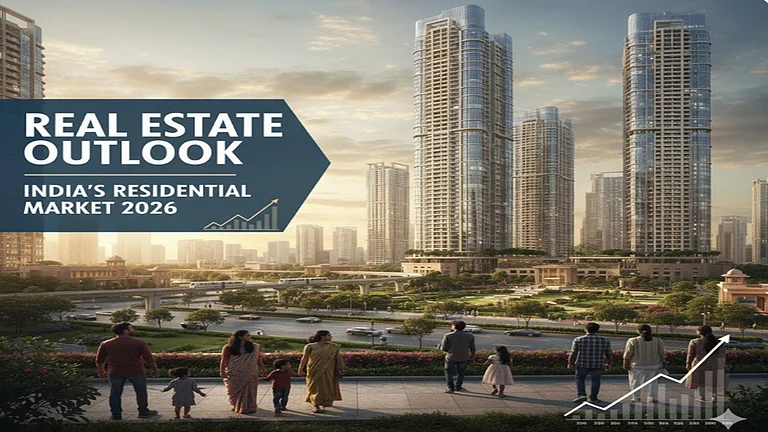
Delhi Evolving As Premium Housing Destination
In doing so, Delhi is also shedding its long-standing perception as a secondary luxury market.
Traditionally overshadowed by Gurugram and Noida in the premium housing segment, the capital is reclaiming its position as a primary destination for high-end residential development. Developers, such as DLF, TARC, Godrej and Unity are placing large bets on Delhi with projects like DLF ONE Midtown, The Amaryllis Iconic Tower, TARC Kailasa, and others, convinced that the city’s next chapter will be defined by vertical scale, integrated planning, and lifestyle-led housing.
The most visible manifestation of this transformation is evident in West Delhi, particularly in micro-markets, such as Moti Nagar and Kirti Nagar. Areas once dominated by low-density warehouse and industrial properties have gradually evolved into high-density residential hubs. This shift has given developers access to sizeable land parcels and, aided by proximity to central Delhi and with robust metro connectivity, has enabled vertical, large-scale development.
Advertisement
As a result, both commercial spaces and residential properties in these micro-markets now command values and rentals that, in many cases, rival – or even exceed – those in some of the most established and premium residential corridors across the NCR, underscoring a renewed market strength for the city of Delhi.
Says Aakash Ohri, managing director and chief business officer, DLF: “Historically, Delhi has been a predominantly low-rise, plotted housing market, shaped by builder floors, individual homes and Delhi Development Authority (DDA) developments. While this defined the city’s character, it also limited the supply of integrated, amenity-led luxury living. Over the years, this gap compelled many residents to look towards markets, such as Gurugram and Noida for high-rise communities offering security, club facilities and modern infrastructure.”
“However, there has always been a strong underlying preference to remain within Delhi, given its deep cultural, social and emotional connect. What we are now seeing is a natural evolution of the market. Select luxury and ultra-luxury high-rise developments by reputed developers are finally coming up within Delhi, addressing a long-standing demand–supply mismatch. This is not a trend, but a structural shift, allowing residents to access global standards of vertical living, while continuing to live in the city they truly belong to.”
Advertisement
Policy Changes On Land Development
The change can largely be attributed to policy – by bringing together land under a coordinated land use plan, and implementing transit oriented development (TOD). The Delhi government has also unleashed new opportunities for development in and around mass transit locations. The results of these programs are evident through the DDA’s ongoing TOD project in Karkardooma with tower heights approaching 155 metres.
Says Anshuman Magazine, chairman and CEO – India, South-East Asia, Middle East & Africa, CBRE: “Delhi’s shift from predominantly low-rise housing to high-rise residential development is being driven by a combination of factors, including land scarcity and a maturing buyer base that now prioritises asset quality and holistic lifestyle over mere square footage. As land remains a finite resource in the capital, verticality is no longer just an architectural choice, but an economic and lifestyle necessity. Moreover, in 2025, we saw high-end and luxury segments dominate sales, a clear signal that the market has transitioned from volume-led to value-driven growth. Additionally, better security, greater acceptance of gated communities, and demand for better amenities, are influencing buyer preferences towards high-rise living. Going forward, this transition is expected to play a larger role in shaping the future residential supply in Delhi.”
Advertisement
The Real Estate Regulatory Authority (Rera) has also improved confidence among buyers due to the implementation of the regulations in the Delhi, which has allowed for increased accountability and transparency from providers. This has positively contributed to higher comfort levels towards large-scale, high-rise developments. Younger working professionals and smaller families, who had long been waiting for such an opportunity, are now viewing vertical living within the city as a practical and attractive alternative to moving to satellite cities.
Many urban planners refer to cities like London, Paris and Beijing when looking at the development of their own cities. As those capitals have created zones for new buildings to develop while protecting their historical centres, so does the city of Delhi – protecting its historical buildings while providing opportunities for more vertical growth in areas where the city can accommodate it.
Delhi is now undergoing an acceleration of the verticalisation process that has occurred very slowly in the past. The verticalisation of Delhi from a predominantly low-rise city to a highly vertical city is not being done gradually; it is drastically altering how people live, how buildings are constructed, and how Delhi is perceived within the context of the rapidly-changing urban hierarchy of India.
Advertisement
Show comments
Published At: