







Summary of this article
Government confirms 8th CPC formed; no rollout date.
ToR approved; report expected mid-2027.
DA merger rumours dismissed completely.
When the 8th Central Pay Commission will actually be effective is something that many people have been questioning ever since the proposal received a nod of approval in January 2025. Recently, in the ongoing winter session of the Parliament, members raised questions regarding the implementation and formulation of the 8th Central Pay Commission.
To which, in a written reply, the Minister of State for Finance, Pankaj Choudhary, confirmed that the commission has been formally constituted and the Terms of Reference (ToR) were approved on November 03, 2025. He also emphasised that there is no fixed date for when it will be rolled out or made effective.

This clarification ends all speculation of an early rollout that many people have been asking for since the approval of the proposal.
A three-member panel chaired by former Supreme Court judge Ranjhana Prakash Desai has been tasked with the duty of reviewing pay, allowances, pension structures and service conditions for employees of the central government and the pensioners. The commission's recommendations are going to affect more than one crore individuals, and hence, it makes it more financially and administratively straining for the CPC.
Terms Of Reference For The 8th Pay Commission
The Terms of Reference for the 8th Pay Commission are aimed at reviewing the following,
Review and suggest changes that can be made to the pre-existing pay structures of current government employees.
Reviewing and revision of gratuity and pension schemes for both NPS and non-NPS employees.
Health schemes of the Central Government Health Scheme (CGHS) for employees and pensioners.
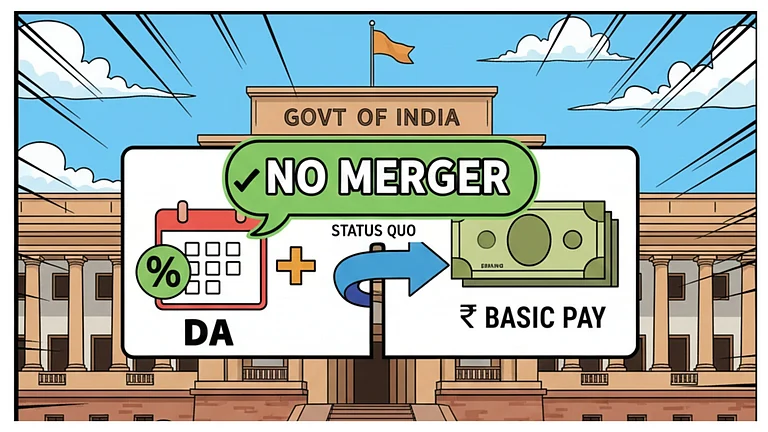
There were rumours that with the implementation of the new pay commission, the existing Dearness Allowance (DA) would be reset to zero. This was also further clarified that there is no such proposal or consideration to merge both with the basic pay. The DA will continue to be adjusted every two years based on inflation, separately.
When Can This Be Expected To Roll Out
The commission has been given around 18 months to formulate the report completely, which means the earliest finalisation of the 8th Pay Commission will come out around mid-2027. This signals that immediate pay revisions will not be possible in early 2026.
The DA is currently revised every two years based on inflation. As per the clarification, it will continue to be revised separately until any new structure is approved and implemented. This clarification is crucial because merging DA with basic pay would have significantly increased the financial output for the government.
As of now, the focus remains on the commission's internal processes, like data collections and cost-impact calculations, which will be shaping the next phase of reform in government compensation.
What is clear as of now is that the government is not rushing this decision. Any further decision will depend on the commission's recommendations, financial space and other economic considerations.





