RBI likely to maintain repo rate amid inflation and currency concerns.
Experts expect liquidity measures instead of immediate monetary tightening.
Crude oil prices remain key factor for future rate decisions.
RBI Likely To Hold Repo Rate In June MPC Amid Inflation, Rupee Concerns, Say Experts
After keeping the repo rates steady in the last two MPC meetings this year and maintaining a neutral stance, RBI is expected to stay on hold in June as well, say experts

Summary
Advertisement
The Reserve Bank of India’s (RBI’s) June Monetary Policy Committee (MPC) meeting comes at a time when policymakers are balancing emerging inflation risks against the need to support growth. After keeping rates steady at 5.25 per cent since December 5, 2025, and subsequently continuing with the neutral stance, the central bank is now widely expected to maintain the status quo at its June 3-5 meeting.
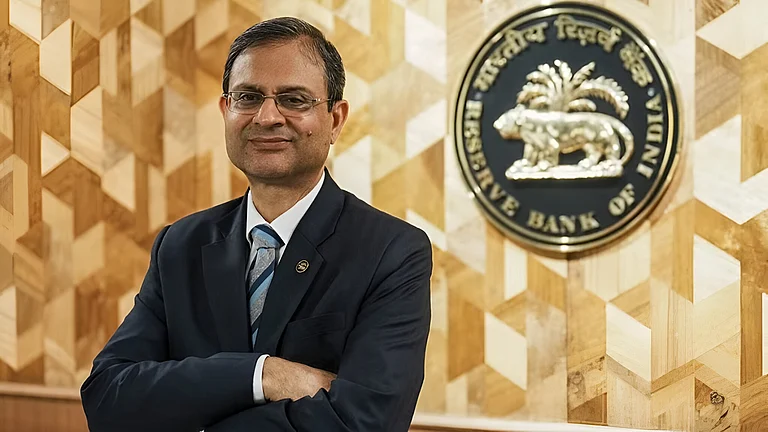
Rising crude oil prices, a weakening rupee, and heightened global uncertainty have fuelled speculation about the policy path ahead, but economists largely expect the RBI to hold rates steady at its MPC while monitoring incoming inflation and the economic growth data.
RBI Unlikely To Rush Into A Rate Hike
DSP Mutual Fund’s Fixed Income Desk said in a note that the MPC will “most probably not” lower rates in the upcoming policy review.
Advertisement
“Our base case scenario is a no rate hike in the upcoming June policy. The RBI rarely jumps straight to a rate hike. Instead, they follow a step-by-step sequence before pulling the trigger on rates to defend the currency,” the note said.
It said the RBI has already implemented several regulatory and macro prudential measures to ease pressure on the rupee, while continuing to provide liquidity support through variable repo rate (VRR) operations and buy-sell swaps. It added that recent VRR operations have remained undersubscribed, suggesting there is no severe liquidity stress in the banking system.
Experts Expect Rates To Remain Unchanged
Vinay Pai, managing director and head of fixed income at Equirus Capital, said that market participants have factored in the possibility of a rate hike, but recent RBI actions point towards a different approach.
“Market expectations currently price in a potential 25-50 basis point (bps) rate hike, though recent RBI actions suggest a preference for liquidity management and currency stabilisation over immediate tightening,” he said.
Advertisement
He added: “For the upcoming June policy, the RBI is expected to maintain rates, while possibly adopting a more hawkish forward guidance stance, though the official policy stance is likely to remain unchanged in the near term.”
A rate hike would depend on how inflation and external risks evolve in the coming months.
“If crude prices remain above $100 per barrel for an extended period, inflationary pressures could force the RBI to consider a cumulative 50 bps hike by August, although this is not the base case at present,” Pai said.
Vivek Iyer, partner and financial services risk leader at Grant Thornton Bharat, also expects the central bank to leave rates unaffected.
“Globally the world is faced with stagflation, and India has a unique position where there is domestic growth that is driving the Indian economy with exchange depreciation raising the possibility of imported inflation on account of imports,” he said.
Advertisement
He added: “The government fiscal responses will ensure that inflationary impact is contained and hence monetary policy will need no interference. Hence, we don’t expect a rate cut and we expect the stance to continue to be neutral.”
Saurabh Bansal, a Securities and Exchange Board of India-registered investment advisor (Sebi RIA) and the founder of Finatwork Investment Advisor, said: “The June MPC meeting comes at a particularly challenging time for the RBI. On one hand, domestic inflation remains relatively contained and growth continues to be resilient. On the other, rising crude oil prices, geopolitical uncertainty in West Asia, and pressure on the rupee have increased the risk of imported inflation.”
He added: “The most likely outcome is a status quo on rates, but the market will be equally focused on the RBI’s commentary around inflation, liquidity, and currency stability. More than the rate decision itself, any revision to growth and inflation projections could shape market expectations for the rest of the year.”
Advertisement
Shubham Gupta, CFA, co-founder of Growthvine Capital, stated that he expects "the RBI to maintain the repo rate at its current level in the June MPC meeting, while adopting a more cautious and hawkish tone."
Gupta continues, "Although inflation risks have risen due to elevated crude oil prices, imported inflation pressures, a weaker rupee, and concerns around an El Niño-led impact on food prices, the central bank is unlikely to rush into a rate hike before obtaining greater clarity on inflation trends and monsoon outcomes."
Cautions Against Currency-Driven Rate Action
Former RBI Governor D. Subbarao has also mentioned in an interview with news agency PTI that interest rate decisions should remain focused on inflation and growth considerations rather than being used primarily to defend the rupee.
His comments have added to expectations that RBI is unlikely to react to short-term currency movements with a rate hike, and that the central bank should let the rupee depreciate more.
Advertisement
SBI Research Also Sees Status Quo
SBI Research has similarly projected that RBI is likely to maintain status quo in the June MPC meeting. The report mentioned that the central bank has several tools at its disposal to manage currency volatility and liquidity conditions without resorting to an immediate increase in policy rates.
The report also noted that inflation remains within RBI’s tolerance band despite emerging risks from higher crude oil prices. It also projected that policymakers are likely to wait for more clarity on the inflation outlook and global developments before considering any change in rates.
Show comments
Published At: