RBI mandates LEI for all financial market participants
Entities without LEI barred from RBI-regulated transactions
UTI requirement introduced for OTC derivatives from 2027
RBI Makes LEI A Must For Market Players To Improve Transparency
RBI has made LEI compulsory for all market participants and brought in the UTI norms for more transparency and reporting in financial market transactions. The move is to improve transparency and better oversight across financial markets

Summary
Advertisement
The Reserve Bank of India (RBI) has directed all market participants, both resident and non-resident, to obtain a valid Legal Entity Identifier (LEI), making it compulsory for participation in financial markets regulated by the central bank.
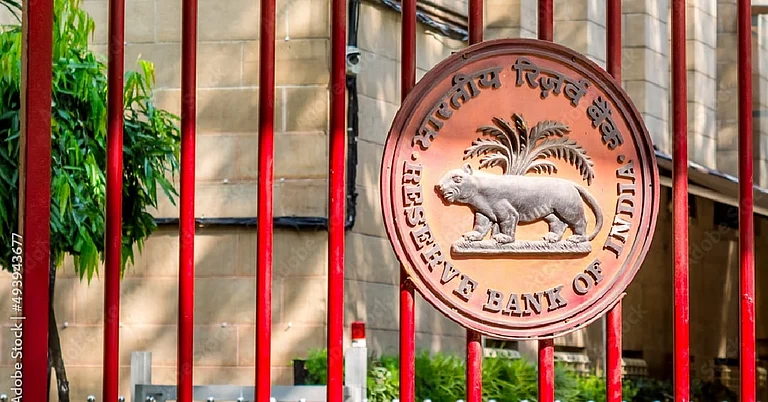
In a master direction issued on March 27, 2026, RBI said that entities which do not hold an LEI will not be allowed to carry out transactions in the markets which are regulated by RBI. The move is to improve transparency and better oversight across financial markets.
LEI Mandatory For Market Segments
An LEI is a 20-character unique identification code associated with entities involved with financial transactions. It helps to improve the accuracy of financial data as it allows for better identification of the counterparties.
According to RBI, the LEI requirement will be applicable to over-the-counter (OTC) transactions in government securities, money market instruments, foreign exchange instruments, and derivatives. The mandate covers all entities other than individuals.
Advertisement
For non-derivative foreign exchange transactions, the requirement will only apply where the value of the transaction is the equivalent of or is equal to $1 million.
RBI has further said that entities will have to ensure that their LEI is valid and updated under the global LEI system. Entities with lapsed or invalid codes could be restricted from accessing financial markets.
Requirement To Take LEI From Accredited Units
RBI has also asked the participants to obtain LEIs from any local operating unit (LOU), accredited by the Global Legal Entity Identifier Foundation (GLEIF). In India, such LOUs are to be recognised by RBI.
Entities responsible for the execution, reporting or maintenance of records of transactions have been asked to capture LEI details in their systems. This is to enhance consistency in reporting and to have better monitoring of financial risks.
The master direction brings together previous instructions issued on LEI implementation into one framework.
Advertisement
UTI For Derivatives Market
RBI has also launched the Unique Transaction Identifier (UTI) for OTC transactions in derivatives. This provision will be implemented from January 1, 2027. UTI is a special code that is assigned to each derivative transaction to allow for detailed reporting and tracking. It will apply to transactions that are conducted under existing regulations relating to derivatives.
RBI has said that the UTI will be generated in accordance with global technical standards, which will remain linked with a transaction throughout its lifecycle. The responsibility for the generation of the identifier will depend on the nature of the transaction and the entities involved.
A Market More Transparent
According to RBI, global identifiers, such as LEI and UTI play a key role in improving transparency in financial markets. These measures are expected to reinforce reporting systems and give regulators a better picture of what is happening in the market.
Market participants have been advised to implement the systems in order to comply with the new requirements.
Advertisement
Show comments
Published At: