RBI keeps repo rate unchanged at 5.25 per cent.
MPC sees food and fuel inflation risks, but limited broad pressures.
Policymakers await clearer inflation trends before considering rate changes.
RBI MPC Minutes: Inflation Risks Remain, But Rate Hike Not Yet Needed
The RBI’s rate-setting panel opted to wait for clearer evidence that higher food and fuel prices were spreading across the wider economy, and accordingly decided to maintain a status quo on the repo rate, according to minutes of the RBI MPC’s meeting held in August

Summary
Advertisement
The Reserve Bank of India’s (RBI’s) Monetary Policy Committee (MPC) had kept the repo rate unchanged at 5.25 per cent in its August meeting, with members noting that inflation risks remained but there was limited evidence of broad-based price pressures. The six-member panel, headed by RBI Governor Sanjay Malhotra, unanimously voted to maintain the status quo on interest rates after its August 3-5, 2026 meeting.
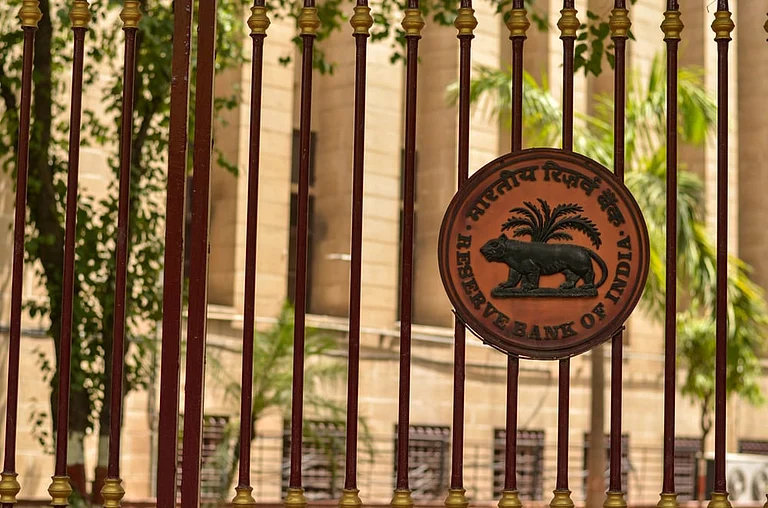
The minutes, released on August 19, showed that members preferred to wait for greater clarity on the inflation outlook before considering any change in the policy rate. The MPC noted that the Indian economy remained resilient despite global uncertainties, with domestic demand, investment, and exports supporting growth. At the same time, geopolitical tensions, volatile oil prices, monsoon conditions and the risk of El Niño remained key uncertainties.
RBI Governor Seeks More Clarity On Inflation
Malhotra said that the economy performed better than expected in the first quarter of 2026-27 despite disruptions to supply chains caused by the West Asia conflict, higher uncertainty, and an erratic monsoon.
Advertisement
He added that a monetary policy response to a supply-side shock becomes necessary when it starts spreading into general inflation, pushes up inflation expectations or results in persistent price pressures.
According to the minutes, Malhotra preferred to wait for more clarity on the persistence of inflation, its forecast path, and the level at which it could eventually settle before considering a change in the policy rate.
However, he cautioned that higher food, fuel and other input costs could still spread across the economy. If evidence emerges that these risks are materialising, policy tightening could become necessary, he said.
MPC Members Back Wait-And-Watch Approach
Deputy Governor and MPC member Poonam Gupta also favoured waiting for more information. She noted that uncertainty around global developments and weather conditions needed to settle before the central bank could assess how deeply supply-side inflation was becoming entrenched.
RBI Executive Director and MPC member Indranil Bhattacharyya noted that the rise in food and fuel inflation had so far seen limited pass-through into broader prices. This suggested that inflation had not yet become widespread.
Advertisement
External member Nagesh Kumar cautioned against complacency despite some improvement in the growth and inflation outlook. He pointed to continuing risks from El Niño, the West Asia conflict, the Strait of Hormuz situation and trade policy uncertainty. External member Saugata Bhattacharya also called for close monitoring of growth and inflation before deciding when to recalibrate the policy rate.
Another committee member Ram Singh noted that economic growth of around 7 per cent had not shown significant signs of demand-driven overheating. He added that incoming data would be important for monetary policy decisions.
The next MPC meeting is scheduled for October 5-7, 2026. The RBI is mandated to keep the consumer price index (CPI) inflation at 4 per cent, with a tolerance band of 2 per cent on either side.
Show comments
Published At: