Turn idle physical gold into digital demat assets
SEBI regulated EGRs offer transparent real time market pricing
Eliminate bank locker fees by converting jewellery to EGRs
Can You Turn Idle Gold Jewellery Into Demat Gold? Everything You Need to Know About EGRs
Sebi has introduced electronic gold receipts (EGRs) as a means to mobilise gold into a standardised asset with a regulated, exchange-traded framework

Summary
Advertisement
Gold is an emotion, investment, and tradition all rolled into one. It is also a silent part of every portfolio that households often don’t factor into their own demat accounts.
Given the steep rise in gold prices, investors often fail to see the big picture and the actual value of the gold jewellery they end up stashing in their lockers. According to data from the World Gold Council (WGC), India’s privately-held gold hoard is estimated to be over 25,000 tonnes, largely lying idle in bank vaults and home lockers.
In order to mobilise this gold into a standardised asset with a regulated, exchange-traded framework, the Securities and Exchange Board of India (Sebi) introduced electronic gold receipts (EGRs). The regulator seeks to create a transparent, “one nation, one price” gold benchmark.
While EGRs were formally launched by the BSE in 2022, the EGR trading segment went live on the NSE on May 4, 2026. With trading happening on both exchanges, investors are increasingly interested in understanding how EGRs work and how they can convert their gold jewellery into demat-gold.
Advertisement
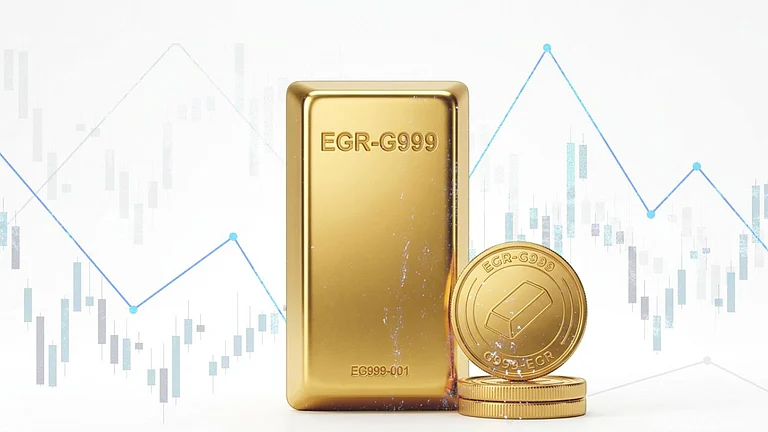
How to Convert Your Physical Gold Jewellery into EGRs
According to Sebi’s master framework released in 2022, the process of converting gold jewellery into EGRs involves accredited refineries, registered vault managers, and Sebi-registered depositories.
Melting and Refining
The market regulator has mandated that all jewellery has to undergo a necessary physical checking process. According to Sebi’s Gold Exchange Framework, only gold that strictly complies with LBMA Good Delivery Standards or India Good Delivery Standards will be accepted for conversion into EGRs.
This simply means that the gold has to either have 99.50 per cent or 99.90 per cent 24-karat purity. Typically, jewellery in India tends to be made out of gold with additions of copper or silver to make it durable. Thus, it cannot be directly dematerialised. Thus gold owners looking to convert their gold jewellery will have to first go to a stock exchange-accredited or Bureau of Indian Standards (BIS) certified refinery. The refinery will melt down the jewellery, remove stones or alloys, and recast it into standardised 24-karat bullion bars. Once the melting is complete, the refiner will hand over the bars and an official legally-recognised certificate of purity to the individual.
Advertisement
Depositing the Bar at the Vault
Once the investor has converted their gold jewellery into 24-karat bars they can initiate the digitisation process by taking their gold bar and its purity certificate to a Sebi-registered Vault manager. The vault official will physically weigh the metal, verify the refinery credentials, and safely lock it away. Once the physical check is complete, the vault manager will upload the deposit data into a common regulatory interface.
Getting EGRs in the Demat Account
Once the data of your gold holding is uploaded, the vault manager will send a secure electronic instruction to the national depositories, NSDL or CDSL. The depository will process this data and credit the EGR units into the individual’s demat account.
What Happens Once Gold Is Converted into an EGR
Once the gold has been digitised in the form of an EGR, investors can trade them on dedicated Gold Exchange segments of either the BSE or the NSE. Investors also have the option to sell their EGR units instantly through their broker app at the transparent, real-time national market price.
Advertisement
Once sold, the money is credited into the investor’s account on a T+1 basis following standard Sebi rolling settlement rules. Sebi’s framework also allows investors to either hold the EGR in their demat account or trade it back for the yellow metal. However, in order to do so, you need to submit a formal physical withdrawal request through your depository participant.
How Converting Physical Gold to EGRs Helps Investors
Investors can consider converting gold jewellery into EGRs to avail some of the benefits of the asset’s dematerialised nature. By dematerialising gold jewellery, investors can eliminate locker costs entirely. Storing physical gold in a bank locker incurs annual rental costs while you remain exposed to bank liability limits in case of theft.
EGRs also offer greater liquidity compared to selling gold jewellery. Normally, selling jewellery includes dealing with jewellers and negotiating prices. On the other hand, EGRs offer the convenience of executing a sell order with a click on your app during market hours. Manasvi Garg, Sebi RIA and founder of Moneyvesta Wealth mentioned that converting physical gold into EGRs can make holding the gold easier.
Advertisement
“An investor holding 100 grams of investment-grade gold can convert it into one 100-gram EGR unit and manage it in demat form instead of physically storing the bar. This makes the holding easier to track, easier to transfer, and more structured than physical gold, while still keeping direct gold backing,” Garg said.
Things to Keep in Mind Before Converting Your Gold into EGRs
While the digitisation process is efficient, retail investors must consider certain behavioural and structural issues associated with gold jewellery before converting their household gold. Traditionally, gold in households is seen as an emotional heirloom. Converting jewellery into an EGR involves melting it down. While individuals have the option to eventually redeem physical gold against their EGRs the craftsmanship and emotional value of the heirloom is permanently lost. Garg highlighted various issues associated with EGRs compared to physical gold.
“The gold must first satisfy strict quality and custody requirements before an EGR can be issued. NSE’s product specifications show that EGRs are available only in 995 purity and 999 purity, with trading denominations ranging from 100 mg, 1 g, 10 g, to 100 g depending on the contract. Even after that, the process involves assaying, vault storage, and depository coordination, and settlement happens on T+1. In practical terms, this makes the process more operationally involved than holding physical gold directly,” Garg said.
Advertisement
When you convert your physical gold into EGRs, you will not get 100 grams worth of EGR units for 100 grams of jewellery. This will be because the raw weight of jewellery often includes the weight of alloyed metals. The investor will also have to be mindful of upfront out-of-pocket expenses for the refinery’s services, assaying tests, and subsequent delivery logistics to the vault.
Garg added that currently the trends show strong investor preference for Gold ETFs when it comes to owning paper gold. However, he added that EGRs can still act as a complementary alternative to Gold ETFs.
“EGRs can be particularly relevant for those who already own physical gold and wish to hold it in a regulated, exchange-traded format. However, given their recent introduction and the additional operational processes involved in conversion, EGRs are best viewed as a complementary alternative rather than a replacement for Gold ETFs,” Garg said.
Advertisement
Ultimately, the choice to convert your physical gold into EGRs depends on whether you view it as an asset or as adornment. However, for households holding “idle gold”—pieces that haven’t left a dark bank locker in a decade, the current steep rise in bullion prices makes a compelling argument for monetisation.
Show comments
Published At: