EPF, PPF, and NPS are long-term tools to build a retirement corpus and stay financially independent.
Experts warn against choosing these products only for tax benefits.
One should start by estimating future expenses and required corpus, then pick the right mix.
Independence Day 2026: How EPF, PPF, And NPS Can Secure Your Financial Freedom
EPF, PPF, and NPS are long-term investment instruments that help you save money for old age. They aim to keep you financially independent when your salary stops. However, have you ever thought about whether you really require all of these

Summary
Advertisement
True financial freedom comes not by earning more money but by saving it for your future and for any exigency. This Independence Day, plan your financial freedom through disciplined long-term savings. Think of long-term investments for retirement. While the Employees’ Provident Fund (EPF), Public Provident Fund (PPF), and National Pension System (NPS) are designed for this objective to build a robust retirement corpus and protect individuals from uncertainty, these investments also ensure that one remains independent even after the regular income stops.
These three instruments cater to concerns about old-age financial security; many people invest in them without thinking about their actual benefits and their own need analysis. They invest in them because their employer, parents, or a friend has suggested them to do so.
For most of us, the previous generation started the PPF, which we are continuing, and because the employer deducts the EPF as per the government’s rule, we contribute part of our salary towards it for retirement benefits. But now there is another product, NPS, in line to be accepted, which does not guarantee a return but claims to have the potential to beat inflation. Should you invest in this, too?
Advertisement
If you have invested in all of them or none of them at present, the time is now to understand how they secure your financial freedom.

What Do EPF, PPF, And NPS Offer?
EPF and PPF are secure, government-backed instruments that offer a fixed interest and tax benefits. On the other hand, NPS has a different structure. It invests in a mix of asset classes, including equities, and offers subscribers the freedom to select from different investment choices, withdrawal choices, and tax benefits on deposits and withdrawals.
Unlike EPF and PPF, NPS doesn’t offer a fixed return, but it offers chances of a higher return over the long term, whereas EPF and PPF offer guaranteed interest, but they may not be able to beat rising inflation.
All three instruments offer tax benefits under the Income-tax Act, subject to the chosen tax regime.
Advertisement
Should You Focus On Tax Benefits Instead Of The Retirement Needs?
True financial freedom is investing money in a way that it can grow and make you financially secure. Confusing it with tax saving can be detrimental. While it is good to invest money in instruments that also offer tax benefits, tax planning shouldn’t take over retirement planning.
Ajay Kumar Yadav, CFPCM, Group CEO & CIO, Wise Finserv, calls it a mistake, saying, “EPF, PPF and NPS all have their place, but one should not invest in a retirement product only because it offers a tax benefit. PPF, for example, provides tax-free accumulation and withdrawal, but it is useful only if it also fits into the person's overall retirement plan.”
“Suppose a family is spending Rs 1 lakh every month today. After 15 or 20 years, inflation may make the same lifestyle much more expensive. Retirement planning should therefore begin by estimating future monthly expenses, calculating the corpus required and then working backwards to determine how much needs to be invested today. So, tax savings should be the benefit of a good retirement plan, not the starting point of the plan,” he adds.
Advertisement

EPF, PPF, NPS: Is Financial Freedom For Those Starting In 40s & 50s?
Time has value. In money matters, compounding is a basic rule that can multiply the investment over a period of time, whether it is an investment in a fixed-interest instrument or in the equity market.
Those who start close to their retirement may not benefit much from compounding in the usual sense. But if they can invest a higher sum or remain invested beyond their retirement age, they can still benefit.
Gibin John, Senior Investment Strategist, Geojit Investments Limited, suggests, “Investors should first estimate the retirement corpus they need to accumulate during their working years based on their future expenses, lifestyle expectations, and financial goals. They can then work out an asset allocation depending on their risk tolerance and investment horizon. If an investor has a higher risk appetite and a longer investment horizon, they may consider equity-oriented investment options, which have the potential to generate higher long-term returns and greater wealth over time.
Advertisement
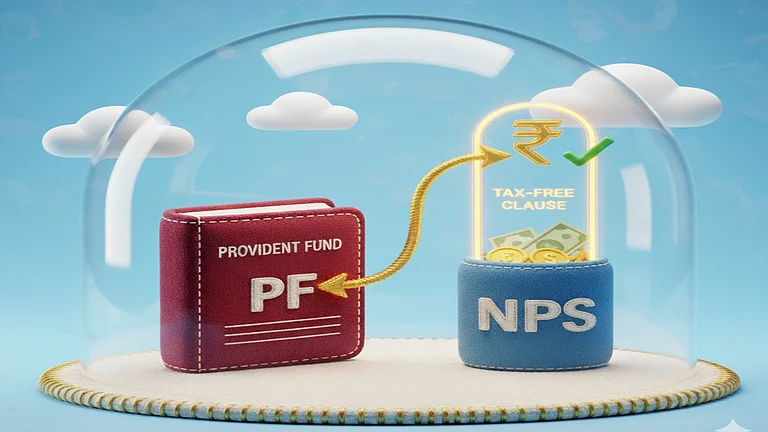
Should Investors Invest In All Three: EPF, PPF, And NPS?
According to Yadav, “There is no reason why everybody must invest in all three (EPF, PPF, and NPS). If someone already has a very large EPF balance and most of the retirement portfolio is in fixed-income assets, adding more and more money to PPF may not necessarily be the best decision. That person may need more equity exposure for long-term growth. Similarly, an investor who already has substantial equity exposure outside NPS does not necessarily need to choose the most aggressive NPS option.”
To summarise, financial freedom is the result of consistent and deliberate efforts to save and invest through suitable instruments. While retirement planning instruments help ensure financial security in old age, one also needs to be mindful of spending during their working years to stay on track towards overall financial freedom.
Advertisement
Show comments
Published At:
Tags