The Supreme Court directs 7 states to raise judicial officials retirement age from 60 to 62 years.
Officials retiring at 60 can continue based on performance.
Non-consenting states get two weeks to reconsider decision.
Retirement Age Of Judicial Officials To Increase To 62 Years: Supreme Court Asks Seven States To Amend Service Rules
The Supreme Court has asked seven states that have approved raising the retirement age of judicial officials to make amendments in their service rules within two weeks and allow judges retiring at 60 to continue their service up to 62 years of age. It has also asked other states and UTs that have opposed or not yet decided on the matter to reconsider their decision in this regard

Summary
Advertisement
The Supreme Court has directed the high courts of seven states to amend the service rules and raise the retirement age of judicial officials from 60 years to 62 years. These are the states which have agreed to raise the superannuation age for judicial officials and have informed the apex court of their consent.
The Bench comprising the Chief Justice of India Surya Kant, Justice Joymalya Bagchi, and Justice V Mohana said, “The states which have consented to the enhancement of age of the Judicial Officers, namely, Chhattisgarh, Karnataka, Madhya Pradesh, Maharashtra, Sikkim, Tamil Nadu, West Bengal, are directed to amend the service rules and enhance the age of superannuation in the judicial service to 62 years, subject to the suitability assessment of the concerned Judicial Officer, on their attainment of the age of 60 years, by the High Court. Such amendments shall be carried out as early as possible, preferably within two months."
Advertisement
The Supreme Court said that no judicial officer in these states will retire before the age of 62, subject to the condition that the respective high court finds the judge suitable and their performance satisfactory.
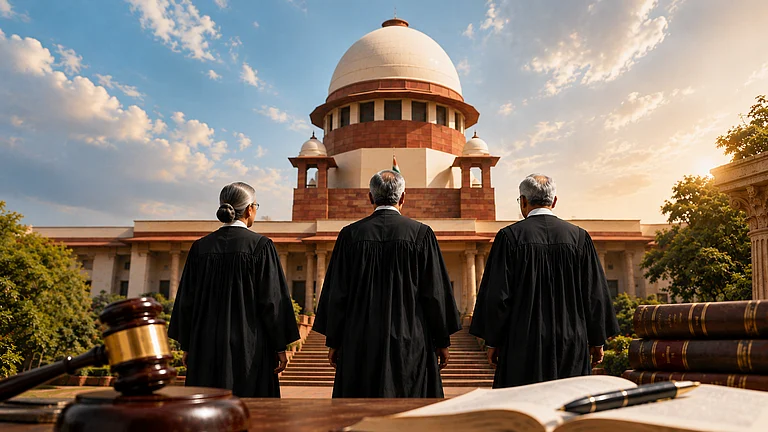
Pendency Of Cases
The pendency of court cases is well-known. According to the National Judicial Data Grid (NJDG) portal, more than 50 million cases are pending in different courts across all levels of the judiciary, including district courts, high courts, and the Supreme Court. The scale of the problem is evident from the numbers: 4.82 million cases (4,822,851 at the time of writing) have been pending for more than 10 years. The long-term pendency includes 3.93 million (3,939,792) criminal cases. But these cases, pending for more than 10 years, form only 9 per cent of the total pendency.
To reduce pendency, the Supreme Court has directed the states to reply within two weeks. It had earlier said that states cannot cite financial burden as a reason to oppose raising the retirement age of the judicial officers and asked the states and Union Territories (UTs) to reconsider their decision regarding the superannuation age of judicial officers.
Advertisement

Retirement Age In Courts
It’s important to note that the retirement age for Supreme Court judges is 65, whereas that for high court judges is 62 years. In district courts, it is even lower at 60. The apex court was hearing a petition for a uniform hike in district judges’ retirement age to 62 years across the country. In 2002, the Justice K Jagannatha Shetty Commission also proposed increasing the superannuation age of district judges to 62 years, but the apex court had declined it then, according to a PTI report.
Compliance Report Within Two Weeks
The court also directed the other states and UTs, including Andhra Pradesh, Uttar Pradesh, Uttarakhand, Bihar, Jharkhand, Arunachal Pradesh, Himachal Pradesh, the National Capital Territory (NCT) of Delhi, Puducherry, Goa, Keralam, Odisha, Telangana, Manipur, Mizoram, Nagaland, Meghalaya, Odisha, Rajasthan, Punjab, and Jammu and Kashmir to reconsider their decision on judicial officers’ retirement age hike, decide, and submit a compliance a report within two weeks.
Advertisement
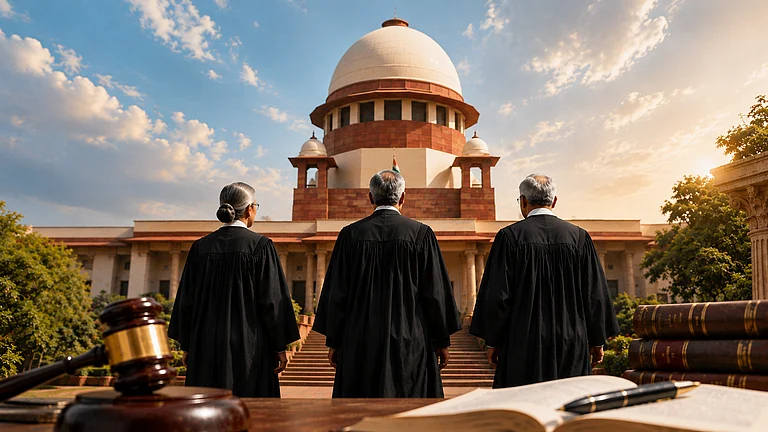
The court, reportedly, acknowledged that “gap between sanctioned and the working strength in the judicial service” and that it can be reduced by retaining the experienced judicial officials, so that accessing justice doesn’t remain a dream due to vacant posts of judges, but could become a reality.
The Bench said, “It is with this spirit that we request the High Courts and States to reconsider the issue with regard to enhancement of age of superannuation in the district judiciary, whose conditions of service are to be governed by rules framed on their recommendation.”
It further observed that some courts have added some riders for assessing the judicial work as a condition so that only competent officers of proven integrity can continue in service, and appreciated such suggestions.
Show comments
Published At: