MP Priyanka Chaturvedi slams Budget 2026 for zero senior tax relief.
Seniors face up to 18 per cent GST on medical care services, devices, and products.
Railways made an additional profit of Rs 8,913 crore by denying senior concessions in five years to 2025.
Senior Citizens' Budget Woes: MP Priyanka Chaturvedi Raises Questions That Matter
The Budget 2026 fell short on senior citizens’ expectations. There was no direct relief announced for seniors. Rajya Sabha MP from Maharashtra, Priyanka Chaturvedi, raised questions about the lack of consideration of seniors’ demands in the Budget

Summary
Advertisement
The elderly population is projected to reach 347 million by 2050, and while senior-focused policies are becoming part of the discussion, the Budget 2026 overlooked the elderly completely. Priyanka Chaturvedi, Member of Parliament in Rajya Sabha, raised this question aptly when she asked about the reliefs expected by senior citizens from the budget, and none were addressed, leaving them disappointed.
While the consumer price index shows an inflation rate within the acceptable range, the medical inflation that affects seniors the most is much higher, at between 10 and 15 per cent. Changing social structure, rising nuclear families, social isolation, and increasing cyberfrauds are some of the points Chaturvedi raised that have not been addressed in the Budget.
She highlighted that out of the projected 30 crore seniors by the middle of the century in India, many are living in rural areas whose interests and welfare have not been considered in the Budget. She said that the rising number of the elderly would not only be an economic challenge and a social challenge, but also a healthcare challenge in the coming years.
Advertisement
Railways Concessions For Seniors
During COVID-19, the Railways withdrew the concessions that had been offered to seniors for decades. She said that it was promised that these would be restored when the situation improves, but it hasn’t been done yet.
Notably, railways are a prominent mode of transport in India, especially for long distances, because there are many people who can’t afford to regularly travel by air or by road. According to Niti Ayog’s position paper titled Senior Care reforms in India, reimagining the Senior Care Paradigm in February 2024, 70 per cent of the elderly population is dependent on others for everyday maintenance, and 78 per cent are living without pension security. The elderly with no income source, whose children live in other cities or probably in other countries, find their favourite transport mode gradually becoming difficult to afford.
Advertisement
Notably, the Indian Railways has earned an additional revenue of Rs 8,913 crore in five years between 2020 and 2025 by withdrawing the senior citizens’ concessions. Every year, some parliamentarians raise the question, but the concession is not being restored.
GST On Healthcare Services And Products
Chaturvedi also pointed out 18 per cent goods and service tax (GST) on residential care, home care services, or support services. Further, the assistive care devices and products, such as wheelchairs and other assistive devices, elder diapers, etc., are also kept under the GST ambit in the range of 5-18 per cent tax. It could have been reduced to extend relief to the elderly or their family members.
Himanshu Rath, founder, Agewell Foundation, a not-for-profit organisation, says, “The government should have provided targeted relief in the Union Budget 2026, such as a full exemption (0 per cent GST) on essential assistive devices, senior-specific care products, and related services, similar to exemptions on other critical items. Such a measure would have directly alleviated the burden of medical inflation, promoted active ageing, and aligned with the spirit of inclusive development.”
Advertisement
Tax Reliefs
Separately, the focus to shift taxpayers to the new tax regime has left senior citizens with no specific benefits useful for them, not even the basic exemption limit. The old regime is not being updated to match the needs of today. In the old regime, the deductions under Section 80D (Rs 50,000 for seniors towards health insurance premiums and preventive health check-ups) and Section 80DDB (Rs 1,00,000 towards medical expenses incurred on specified diseases) have not been revised.
The high medical cost leaves many elderly people out of getting timely care or even any care at all. The rising healthcare costs, abundance of adulterated food items, contaminated water supply, and even polluted air cause health issues, but a cure is not available at an affordable price.
Ayushman Bharat Yojana
Moreover, the inclusion of seniors under the Ayushman Bharat Yojana (AB-PMJAY), irrespective of economic status, is available only when they become 70 years old. The scheme provides up to Rs 5 lakh health insurance benefits to eligible beneficiaries. But why is it at age 70+? People retire at the age of 60. Employer group insurance ends at retirement. Buying personal health insurance at this age typically costs less than Rs 30,000 for a person.
Advertisement
Rath says, “For middle-class seniors, high premiums, often rising sharply with age and pre-existing conditions, combined with inflation, make comprehensive coverage challenging. Many end up underinsured or relying on out-of-pocket payments.”
Digital Frauds And Digital Arrests
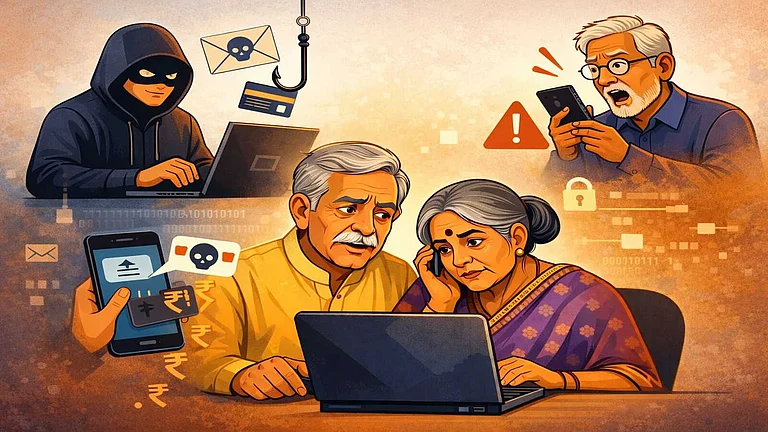
Besides, considering the inflation, the old age pension that ranges between Rs 200 to Rs 500, is not at all adequate for anyone, stressed Chaturvedi, who also pointed out that there are talks about digital technology, digital adoption, and where all the platform are digital, senior citizens are at risks of digital arrest and frauds, but there is no provision in the budget allocation for educating and empowering senior citizens.
Rath says, “The budget fell short of many expectations. There was no major new tax relief, no broad GST exemptions for seniors, and no restoration of railway concessions. Amid high medical inflation and demographic shifts, more targeted, substantial provisions were needed for financial security and dignity.”
Advertisement
As of now, seniors have little option but to hope for relief in the future.
Show comments
Published At: