





Summary of this article
CSE plans to restart trading with new technology and infrastructure
It must withdraw its Sebi exit application before reviving operations
Success depends on regulatory approval and a viable business model
The Calcutta Stock Exchange (CSE), one of India’s oldest bourses, is preparing to abandon its planned closure and pursue a revival with a new trading platform, upgraded market infrastructure, and a disaster recovery facility, marking a dramatic shift for an institution whose trading operations have remained suspended for over a decade.
The proposed turnaround would require the 118-year-old exchange to withdraw the voluntary exit application it had submitted to the Securities Exchange Board of India (Sebi) in February 2025 after its board approved winding up exchange operations.
After receiving the application, Sebi had appointed an independent valuer to assess CSE’s assets and had formed a working group to work out the process for the exchange’s exit under the rules for regional stock exchanges. To restart the process, the CSE board will have to pass a fresh resolution reversing its earlier decision and formally notify Sebi that it wishes to withdraw the application. The exchange would also need to satisfy regulatory requirements before any return to active trading.
The revival effort has gained momentum after receiving support from the West Bengal government. State Finance Minister Swapan Dasgupta, in his Budget speech on June 22, 2026, had described the exchange’s revival as a way to improve access to capital for businesses in eastern India, lower listing and trading costs, and generate employment. He said restoring the exchange could help strengthen Kolkata’s position as a financial centre for the eastern region.
According to a report in the Economic Times, CSE has sufficient financial resources to support a restart, although a substantial portion of its funds is currently held in escrow. The exchange is understood to have a net worth exceeding Rs 300 crore. Its FY25 income stood at Rs 26 crore, largely comprising annual listing fees and interest income. Earlier this year, it also completed the sale of a parcel of land in Kolkata’s Eastern Metropolitan area for about Rs 253 crore, adding to its financial resources.

Among CSE’s shareholders are BSE, which owns about 5.05 per cent, and the West Bengal Infrastructure Development Finance Corporation with around 3.40 per cent.
The proposed revival, however, extends beyond restoring trading. According to market participants, a competitive technology platform will be critical if the exchange is to attract brokers and issuers after years of inactivity, the report said.
JM Chaudhury, a former CSE president who served three terms between 1994 and 2000, has said that any revival would require the exchange to operate its own trading system. He cited C-STAR, CSE’s proprietary screen-based trading platform launched on February 26, 1997, as an example of the type of infrastructure needed. The platform replaced the open-outcry trading system that brokers had used at the exchange for decades, the report added.
Chaudhury also said a functioning CSE could reduce trading costs for brokers in eastern India, many of whom shifted their business to NSE and BSE after trading at CSE was suspended in April 2013 after it failed to meet Sebi’s regulatory requirements.
Industry participants have, however, cautioned that regulatory approval alone will not determine the exchange’s future. Several brokers believe that CSE may have better prospects by focusing on specialised segments rather than competing directly with the country’s two dominant stock exchanges. They have also suggested that the exchange could position itself as a listing venue for small businesses and emerging enterprises from eastern India, where companies often seek lower-cost access to capital markets.
CSE’s possible return comes against the backdrop of Sebi’s framework introduced in 2012 for regional stock exchanges. The rules allowed exchanges with annual trading turnover below Rs 1,000 crore to voluntarily surrender recognition. Exchanges that neither met the prescribed turnover threshold nor opted for voluntary exit within the stipulated period faced compulsory de-recognition.


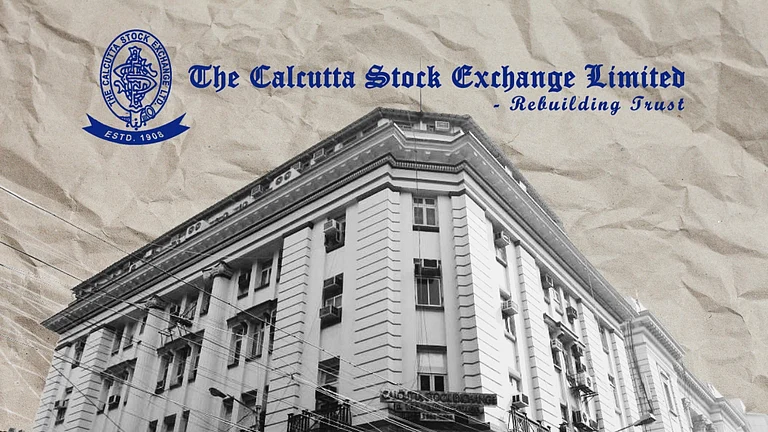
Founded in 1908, CSE was once among India’s leading equity markets and played a central role in the region’s financial ecosystem. Whether it regains relevance now will depend on securing regulatory clearance, building modern trading infrastructure, and demonstrating a commercially sustainable business model in a market dominated by larger national exchanges.





