




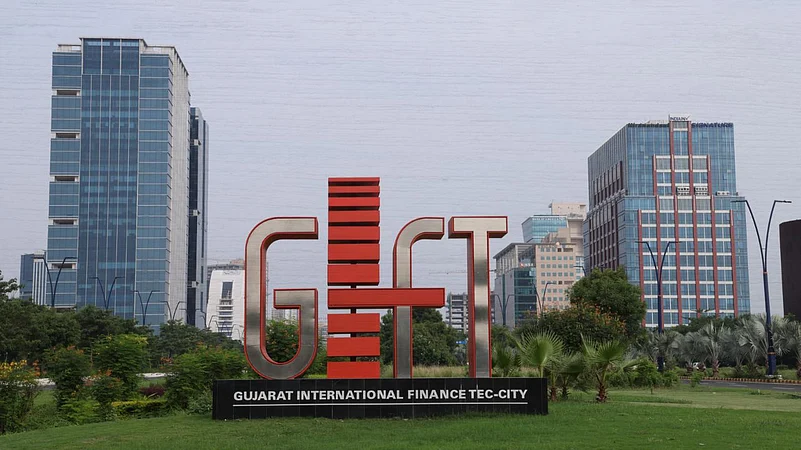

Retail participation in GIFT City-based fund schemes gathered significant momentum in the January-March quarter of FY26, with the number of investors in retail schemes nearly tripling in just three months, according to the latest bulletin released by the International Financial Services Centres Authority (IFSCA), the regulator overseeing financial activities in GIFT City.
The investor base in retail schemes rose 177.50 per cent quarter-on-quarter to 3,438 as of March 2026 from 1,239 in December 2025, accounting for more than three-fourths of all new investors added during Q4 FY26. The growth looks even more impressive over a longer period. In September 2025, these schemes had just 255 investors, implying a jump of nearly 1,250 per cent in the six months leading up to March 2026.
This means, more than three-fourths of new investors entering GIFT City funds in Q4 FY26 came from the retail segment.
The increase in retail participation also lifted the overall investor count across GIFT City's fund ecosystem. According to IFSCA, the total number of investors across fund schemes increased to 9,594 in March 2026 from 6,721 in December 2025.
"This was driven mainly by marked rise of investor participation in retail schemes with 3,438 investors, up significantly from 1,239 in Dec 2025," the regulator said in its bulletin.
Until now, GIFT City's fund ecosystem has largely been dominated by institutional investors and alternative investment funds (AIFs). But the latest numbers suggest that more retail investors are beginning to participate.
What Are GIFT City Retail Schemes?
GIFT City, India's only international financial services centre located in Gujarat, allows fund houses to launch investment products under a separate regulatory framework overseen by IFSCA. These schemes are distinct from domestic mutual funds regulated by the Securities and Exchange Board of India (Sebi).
Unlike conventional mutual funds sold in India, many GIFT City products are structured as international funds and are often targeted at non-resident Indians (NRIs), overseas citizens of India (OCIs), global investors and sophisticated domestic investors seeking offshore exposure.
The ecosystem has expanded rapidly in recent years. During the March quarter, the number of Fund Management Entities (FMEs) operating in the IFSC increased to 217 from 202 in the preceding quarter, while the number of registered schemes rose to 360 from 327.
IFSCA noted that the growth in both entities and schemes reflects the continued deepening of the fund management ecosystem within GIFT City.
What Is Driving Retail Participation?
Industry participants attribute the surge to a combination of new fund launches and growing awareness among investors, particularly NRIs looking for globally structured investment opportunities.
Ankur Choudhary, co-founder and chief executive officer of Belong, a GIFT City-based investment platform, said the momentum was driven by both fresh product launches and increasing participation in existing schemes.
Products such as the Sundaram India Mid Cap - GIFT Fund and the Edelweiss Greater China Fund helped bring in fresh investors, while established schemes like the Tata India Dynamic Equity Fund and the DSP Global Equity Fund continued to see strong participation, Choudhary noted.
Amish Kapadia, CFA, founder of NRI Money Matters, believes much of the March-quarter surge came from non-resident Indians. "Most of the Q4 acceleration looks NRI-driven to me. Three things converged in that quarter. First, ongoing discussions around cross-border taxation and remittance structures pushed money-routing questions to the forefront for many NRIs who previously hadn't paid much attention to them. Second, with the rupee trading near historic lows, the case for holding dollar-denominated assets became far more tangible," he said.



Kapadia added that easier access to GIFT City funds over the past year also played an important role, as onboarding and distribution channels improved significantly. According to him, the products were already available, but rising concerns around currency diversification and overseas investing brought more investors to GIFT City, which effectively catered to both needs at the same time.
While the number of retail investors in GIFT City funds is still small compared with India's broader mutual fund industry, the growth has been significant. Whether this growth continues will depend on how the market evolves. More product launches, better investor awareness and clear advantages over traditional mutual funds and other overseas investment options could help attract more investors in the coming years.





