




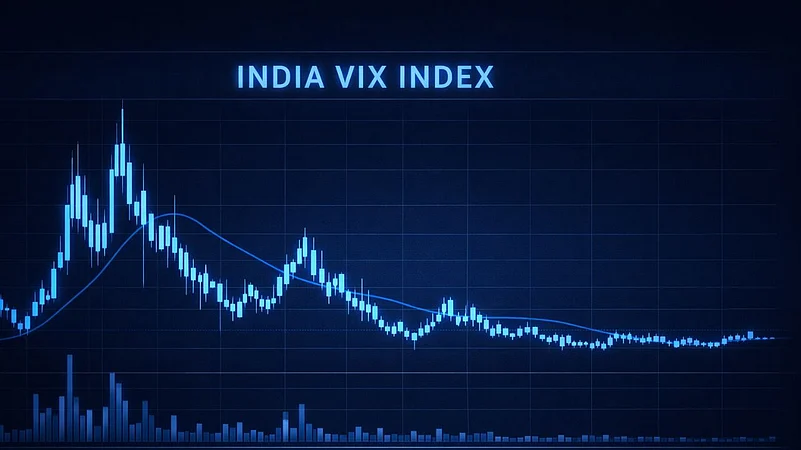

The India VIX index, often referred to as the market’s “fear gauge”, eased 15.52 per cent to 17.86 on March 5. The decline came after the volatility index, which measures the market’s expectation of near-term volatility based on options of the Nifty 50, had surged more than 62 per cent in the previous two sessions amid growing geopolitical uncertainty triggered by the Iran war.
The sharp spike had come after the United States and Israel carried out a series of attacks on Iran, prompting retaliatory strikes from Tehran, raising fears that the conflict could widen in the region. The sudden escalation in war made investors nervous across global markets, prompting a rush towards safer assets and weakening overall risk appetite.
Now, the easing of the fear gauge came as domestic equity benchmarks bounced back after suffering three days of deep cuts, buoyed by hopes that tensions in the ongoing Iran conflict may not escalate further. Further, reassurances from Donald Trump on steps to keep global oil supplies stable and ensure the smooth movement of energy shipments also helped in calming investor concerns over a surge in crude prices.
So, Is The Panic Over
When the volatility index jumps, it generally signals rising uncertainty in the market. A fall in the index, however, indicates that investor fears are beginning to subside.
According to Hitesh Tailor, technical research analyst at Choice Broking, the recent drop in India VIX suggests that the initial panic seen earlier in the week is starting to cool, although volatility remains relatively high. He noted that the gauge is still hovering above the 18–20 zone, which indicates that the market has not yet fully stabilised. For a more durable recovery, Tailor said the VIX would need to move closer to the 14–15 range while the Nifty 50 regains key short-term moving averages.
From a derivatives standpoint, Tailor said the earlier surge in volatility largely reflected aggressive hedging activity and panic-driven selling in the market. The recent pullback in the VIX suggests that some of that fear is now being unwound, which could trigger intermittent bouts of short-covering. However, he cautioned that such rallies may remain “relief moves rather than the beginning of a sustained uptrend” unless broader market stability returns.

Santosh Meena, head of research at Swastika Investmart, also said the decline in volatility offers some comfort but does not necessarily mean that the market has moved past the phase of uncertainty. According to him, the VIX is still hovering around 18, which remains significantly higher than the sub-12 levels seen earlier this year when markets were relatively calm.Meena said the latest drop in volatility appears more like a temporary “sigh of relief” as investors hope for de-escalation in geopolitical tensions. However, several risks remain in place, including elevated crude oil prices, tensions around the Strait of Hormuz, and continued foreign institutional investor outflows. In his view, the market may now be moving from a phase of “blind panic” to one of “anxious watchfulness”.
He added that the recent decline in the VIX largely reflects a typical mean reversion after a sharp spike, but for a more durable reversal, the index would need to hold below the 15–16 zone. Meena also cautioned that crude oil prices remain a key constraint for the market. As long as Brent crude trades above $80 a barrel, pressure on corporate margins could limit valuation expansion in several sectors.
What Should Investors Do
As the markets tread through an uncertain path, participants are increasingly worried about whether to make more investments in the current environment or wait for the storm to pass.
Tailor’s advice for investors is to avoid aggressive lump-sum buying in the current environment and instead adopt a staggered approach of buying on meaningful dips. He said selective exposure to fundamentally strong sectors such as private banks and consumer discretionary could offer opportunities as valuations become more reasonable, while defensive segments like pharma or gold may help cushion volatility.
For traders, he recommended keeping tighter stop-losses and moderating position sizes. Until there is greater clarity on geopolitical developments and volatility cools further, Tailor said the prudent strategy is to “buy on dips with discipline, but avoid chasing the market during relief rallies.”





