

Summary of this article
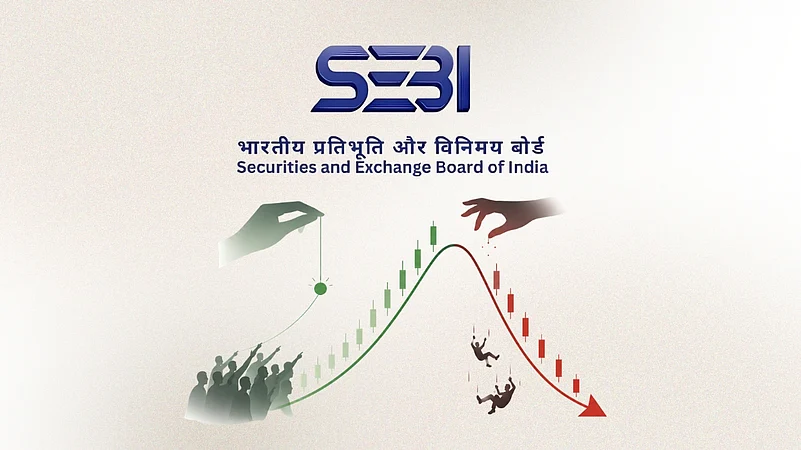
The scheme began by targeting thinly traded small-cap stocks
Artificial trading allegedly created the illusion of strong demand
Bulk stock tips encouraged retail investors to buy
The alleged operators exited after prices surged
The order highlights warning signs every retail investor should know
For many retail investors, a stock tip received through an SMS or a social media message may look like just another investment recommendation. But Sebi's 394-page final order in the Mauria Udyog case shows that, in some instances, such messages are actually the last step of a carefully planned market manipulation scheme.
The order, which covers Mauria Udyog, 7NR Retail, Darjeeling Ropeway Company, GBL Industries and Vishal Fabrics, details how a large network of entities allegedly worked together to artificially inflate share prices before attracting retail investors through promotional messages. Once fresh investors started buying, the operators allegedly exited by selling their own shares at higher prices.
The order names 226 entities and traces how the alleged scheme unfolded across five small-cap stocks. It explains how shares were accumulated, prices and trading volumes were artificially pushed higher, misleading buy recommendations were circulated, and the operators allegedly exited after retail investors entered the market. More than an enforcement action, the order offers a rare look at how a pump-and-dump scheme works and the red flags investors should watch out for.
Why These Five Stocks Were Targetted
According to Sebi, the scheme began with five relatively illiquid stocks that did not have any major business developments or corporate announcements to justify a sharp rally. Low trading volumes made these stocks easier to influence, allowing the operators to move prices with relatively fewer trades.
Mauria Udyog, for instance, posted a net loss of Rs 12.65 crore and a 35 per cent quarter-on-quarter fall in revenue in September 2019, precisely when its share price and volumes began to surge. That mismatch between weak fundamentals and rising prices is, as Sebi's order shows, the first and most telling sign that a stock's movement is not being driven by the market.
The Network Behind The Scam
According to Sebi, this was not a one-man operation. It involved a large network of people and entities, each assigned a specific role to help carry out different stages of the alleged pump-and-dump scheme.
At the centre of the network was Hanif Shekh, whom Sebi identified as the “mastermind” and one of the main beneficiaries of the scheme.
Around him were several other groups. One set of entities allegedly created artificial buying interest by pushing up share prices and trading volumes before retail investors entered the market. Sebi referred to them as "PV Influencers". Another group, called "Collaborators", allegedly helped keep the trading activity going while the stocks were being promoted to the public.
There were also "Offloaders", the entities that allegedly sold shares after retail investors started buying. In the case of Mauria Udyog, Sebi said this group included 62 employees of the company. The regulator also identified financiers and conduit entities that allegedly arranged funds for the share purchases and later helped route the sale proceeds back to Hanif Shekh and the company promoters.
According to the regulator, every group had a defined role, and together they helped execute different stages of the alleged manipulation.
First Step: Building Fake Momentum Before Anyone Was Watching
The first phase of the scheme began long before investors started receiving stock tips. A group of connected entities allegedly traded the shares among themselves to make the stocks appear more active and generate artificial buying interest.
In the case of Mauria Udyog, Sebi identified 11 entities that repeatedly traded with one another between January 2017 and September 2019. Together, they accounted for nearly 40 per cent of the stock's buy volume and more than 35 per cent of its sell volume. Of this, 17.38 per cent came from trades executed only among the connected entities.
For example, on June 3, 2019, one entity placed 25 buy orders of 10 shares each at prices around Rs 50 below the last traded price. Within a second of a connected entity placing matching sell orders, the buyer modified its orders upwards, allowing the trades to go through.
Sebi said such instances were not isolated. In more than 75 per cent of these trades, the buy and sell orders were placed less than a minute apart. In nearly two-thirds of the cases, the gap was under 10 seconds. According to the regulator, this level of synchronisation was unlikely to be a coincidence.
The regulator found similar patterns across the other four stocks as well. In some cases, entities repeatedly traded a single share thousands of times. In others, buy and sell orders were matched within seconds. Taken together, Sebi said these trades created the impression of genuine market activity, even though the demand was allegedly being generated within the network itself.
Second Step: The Stock Tips Reach Retail Investors
Once the artificial price and volume base was in place, Sebi's order says Hanif Shekh took over directly, circulating "buy recommendations" through bulk SMSes and websites such as www.midcapgains.in and www.mbstocks.in.
To make the messages appear genuine, the SMS headers resembled the names of well-known brokers such as Zerodha and ICICI Securities. Headers like "BT-ZROHDA" and "BT-ICISEC" were used to give recipients the impression that the recommendations had come from trusted market intermediaries.
In Mauria Udyog's case, more than 60,000 unique mobile numbers received these messages; in GBL Industries, roughly 21 million bulk SMSes were sent over a single month. Sebi traced the SMS-sending numbers and websites back to Hanif Shekh by cross-referencing telecom records, hotel and travel bookings, and SMS-reseller communications, corroborated by call detail records and WhatsApp chat screenshots.
The impact was immediate and measurable. On one day alone, Mauria Udyog's traded volume jumped from 31,219 shares to 1,37,648 shares after an SMS blast, with the price rising about 1.5 per cent that same day. Across the full SMS period, the scrip's volume rose 1,638 per cent and its price 61 per cent compared to the period before. In 7NR Retail, the share price rose roughly 11.5 times in under a year. GBL Industries recorded an 867 per cent jump in trading volume after the bulk SMS campaign.
Third Step: Keeping The Rally Alive
Once retail investors started buying the shares, the next challenge was to keep the momentum going. According to Sebi, this was done by another group of entities that it referred to as "Collaborators".
The regulator said these entities regularly traded the stocks among themselves through intraday transactions to create the impression that the shares continued to attract strong investor interest. Sebi noted that they kept trading even though the companies' financial performance did not justify the rising share prices. In many cases, the entities even booked losses while carrying out these trades.
Nearly half of their buy trades and 73 per cent of their sell trades involved fewer than 20 shares. Sebi also found that only 0.37 per cent of the total trading volume led to an actual change in ownership of the shares.
The regulator noted that the purpose was to make the stocks appear liquid and actively traded, so that more retail investors would join the rally.

Final Step: Selling The Shares To Retail Investors
With prices inflated and unsuspecting investors drawn in by rising charts and SMS "tips", the Offloaders began selling.
In Mauria Udyog, this group included 62 company employees. The regulator found that they had received pre-listing shares through off-market transfers, with no evidence that they had paid for them. It also noted that most of them showed little or no trading or banking activity outside the period when the promotional SMS campaign was running.
Sebi also cited an internal email dated May 13, 2020, between two Mauria Udyog employees. According to the regulator, the email contained details of shares sold, payout dates and the bank accounts where the sale proceeds were credited. Sebi treated this as key evidence supporting the alleged offloading of shares.
In Darjeeling Ropeway, Sebi alleged that the company's promoter sold 2,17,335 shares through 118 matched trades with connected entities before exiting the stock.
How Sebi Traced The Alleged Profits
One of the most detailed parts of Sebi's investigation was tracing where the money from the share sales eventually went. According to the order, the proceeds were routed through several conduit entities and "forex companies" to make the money trail difficult to trace. The funds were ultimately transferred to entities controlled by Hanif Shekh or to the promoters of the companies.
Sebi linked these entities using a range of evidence, including common addresses, shared email IDs and mobile numbers mentioned in tax returns and account-opening documents, identical IP addresses used to access bank and email accounts, frequent fund transfers between the entities, common directors, and, in several cases, the same recovery email ID being used for accounts belonging to seemingly unrelated individuals and companies.
The order also shows how important the promotional campaign was to the alleged scheme. In the case of Darjeeling Ropeway, BSE's surveillance system detected the bulk SMS activity and intervened within four days. According to Sebi, the early action disrupted the scheme, the share price fell, and the offloaders had to exit with much smaller profits than they had expected.
The Aftermath For Retail Investors
Once the SMS campaigns stopped and the stock exchanges stepped up surveillance, the sharp rally in all five stocks began to fade. The artificial gains built during the alleged scheme were eventually wiped out.
Retail investors who had bought the shares after seeing the "buy recommendations" and rising prices were left holding stocks of companies whose underlying businesses had not improved. As Sebi's order points out, the companies' fundamentals remained largely the same as they were before the share prices started rising.
Sebi's Final Findings And Penalties
Sebi held that the noticees violated Sections 12A(a), 12A(b) and 12A(c) of the Sebi Act, along with several provisions of the Prohibition of Fraudulent and Unfair Trade Practices (PFUTP) Regulations.
The “mastermind” Hanif Shekh has been barred from the securities market for seven years and fined Rs 10 crore, the highest penalty in the order.
Entities controlled by him have been barred from the market for six years and fined Rs 2 crore each. Mauria Udyog, its promoters and Malay Bhow, whom Sebi identified as the link between the operators and the "Collaborators", have been barred for five years and fined Rs 1 crore each.
The regulator imposed a four-year market ban and a penalty of Rs 50 lakh each on the conduit entities. The remaining noticees have been barred from the securities market for four years and fined Rs 5 lakh each.
Sebi also directed the entities to disgorge their unlawful gains along with simple interest at 12 per cent. The amount will be deposited into the Investor Protection and Education Fund. However, the regulator did not issue any directions against three noticees after finding that their roles in the alleged scheme could not be established.
Red Flags Retail Investors Should Watch For
A stock rallying with no news behind it. Sebi found the companies had no meaningful corporate announcements or business improvement when prices and volumes spiked.
Unsolicited SMS or social media "tips" urging you to buy a specific stock, especially those citing an impending listing, price target or insider information.
Message headers designed to look like they are from a known broker or exchange. Always verify the actual sender, not just the display name.
A sudden, sharp jump in trading volume in an otherwise illiquid, thinly traded scrip.
Round-number or oddly small trade sizes repeated rapidly, a pattern retail investors can't see directly, but which regulators use as a manipulation marker.
Promotional websites with no verifiable research credentials or regulatory registration.
A stock's price rises steeply just before or during a period of heavy promotional messaging, followed by a sharp fall once the messaging stops.
Company insiders or promoters are selling heavily precisely when retail buying interest is being whipped up.