





Summary of this article
DA hike likely before 8th CPC rollout.
Inflation raises expectations of higher DA.
Employee unions seek broader pay reforms.
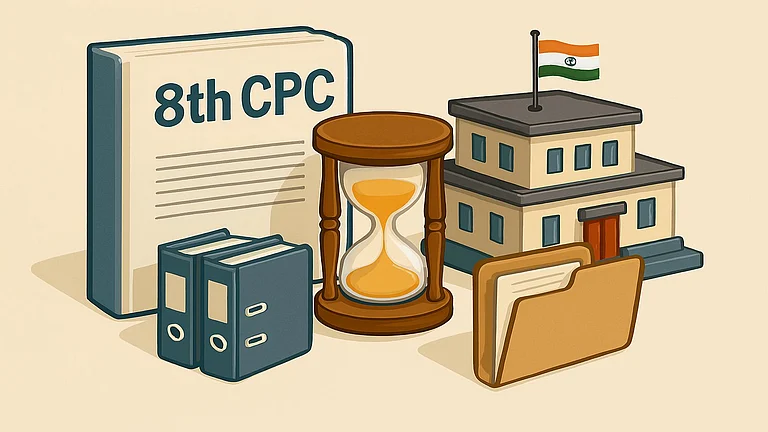
While the central government employees and pensioners patiently await their progress on the 8th Central Pay Commission (8th CPC), the attention right now is on the Dearness Allowance (DA). The 8th CPC body is undergoing processes of consultations and feedback from employee bodies to ensure they receive complete and thorough feedback on the demands of employees and pensioners. The upcoming DA revision could offer temporary relief amid rising inflation.

DA Hike Likely Before Pay Commission Rollout
As per a report by LiveMint, the next revision in Dearness Allowance is expected to come from July, which is still subject to approval. DA is revised twice a year to help employees and pensioners offset the impact of inflation on their purchasing power. Unlike any large-scale changes that are expected under the 8th pay commission, the DA hike offers immediate financial support without waiting for the commission’s recommendations.
Inflation Fuels Expectations
Recent inflation indicators have boosted the expectations of the recipients of another DA increase. The calculation of DA is linked to the All India Price Index for Industrial Workers (AICPI-IW), which indicated an upward trend recently. Based on the available data, it is estimated that the current DA of 60 per cent could rise to almost 63 per cent, indicating a 3 per cent increase. However, this remains just an expectation until the commission gives final approval.
Why DA Matters
DA plays an important role in protecting the real income of government employees and pensioners. As the prices of daily goods continue to rise, DA helps to compensate for the monetary erosion that happens due to inflation.
Broader Salary Reforms
Alongside the DA hike, employee organisations have submitted their recommendations to the upcoming 8th CPC. Many stakeholders have argued that the present salary structure no longer suits the present reality of today’s cost of living and needs a detailed review.
Another major demand is the revision of the formulas used to calculate the minimum wages. Employee groups believe that the current three-family unit model is outdated and does not suit the financial realities of families with more members.
Revising the fitment factor to a bigger number is another demand, along with minimum basic pay, merger of DA with basic pay, and stronger safeguards towards pensioners.
What Were The Previous Updates?
The last updates were related to the 8CPC talks, which have intensified after the employee unions have urged their demands. The demands are along the lines of bringing the Old Pension Scheme (OPS) back, as well as a significant hike in the minimum basic pay before the panel. The demands were submitted by the National Council-Joint Consultative Machinery (NC-JCM), which is the main body that represents the central government bodies.
The employee body has also linked DA reforms with the proposal of a higher fitment factor. The proposal is 3.833. This recommendation could raise the minimum salary from Rs 18,000 to almost Rs 69,000.
The Centre had held consultations for the CPC by announcing a series of stakeholder meetings across several key cities in India. These meetings were held in Delhi, Pune, and Hyderabad, while Srinagar and Ladakh are being held in June, as per previous notices. These meetings are a crucial step in moving forward with the new pay scale, allowances and pensions for government employees and pensioners.
The process of setting up the 8th Pay Commission is still underway. The deadline for submitting memorandums has been extended to allow more stakeholders to participate in a wider audience. Until the commission begins formal work and submits its recommendations, employees are likely to stay dependent on periodic DA revisions.





