





Summary of this article
Rupee hit a record low as Iran was reported to attack oil tankers
Rupee could keep falling if war in Iran by US and Israel continues
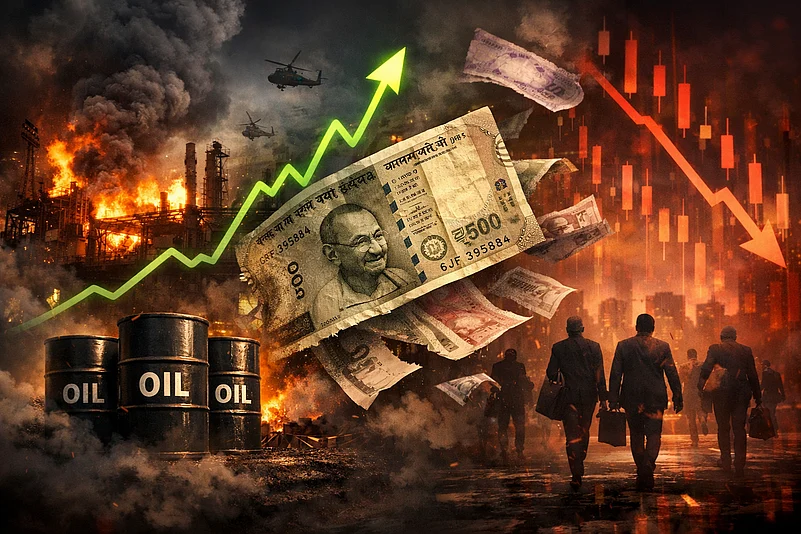
The rupee fell to a record low of 92.37 against the dollar on March 12, 2026, before rebounding and ending at 92.18, better than its previous close. The volatility in the rupee is due to the ongoing US-Iran war. Over the past one year, the rupee has slumped over 5 per cent, making it the worst faring Asian currency.
The rupee has been falling amid geopolitical tensions in West Asia and US President Donald Trump’s administration’s decision on trade tariffs. Rising crude oil prices amid fears of supply disruptions had added to the fall in the rupee. The Brent crude has jumped to $96.75 per barrel, which is also expected to shoot up India’s import bill sharply.

Crude oil prices rose on March 12 after reports that Iran attacked two fuel oil tankers, which added to the fears of supply disruption. Crude oil prices have also turned volatile as the war showed no signs of de-escalation, and the US showing mixed signals on the war.
The rupee fell sharply in the early hours of the market, as global investors exited from emerging markets, clouded by the uncertainty on when the geopolitical tensions will ease. Both equity and money markets rattled during the session, as investors exited, leading to a sharp fall in the rupee.
Experts said that if the war continues, then shipments of liquefied natural gas (LNG) could be impacted the most due to the supply disruption through the Red Sea and the Persian Gulf. LNG prices have already seen a rise due to the ongoing war, and oil marketing companies (OMCs) in India have raised cylinder prices for both households and commercial uses. There have also been reports of shortage of liquefied petroleum gas (LPG) cylinders in India.

Bajaj Broking said in a note: “The rupee depreciated 0.17 per cent against the dollar to a record low of 92.19, as fresh attacks on oil and transportation infrastructure in the Middle East pushed crude prices higher. The sharp move in crude increased pressure on the currency, with market participants anticipating possible intervention by the central bank to curb excessive volatility.”
Market experts said the rupee could continue to be under pressure if the war continues for a longer period. The fall of the rupee is so far contained by intervention of the Reserve Bank of India (RBI) in the foreign exchange market. The RBI has sold dollars in order to contain the volatility in the rupee. However, this has also led to a fall in rupee liquidity.





