





Summary of this article
Irdai requires insurers to approve cashless hospital discharge within three hours
Insurers must bear additional hospital costs caused by delayed discharge authorisation
Families should preserve time-stamped requests, hospital bills and insurer communications
Unresolved complaints can be escalated through Bima Bharosa or the Insurance Ombudsman
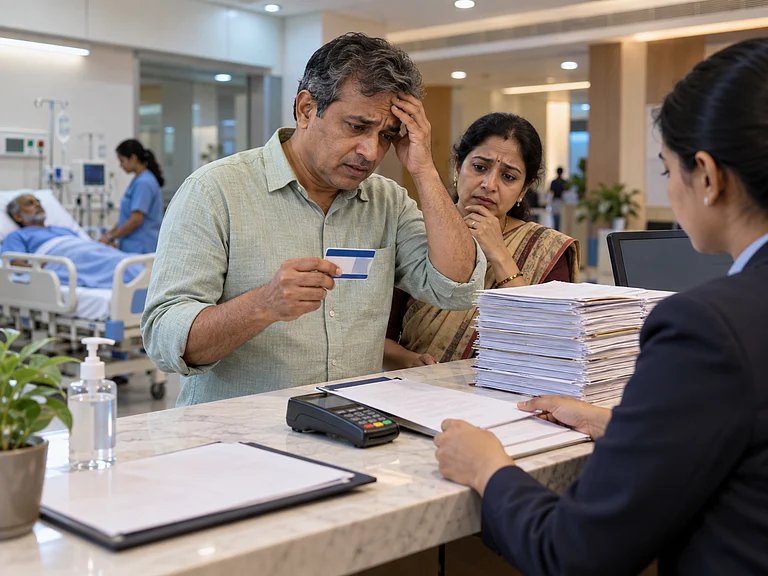
A patient’s discharge can be held up while a hospital waits for final cashless authorisation from an insurer. Under an Insurance Regulatory and Development Authority of India (Irdai) rule, that wait should not leave patients with extra charges: if approval takes more than three hours, the insurer must bear additional hospital costs caused by the delay.
When Does The Three-Hour Clock Start?
Irdai’s May 29, 2024, master circular on health insurance business requires insurers to issue final discharge authorisation within three hours of receiving the hospital’s request. The patient should not be kept waiting for discharge because the insurer’s approval is delayed.
“In accordance with the rule, the insurers are supposed to give final discharge authorisation within three hours of receiving the discharge authorisation request. The patient must not be kept waiting for discharge due to delay in the process of insurer’s authorization,” says Abhishek Bansal, CEO, insurance business, InsuranceDekho.
The clock starts when the insurer receives the hospital’s formal request. It does not begin when the treating doctor recommends discharge or when the hospital tells the family the patient is ready to leave. Families should ask when the request was sent and seek a time-stamped record.
An insurer may ask the hospital for missing records or an explanation of a treatment or billing entry. Ask the hospital’s insurance desk what is still pending and when the insurer requested it.
Keep records as the process unfolds. Ask the hospital for a copy of the discharge authorisation request and communications with the insurer or third-party administrator (TPA). Note when the doctor recommended discharge, when the final bill was prepared, and when the request was submitted. Save the itemised bill, discharge summary, approval messages, emails, and SMS notifications.
“Request the hospital to share the time-stamped discharge authorisation request and any subsequent communication with the insurer or TPA. Keep a record of the doctor’s discharge recommendation, final bill preparation and the time at which the discharge request was submitted,” says Bansal.
Families can call the insurer’s customer care or claims helpline while approval is pending and ask for a complaint or service request number. If three hours have passed, contact the insurer’s claims team or grievance redressal officer, and ask the hospital’s insurance desk to follow up. Keep a record of calls and explanations.
How To Seek A Refund And Escalate
If the family has paid additional charges to secure discharge, it can submit a written refund request to the insurer. Attach the itemised bill, proof of payment, the hospital’s discharge request and its timestamp, along with relevant approval messages and other supporting documents. Ask the hospital to identify the extra charges linked to the delay in the bill.
The circular places responsibility for additional costs caused by an insurer’s delay beyond three hours on the insurer. Families should show which charges arose because of the delay and provide supporting records.
“In case of delay of more than three hours on the part of the insurer in giving final discharge authorisation, all additional costs incurred by the hospital for the delay will have to be borne by the insurer using shareholders’ money,” says Bansal.
If the insurer does not resolve the matter, lodge a written complaint with its grievance redressal officer, seeking a refund and attaching the records. Insurers are required to respond promptly and resolve complaints within 14 days, according to Bansal’s guidance.
If the complaint remains unresolved or the response is unsatisfactory, policyholders can approach Irdai through its Bima Bharosa portal or grievance helpline, and then take the matter to the Insurance Ombudsman.
A clear timeline can help establish when the insurer received the request and whether charges accumulated after the three-hour deadline. Families should preserve bills and communications, follow up while approval is pending, and make any refund request in writing.
FAQs
When does the three-hour period for cashless discharge approval begin?
It begins when the insurer receives the hospital’s formal discharge authorisation request, not when the doctor recommends discharge.
Who pays extra hospital charges if approval takes more than three hours?
The insurer must bear additional charges caused by the delay. If you have paid them, submit a refund request with the itemised bill and proof of payment.
What can families do if the insurer does not refund the charges?
Complain in writing to the insurer’s grievance redressal officer. If unresolved, escalate the complaint through Irdai’s Bima Bharosa portal or to the Insurance Ombudsman.