





Summary of this article
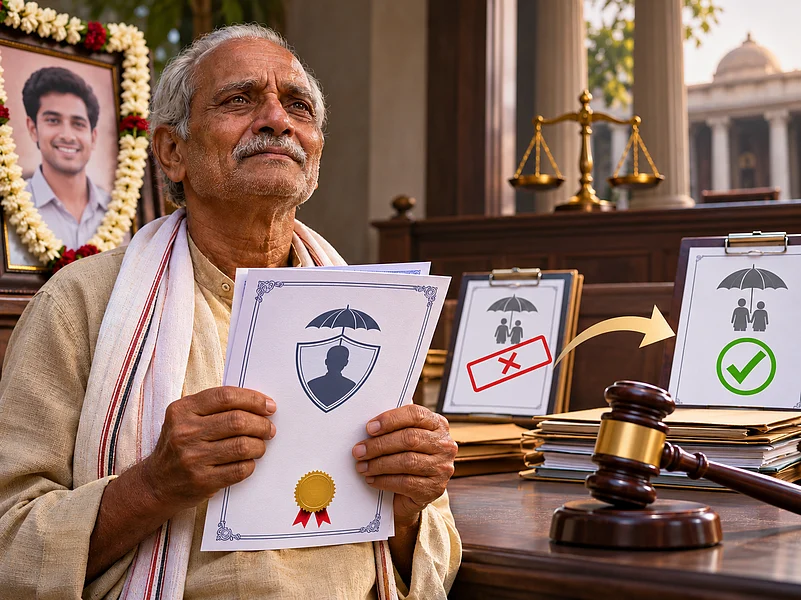
Ranga Reddy Consumer Commission ordered LIC to pay Rs 18 lakh insurance claim
LIC rejected the claim, citing alleged disease concealment and missing adoption documents
Commission found insufficient evidence that the insured knowingly concealed his skin disease
LIC must also pay Rs 20,000 compensation and Rs 20,000 litigation costs
A life insurance claim was rejected after an insured man died less than two months after his policy was revived. LIC said he had failed to disclose a skin disease and questioned whether his father had legally adopted him.
The Ranga Reddy District Consumer Disputes Redressal Commission found the insurer had not established deliberate concealment and could not rely on missing adoption documents after accepting the declared relationship when reviving the policy.
The commission directed LIC and its branch manager to pay Gummi Chandrapal Reddy the Rs 9 lakh sum assured, along with an equal accidental benefit. It also ordered Rs 20,000 as compensation and Rs 20,000 towards litigation costs.

2 November 2026
Get the latest issue of Outlook Money

LIC Cited Alleged Non-Disclosure And Adoption Records
The policy was a 35-year LIC New Jeevan Anand plan, taken by G Satish Reddy on August 27, 2019. It had lapsed after premiums went unpaid. Satish submitted a proposal to revive it on August 17, 2020, and LIC revived the policy on August 31 after collecting the premium, according to a recent report by The Indian Express.
Satish died on October 20, 2020. When his father filed a claim, LIC rejected it in March 2022, alleging that Satish had not disclosed Pemphigus Vulgaris, an autoimmune skin disease, in his declaration of good health during the revival process.
The insurer relied on an Osmania General Hospital discharge summary dated October 13, 2020. It recorded symptoms for about two months, LIC argued, and said disclosure could have led it to seek further tests or refuse to revive the policy.
LIC also questioned the adoption, saying the father had not provided legally valid documents. It relied on a letter dated February 3, 2022, in which Satish reportedly stated that no legally valid adoption papers existed.
Commission Said LIC Had Not Proved Deliberate Concealment
The commission examined the hospital records and found they did not show that Satish had been hospitalised for the same condition in August 2020, when he applied to revive the policy. The records referred to a hospital visit in September, but did not establish that he knew of the disease when he made the declaration.
Without evidence that Satish knew about the condition at the time, the commission said LIC could not treat the omission as deliberate suppression. It also noted that the insurer had an opportunity to make enquiries about his health before reviving the policy.
On the adoption issue, the commission said LIC had accepted the proposal form, which named Chandrapal Reddy as Satish’s father, and revived the policy without asking for adoption documents. Having accepted those details and collected the premium, it could not later use the absence of documents to reject the claim.
The commission said the insurer had failed to provide cogent documentary evidence that Satish knowingly concealed the disease. It found that rejecting the claim on these grounds amounted to deficiency in service.
The order is specific to the facts and evidence in this dispute. It does not mean every claim involving a lapsed and revived policy will be paid.
For policyholders, the case underlines the importance of giving complete and accurate answers in revival declarations, and keeping copies of the proposal, health disclosures, policy documents and premium receipts. For insurers, the commission’s decision shows that an allegation of non-disclosure needs evidence that the insured knew about the condition and withheld it.
FAQs
1. Why did LIC reject the life insurance claim?
LIC alleged that the insured had not disclosed a skin disease when reviving the lapsed policy and questioned whether his father had legally adopted him.
2. Why did the consumer commission direct LIC to pay?
The commission found no proof that the insured knowingly concealed the disease. LIC had also accepted the declared father-son relationship when it revived the policy.
3. What was LIC ordered to pay?
LIC was directed to pay the Rs 9 lakh sum assured and an equal accidental benefit, plus Rs 20,000 compensation and Rs 20,000 in litigation costs.