

Summary of this article
PFRDA tightens NPS KYC rules for NRIs and OCIs from 2025.
Onboarding now demands stricter document verification and no provisional account approvals.
Ongoing KYC reviews mandated based on subscriber risk and transaction behaviour.
Older NPS accounts may face updates as intermediaries recheck incomplete records.
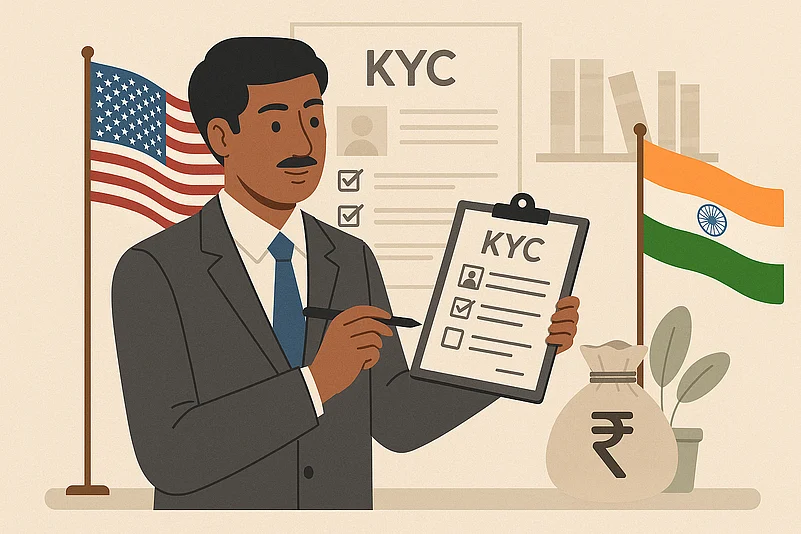
How the National Pension System (NPS) handles subscribers living or working outside India has been quietly reshaped by a new document issued on 25 September 2025, through an updated master circular on Know Your Customer (KYC) and anti-money-laundering rules released by the Pension Fund Regulatory and Development Authority (PFRDA).
The regulator has pulled together older instructions, tidied up loose ends, and introduced sharper checks for accounts linked to non-resident Indians (NRIs) and Overseas Citizen of India Scheme (OCIs).
The tone of the new circular is far firmer than earlier versions. It makes it clear that pension intermediaries can no longer treat overseas accounts as routine, low-engagement paperwork. Instead, the regulator wants a far more deliberate approach, especially at the point where the subscriber’s identity is first established.

1 January 2026
Get the latest issue of Outlook Money

More Care At The Onboarding Stage
A large part of the revised framework is devoted to how an NRI or OCI applicant is screened before the account is opened. Since the documents used in these cases come from different jurisdictions, PFRDA wants intermediaries to verify them with a level of care that goes beyond just ticking boxes.
This means the Points of Presence, the record-keeping agency, and the NPS Trust must check that every detail, passport numbers, visas, overseas addresses, and signatures, sit together logically. If something is unclear or inconsistent, the account simply has to wait. The circular leaves little room for “provisional acceptance” or rushed approvals.
The shift essentially tells intermediaries that the risk of overlooking a small discrepancy is too high, and that the checking process must be methodical rather than hurried.
KYC Will No Longer Stay Frozen After Opening
The second major change in the circular is its insistence that KYC is a moving responsibility. After an account is opened, intermediaries are expected to revisit the subscriber’s details at intervals determined by the individual’s risk profile. Some will need only routine checks, while others, particularly those with changing residency status or complex fund movements, may have to update their documents more frequently.
The regulator also cautions intermediaries not to ignore activity that appears unusual. If something in a subscriber’s pattern of transactions looks out of place, the intermediary is expected to step back, review the situation, and pause fresh transactions until the doubt is resolved. This represents a shift from the earlier approach, where the focus was largely on document collection rather than sustained oversight.
What It Means For Different Types Of Subscribers
For subscribers living in India, the new circular will not dramatically alter how their pension accounts operate. Their documentation is standard, and verifications are usually straightforward. The bigger impact will be felt by NRIs and OCIs, who may notice that their onboarding now involves more questions, more supporting papers, and occasionally, a longer waiting period.
Old accounts may also come up for review. Intermediaries have been given a clear mandate to clean up records, fill gaps, and seek fresh documents wherever the earlier KYC was thin or outdated.
While the extra checks may feel inconvenient, the regulator’s purpose is unambiguous: to ensure the pension system remains secure and that every account, especially those linked to foreign documentation, is backed by clear, verified identity details. PFRDA wants the long-term savings pool to remain trustworthy, and the revised circular is a step in that direction.