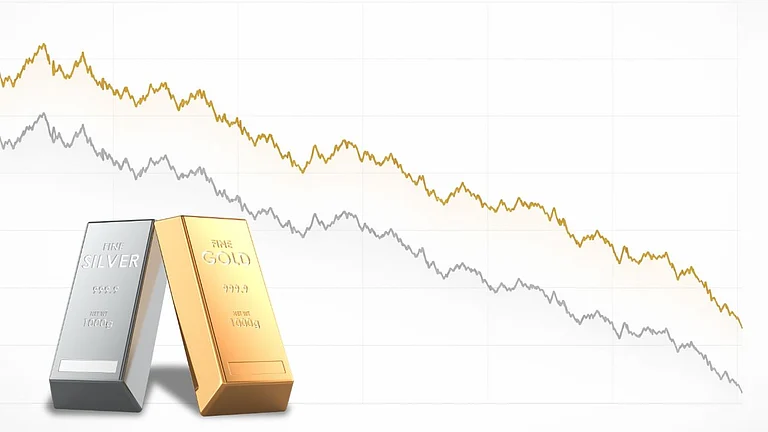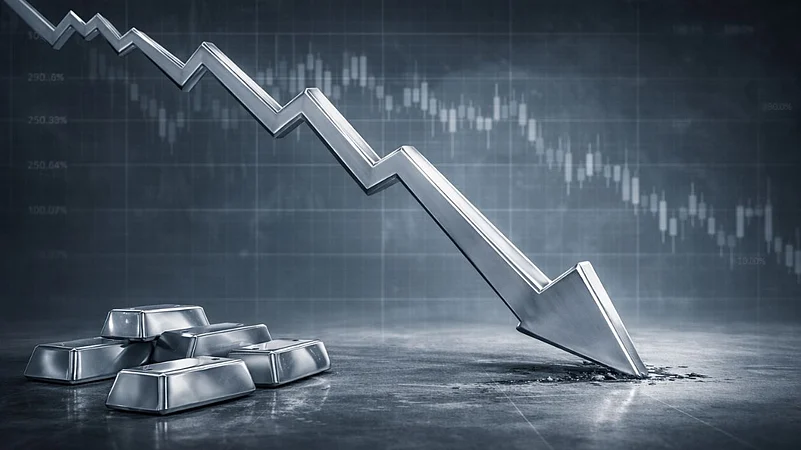

Silver exchange-traded funds (ETFs) witnessed a brutal sell-off over the last week, mirroring the correction in the prices of the underlying metal. Several silver ETFs lost as much as 40 per cent, rattling investors who had chased the rally after record highs.
DSP Silver ETF led the sell-off, plunging as much as 42 per cent during the week. Kotak Silver ETF and UTI Silver ETF followed, each correcting by over 40 per cent. The two largest silver ETFs by assets under management (AUM), Nippon India Silver ETF and ICICI Prudential Silver ETF, also fell by more than 37 per cent.
The decline in silver ETFs mirrored the deep correction in futures prices. On the Multi Commodity Exchange (MCX), March silver futures declined 40.60 per cent from their record high of Rs 4,20,048 per kg to close at Rs 2,49,499 per kg on February 6, 2026.
In the physical market too, silver prices eased significantly, falling from Rs 4,10,000 per kg to Rs 2,85,000 per kg as of February 8, according to Goodreturns.
Why Silver ETFs Crashed
The sudden sell-off was triggered by a combination of global macro factors and technical pressures. CME Group raised margin requirements for gold and silver futures for the third time in two weeks, forcing leveraged traders to cut positions. This came at a time when markets were already jittery due to expectations of a more hawkish US Federal Reserve stance and a stronger US dollar.
Akshat Garg, head of research and product at Choice Wealth, said silver’s fall was largely a result of excesses built up during the rally. “Silver has come off mainly because it had run up too fast in a short period. Over the past year, prices had moved sharply higher and a lot of optimistic positioning had already been built in,” he said. Garg added that when markets are stretched, even small changes in global cues can trigger big corrections.
He said that “right now, a slightly stronger dollar and some cooling in global risk appetite are prompting investors to cut exposure to volatile assets.” Since silver is thinner and more volatile than gold, the selling pressure appeared more intense. “Silver, by nature, reacts more sharply than gold… so when selling starts, the fall looks steeper,” he noted. According to Garg, ETF prices weakened quickly as they closely track spot prices, and the move reflected profit-booking rather than a fundamental breakdown in silver’s outlook.
Hareesh V, head of commodity research at Geojit Investments, echoed similar concerns, saying, “Gold and silver remain volatile as last week’s steep plunge was driven by hawkish Fed expectations after Kevin Warsh’s nomination, a stronger dollar, and sharp CME margin hikes that forced leveraged unwinding.” He added that profit-taking after record highs further amplified price swings, keeping sentiment fragile in the near term.

Should You Buy The Dip, Or Avoid
Amid the heavy correction in Silver ETF prices, there’s much chatter about whether to buy this dip or avoid it.
Aksha Kamboj, Vice President, India Bullion & Jewellers Association (IBJA), urged caution. “Although some investors may see this correction as a chance to buy, it is essential to note that gold and silver prices are still sensitive to global macroeconomic trends,” she said. She also reminded that the Union Budget 2026-27 maintained the status quo on import duties, which has dampened short-term speculative activity. While central bank buying and gold’s safe-haven appeal remain supportive over the long term, Kamboj advised investors to focus on proper asset allocation and timing rather than rushing in.
Hareesh V of Geojit believes patience is key in the current environment. “Bullion investors should stay patient and avoid reacting to short-term volatility triggered by margin hikes, profit-taking and policy uncertainty,” he said. According to him, staggered accumulation may help investors manage timing risks, especially since long-term drivers such as geopolitical tensions, central bank demand and currency pressures remain intact.
Garg of Choice Wealth also advised investors against panic. “There’s no need for panic. Silver is a volatile asset and sharp ups and downs are part of the journey,” he said. He stressed that “one correction does not change the long-term relevance of silver,” but it does underline the importance of position sizing. Garg cautioned that silver should be treated as a supporting allocation rather than a core portfolio holding. “If someone wants exposure, staggered buying is a far more sensible approach than lump-sum investing, especially in a volatile phase like this,” he said, adding that for long-term investors, this phase is more about discipline than immediate action.