







Summary of this article
UP police attached assets worth ~Rs 12 crore in a large insurance fraud case.
Policies were issued using forged medical/death records across multiple districts.
Over 70 arrests made; ED probing money trail and shell-linked property deals.
Industry fears more fraud-driven premiums, tighter scrutiny, and paperwork.
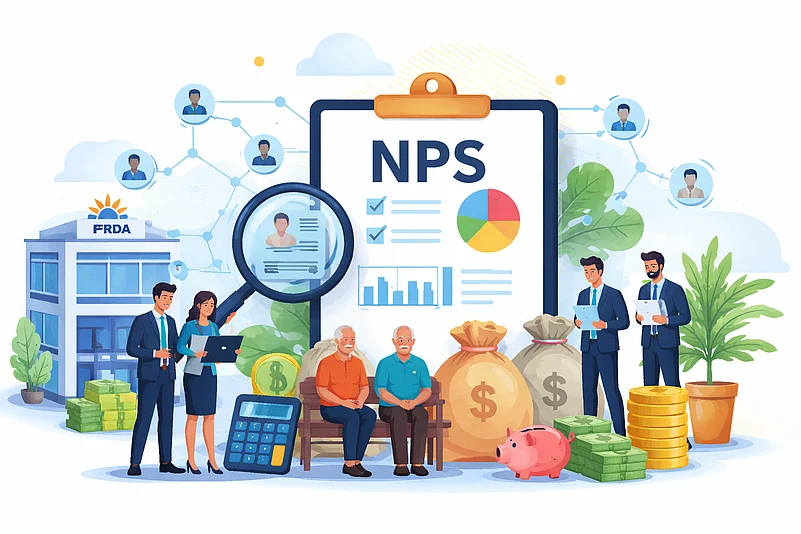
Pension funds have been cleared to receive subscriber information under the National Pension System’s Multiple Scheme Framework, allowing more direct communication and scheme development for private sector users, according to a recent Pension Fund Regulatory Development Authority (PFRDA) circular.
The move represents a quiet but meaningful change in how the National Pension Scheme (NPS) operates in the non-government space. Until now, most servicing and communication happened through central recordkeeping channels, with little room for funds to speak to subscribers in their own voice. That system worked, but it kept the NPS from behaving like a retail financial product with brand identity and differentiated customer handling.
How Data Will Be Shared And Why It Matters
The Multiple Scheme Framework was introduced to let pension funds run their own branded schemes for private sector savers. The goal was to broaden the market and give NPS a more recognisable presence among individuals who compare long-term retirement savings with insurance or mutual funds. Under the new arrangement, fund managers will receive subscriber details through a standard template shared by the recordkeeping agencies.

1 October 2026
Get the latest issue of Outlook Money

The data includes basic demographic and communication fields. Nothing exotic, but enough to allow better servicing, personalised nudges, and clearer onboarding. Funds will only get information about subscribers who have opted for their Multiple Scheme Framework offerings. Those invested only in common schemes will not be covered.
From the subscriber’s perspective, the impact could surface gradually. NPS has never been particularly strong on consumer-facing education or long-horizon engagement. Personalised communication could help explain contribution patterns, life-stage retirement decisions or tax-season planning. It could also nudge savers to use Tier II or other optional features that many do not explore.
Guardrails On Use And Privacy Obligations
The circular lays down strict boundaries on how the data may be used. It is meant for product design, servicing, distribution, and outreach under the Multiple Scheme Framework. The information cannot be used for unrelated marketing or shared outside the pension ecosystem. Pension funds and recordkeeping agencies remain subject to data protection laws and existing confidentiality obligations.
Oversight has been baked into the structure. Audit trails must be maintained, and the regulator or NPS Trust can review how data is handled. That is important because the system is shifting from a uniform, centralised model to something more competitive. When funds are allowed to differentiate, regulators tend to worry about borderline sales practices, especially in retirement products.
For the industry, the change pushes NPS a step closer to a retail environment. Brand, communication, and subscriber experience could now matter alongside fund performance and tax benefits. That could eventually make pension funds behave more like asset managers competing for wallet share and customer attention.
For subscribers, the change may not alter day-to-day interactions immediately, but it could make NPS less opaque and more responsive over time. If the idea works as intended, choosing between pension funds may become a more informed decision rather than a default allocation.





