





Summary of this article
Retirement moves from fund accumulation to decumulation phase.
Budgeting essential to avoid overspending corpus early.
Senior should stay updated on evolving financial risks for safety and cut risky investments, and protect health and assets post-retirement.
Financial journey doesn’t end with retirement; it only transits from the accumulation phase to the distribution phase. Before retirement, you work to generate income to meet your financial goals and build your retirement fund. After retirement, you don’t get any active income and thus have to depend on the retirement corpus for your financial needs. This is when your distribution phase starts. Financial journey may get more challenging after retirement and therefore requires your greater attention than before.
Here are three factors that make retirement a key phase of your financial journey.
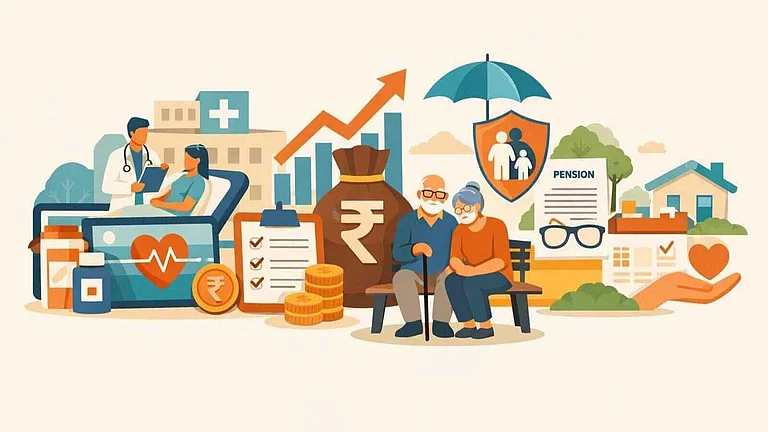




Greater Financial Responsibility Than Before
With no income from active working life, you may have to depend on passive income to meet most of your day-to-day expenses. You have to keep your retirement fund invested to generate sufficient passive income for meeting your spending needs and to beat inflation at the same time. You have to consistently make an effort to maintain an adequate size of your retirement corpus so that it can last through your remaining retirement life.
More Focus On Taking Wise Spending Decisions
Sometimes, your passive income may not be adequate to meet your day-to-day expenses, and you have to cut down your expenses. So, budgeting becomes more crucial after you retire. You have to make a short-term and a long-term budget to avoid overspending and to make sure that your retirement corpus doesn't run out. In short, retirement phase is about making wise spending decisions and avoiding unnecessary risks.

Cut Down Financial Risks
After retirement, you'll be left with a corpus and assets such as properties, and other movable assets. With no active income source after retirement, it becomes crucial to avoid financial risks. These could be related to risky investment, ignoring health risks, accidental injuries, or engaging in legal disputes, among others. So, you must carefully manage your existing health insurance policy and, if possible, increase the coverage in sync with medical inflation. Ensure your bank records are consistently updated and refrain from sharing vital financial information with unknown people. Misleading financial decisions post-retirement can cause significant financial losses; hence you must be more cautious regarding all money related matters.
The financial world is evolving and new types of risks are coming your way every day. Therefore, it's important to keep yourself updated and remain financially safe after retirement.
This author is an independent financial journalist





