


Summary of this article
Form 12BBA replaced by Form 125 under the Income-tax Act 2025.
Seniors aged 75 years and above need to fill this Form to declare pension and bank interest income to avoid filing ITR themselves.
Banks compute tax, deduct TDS after verifying Form 125.
The government has proposed to make changes in Form 12BBA under the Draft Income-tax Rules 2026. This form is used by pensioners to furnish the declaration of their income and evidence of claims under Section 194P of the Income-tax Act, 1961. This Section under the Act is applicable to Indian citizens aged 75 years and above for filing their Income-tax Return (ITR).
It applies to pensioners whose only source of income is a pension and interest on it in their bank account. In such a case, they don’t need to file an ITR, as per Section 194P. Instead, they can simply declare that they have no other source of income on Form 12BBA and submit it to the bank to which their pension is credited.
As the banks have pension details of pensioners in its records, they verify the information in the Form 12BBA. The bank will compute the pension and the interest on it, consider deductions and rebates available for senior citizens, calculate the tax, and, if needed, deduct the TDS (tax deducted at source). So, by submitting this Form, the pensioners become free from the responsibility of filing a separate ITR themselves. The bank will submit the details to the Income-tax department.

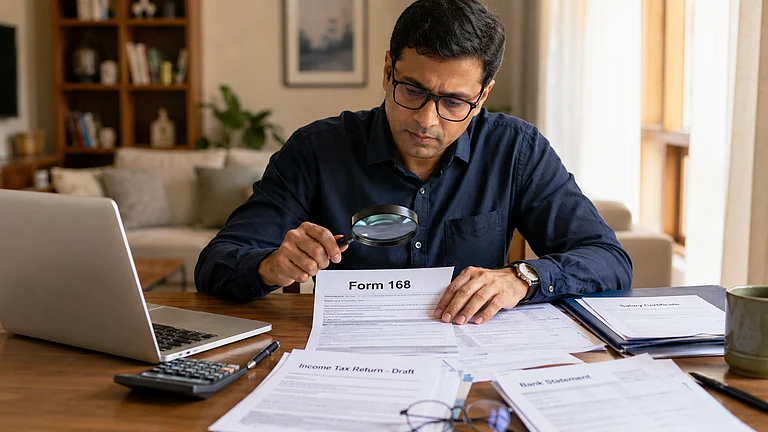



Will Form 12BBA Continue Under The Draft Income-Tax Rules, 2026
Gaurav Makhijani, Managing Partner at MGA, says, “The relief available to specified senior citizens continues under the new Income-tax law with Section 393(8)(iii) replacing the earlier Section 194P. The intent remains the same, that is, law still exempts senior citizens, being resident individuals aged 75 years or above with pension and interest income from the same specified bank, from the requirement of filing a return of income (Income-tax return).”
Says CA Ashish Niraj, Partner, A S N & Company: “Draft Income Tax Rules 2026 - Rule 208 describes that Form No 125 has to be submitted by specified senior citizens for furnishing of declaration and evidence of claims under section 393(1) of the Income Tax Act 2025. In the Income Tax Act 1961, the relevant section was 194P and the relevant form was Form No 12BBA.”
Rule 208 of the Income-tax Act, 1925, is about furnishing the declaration and evidence of claims by a specified senior citizen. Under the new Act, senior citizens are required to submit Form 125 to declare their income. Simply put, Form 125 in the new Act (Income-tax Act, 1925) has replaced Form 12BBA in the old Act (Income-tax Act, 1961), and Section 194 has been replaced by Section 393(8)(iii).

What Has Changed In Form 12BBA
Niraj shares that the new Form has inserted an additional column for Email and Contact Number. Also, a separate line item has been inserted asking whether the specified senior citizen is opting for the new regime or not.
“The new draft Rule 208 and Form No. 125 remain unchanged in substance vis-à-vis the old tax rules on this matter. Senior citizens with pension and bank interest are not generally receiving perquisites or allowances; therefore, any change made in valuation thresholds for such items does not materially impact senior citizens,” says Makhijani.
So, nothing significant has changed in the Form except some basic details and the new names of the Section and the Form itself.