Government health spending hit Rs 4.14 lakh crore; out-of-pocket expenditure fell to 42.7 per cent.
Primary care spend reached Rs 1.53 lakh crore via different schemes.
Social security and private insurance shares rose sharply.
Govt Health Spending Triples To Rs 4.14 Lakh Crore, Out-Of-Pocket Expenses Dip, Says Health Ministry
The government’s expenditure on health increased nearly three times over the last one decade between 2013-14 and 2023-24. Data released by the National Health Authority reveals a reduction of 33.5 per cent in out-of-pocket expenditure over a decade

Summary
Advertisement
Government health spending in India has increased more than three times between 2013-14 and 2023-24 to Rs 4.14 lakh crore, according to the National Health Accounts (NHA) estimates released by the Union Health Ministry.
This huge amount of public funding has also led to a reduction in the proportion of out-of-pocket expenses (OOPE) of households. Their OOPE came down from 64.2 per cent to 42.7 per cent over the decade. The Health Ministry said in an official statement: “The simultaneous increase in public healthcare financing and decline in the proportion of spending borne directly by households reflect India’s progress towards a more accessible, affordable and financially protective healthcare system.”
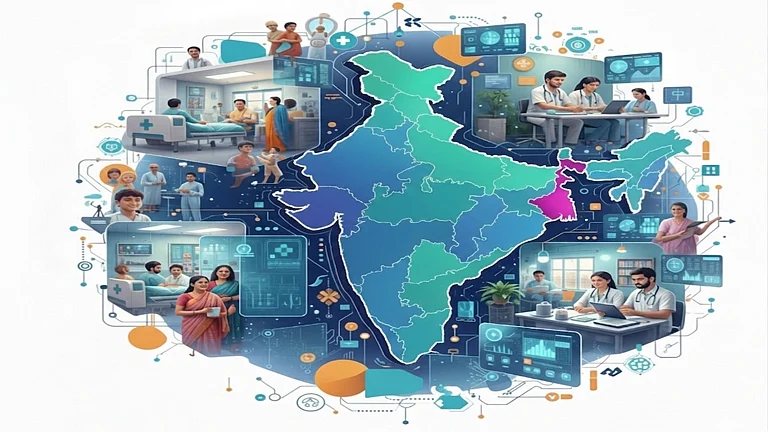
Increase In Per Capita Income And Primary Health Spending
Over the decade, the government’s share in total healthcare expenditure has increased by 14.90 percentage points. On a per capita basis, government expenditure on healthcare has risen by nearly three times, from Rs 1,042 in 2013-14 to Rs 2,959 in 2023-24. A major portion of public spending was directed toward foundational care, with a focus on primary healthcare spending reaching approximately Rs 1.53 lakh crore in 2023-24. According to the health ministry, this reflected the government’s focus on making primary and community-level healthcare services easily available to people.
Advertisement
Different initiatives by the government have helped in reducing household’s direct spending on healthcare facilities. These include free and affordable treatment, medicines, diagnostics, and hospital services. The programmes include Ayushman Arogya Mandirs (AAMs), Pradhan Mantri Bhartiya Janaushadhi Pariyojana, AMRIT pharmacies, Pradhan Mantri National Dialysis Programme, among other free drug and diagnostics schemes.
Social Security Net And Insurance Coverage
The expenditure data reveal a structural shift in healthcare programmes. The social security expenditure and private health insurance contributions have grown. The share of social security expenditure on health has nearly doubled, from 6 per cent in 2013-14 to 11 per cent in 2023-24. These programmes include government-funded Ayushman Bharat-Pradhan Mantri Jan Arogya Yojana (AB-PMJAY), state health insurance schemes and medical expenditure for government employees. Notably, AB-PMJAY has boosted the financial protection of people by providing cashless hospitalisation benefits to eligible beneficiaries across all the states and Union Territories.
Advertisement
Simultaneously, the private health insurance share has also increased in the total healthcare expenditure from the existing 3.40 per cent in 2013-14 to 10.20 per cent in 2023-24. According to the report, these efforts have helped in making a more accessible and affordable medical system for Indian citizens.
Show comments
Published At: