Individuals should focus on cash flow needs instead of building a corpus
Build a diversified portfolio based on risk appetitie and goals
Retirement Planning Needs A Mindset Shift From Corpus To Cash Flow, Says Pradeep Yadav Of Policybazaar
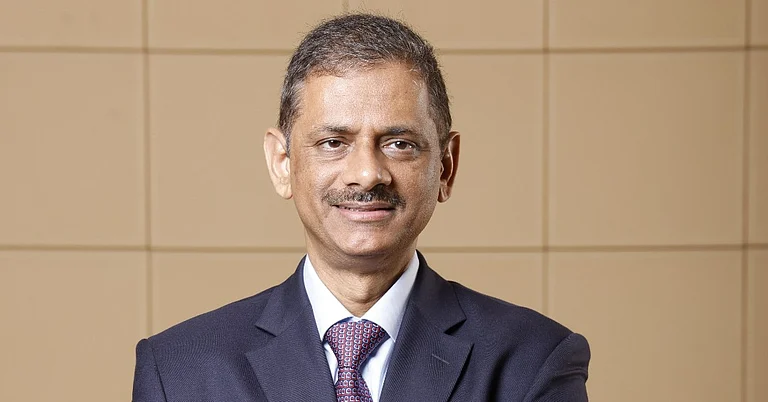
Pradeep Yadav, senior director at Policybazar said that Indians need to shift their mindset in retirement planning. The focus should be in creating steady and long-term cash flows instead of just creating a corpus, he said

Summary
Advertisement
India is seeing a rapidly ageing population and rising longevity, which demands a shift in retirement planning. To this extent, there needs to be change in mindset among individuals to align their portfolios to ensure steady and long-term cash flow rather than just focusing on building a corpus, Pradeep Yadav, senior director at Policybazar said in an interview with Kundan Kishore, Deputy Editor, Outlook Money, at IDFC FIRST Bank presents Outlook Money’s 40After40 Retirement Expo in Mumbai on February 20, 2026. Yadav highlighted the need for early investing, and pairing wealth accumulation with strong health‑insurance protection.
We know India is a young country, but gradually we are ageing. According to estimates, by 2036, one in every seven individuals will be above 60 years old. How do you see retirement planning in this perspective?
Today, around 140-150 million people in our country are 60-plus. With birth rates tapering down, this population is expected to double in the next 20–25 years. So we will have a massive situation, and it could become a significant challenge.
Advertisement
The issue is not just the number of people crossing 60, but also longevity. Most people entering that age bracket do not have a large retirement corpus and have not planned systematically. That creates a retirement protection gap.
Is longevity itself also becoming a major issue?
With advancements in medical care and better access to healthcare, especially in metros and cities, people are expected to live longer. Average life expectancy today is close to 70-plus and may move towards 80.
One of the speakers earlier made a very relevant point: the number of years a person spends retired may soon exceed the number of years they work. You might work 30-33 years, but remain retired for 35-37 years if you live till 85. That calls for a completely different approach to retirement planning.
Advertisement
If someone works for about 30–35 years and has to sustain wealth for another 35 years post-retirement, what solutions or products should they look at?
There are many robust products available today. But more than products, there are two core issues.
First is awareness. How many of us actually believe we need a retirement plan? In the Indian mindset, we talk about corpus, not income. We say, “By 60 I should have Rs 2 crore or Rs 4 crore,” but nobody talks about whether they will have a monthly cash flow of Rs one to 1.5 lakh in real terms post-retirement.
So the mindset needs to shift from wealth accumulation to income generation, from accumulation to decumulation. Second, because longevity is increasing, accumulation needs to start earlier and continue longer. Start early, stay invested longer, and let compounding work.
So essentially, start planning early and build a diversified portfolio?
Yes. Start early. When you are young, you can afford higher equity exposure. That helps the corpus grow. Over time, keep rebalancing towards debt, guaranteed products, or other instruments that provide stable income.
Advertisement
Investors often chase returns, especially when they are young. What should be the ideal strategy for balancing wealth accumulation and later income needs?
There are two aspects here. First, India has been fortunate to have indices that have compounded at roughly 11-12 per cent over the past two decades. Spending more time invested in equities, particularly broad indices, helps build wealth.
Second, medical inflation cannot be ignored. A significant portion of retirement savings may go towards healthcare. So, retirement planning must include health insurance and protection against future medical costs. It is not just about cash flow, but also about ensuring a healthy, worry-free retirement.

Should wealth accumulation and strong health coverage go hand in hand?
Absolutely. A longer accumulation phase, higher equity exposure when young, gradual rebalancing later, and a strong health insurance component together create a more complete retirement solution.
Advertisement
Should asset allocation always tilt towards equity, or should investors maintain a balanced approach from the beginning?
It depends on age and risk profile. A 25-year-old can afford high equity exposure initially. As age increases, gradual rebalancing into debt or guaranteed income instruments makes sense.
For someone above 40-45, adding around 5 per cent more to debt or guaranteed cash-flow instruments every five years could be a sensible approach.
Industry data suggests only about half of equity investors stay invested for more than two years. Does that undermine compounding?
Yes, and that is worrying. Many investors don’t stay invested long enough to benefit from compounding. Data also shows many don’t even earn fixed deposit (FD)-level returns because they enter and exit at the wrong times.
The solution is simple: stay invested longer, preferably through diversified or index-based products, or retirement-focused products that rebalance automatically.
But guaranteed return products often offer lower yields, around 6 -7 per cent. How should investors think about them?
Advertisement
You have to consider inflation assumptions. If inflation moderates around 4 per cent and you get a 6-7 per cent guaranteed return with assured cash flow, that may still be a reasonable component in a retirement portfolio, especially for older investors.
It is not suitable for everyone. A 30-year-old may not need it, but someone nearing retirement might.
What is your advice for young investors just starting their careers and planning long-term goals like retirement?
First, build the habit of investing. That is the most important thing. Understand compounding over 20-30 years.
I often suggest having at least one long-term insurance-linked investment like a Unit-linked insurance plan (Ulip) with an annual investment of around Rs 2.50 lakh because the maturity proceeds can be tax-free. If costs are comparable to mutual funds and returns track equity indices, it can be beneficial over the long term. But broadly, higher equity allocation when young, through mutual funds, index funds, or other equity-linked products.
Advertisement
And for people nearing retirement, say 50–55 years old, what should the decumulation strategy look like?
For this group, protecting capital and ensuring predictable income becomes critical. Immediate annuity or deferred annuity products are useful.
If someone is 55, they can defer income for 5-10 years and then start receiving guaranteed monthly payouts from 60 or 65 onwards. These payouts are fixed at the time of purchase and provide certainty.
Also, taxation should not be overemphasised. Twenty or 30 years down the line, tax slabs may be much higher, reducing the relative burden. Focus first on assured cash flow; tax optimisation will follow.
Show comments
Published At: