

Summary of this article
Fintech has taken banking services beyond physical branches across India.
Digital platforms have improved payments, account access and financial services.
Fintech has expanded formal credit access for small businesses.
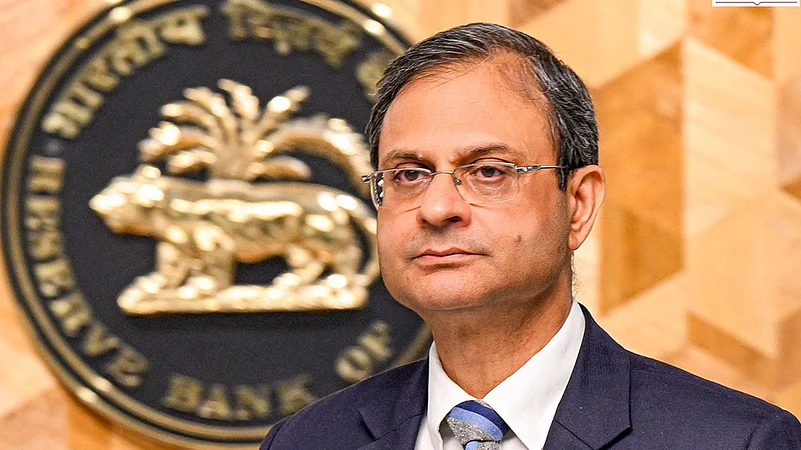
The role of banks in people’s daily financial lives has changed as digital technology has expanded access beyond physical branches, Reserve Bank of India (RBI) Governor Sanjay Malhotra said at the Global FinTech Fest 2026 on September 8, 2026.
“Over the past decade, fintech has fundamentally reshaped the architecture of Indian finance. It has taken banking from the branch to the hand of every citizen,” Malhotra said in his welcome remarks at the event.
He pointed to the use of the Unified Payments Interface (UPI), the Aadhaar-Enabled Payment System (AePS) and the Jan Dhan ecosystem as examples of the digital infrastructure supporting this shift. People in small towns, villages and cities have been able to transact, save and borrow through these digital channels, he said.
“Fintech is the bridge that connects our vast, diverse population to formal finance faster and affordably,” Malhotra said.
Digital Tools Have Changed Banking
Malhotra highlighted changes in the way financial services have been delivered to customers. Technology has cut the time needed for opening accounts and settling payments, while transaction costs have also fallen, he said.
He added that digital systems have also been used for fraud detection through artificial intelligence (AI)-driven analytics. Malhotra also pointed to real-time supervision as another area where technology has contributed to financial infrastructure. The shift has also extended to business lending, particularly for micro, small and medium enterprises (MSMEs), he added.
Small Businesses Get New Credit Channels
Malhotra highlighted cash-flow-based lending, account aggregators and the Unified Lending Interface (ULI) as tools that have changed how lenders can assess small businesses. “Perhaps, nowhere is the impact more tangible than in the credit delivery to our micro, small and medium enterprises,” he said.
He added that these systems have helped millions of small businesses take formal, collateral-light credit that traditional underwriting models had not covered. This, in turn, has also created jobs and livelihoods, he added.
RBI Backs Responsible Fintech Growth
Malhotra added that the RBI has used measures, such as the Regulatory Sandbox and the Reserve Bank Innovation Hub to support engagement with new financial technologies. The central bank has also maintained dialogue with start-ups, fintech companies, and other stakeholders, he further said.
He highlighted self-regulation, digital public infrastructure and openness to new ideas and players as part of the RBI’s approach. “We have promoted responsible innovation while safeguarding trust that is the very foundation of finance,” Malhotra said.
He said the essence is to build a financial system that is safer, trustworthy, inclusive, fair and efficient, and includes economic growth and public welfare as key objectives.