

Summary of this article
Credit cards can be used to pay eligible income tax dues.
Processing fees may increase the overall cost of tax payment.
Pay the bill on time to avoid interest charges.
A credit card can do more than just pay for shopping or travel. It can also be used to clear certain income tax dues if you are unable to make the payment from your bank account immediately.
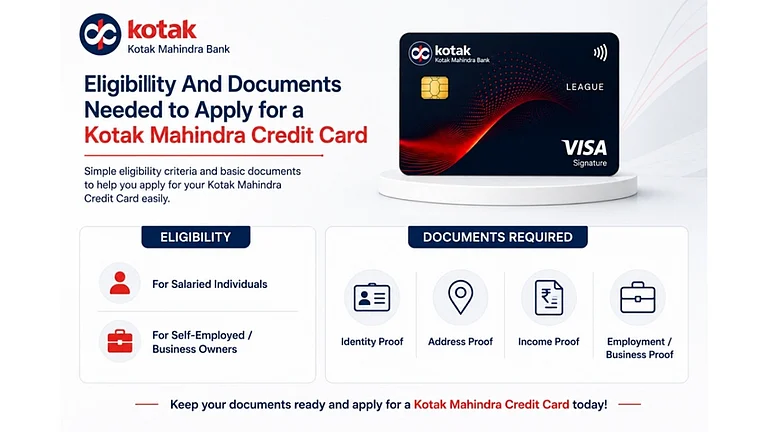
The Income Tax Department allows taxpayers to pay eligible taxes online through its e-pay tax facility. The option is available for payments, such as advance tax, self-assessment tax and outstanding tax demands. Along with credit cards, taxpayers can also pay using debit cards, net banking and Unified Payments Interface (UPI) to pay taxes.
Payment Can Be Made With Or Without Login
The online payment facility is available on the Income Tax Department's e-filing portal. Taxpayers can log into their account and choose the relevant tax category, fill in the payment details, and select a credit card before completing the transaction through an authorised payment gateway.
The portal also offers a pre-login payment option. After verifying the Permanent Account Number (PAN) or Tax Deduction Account Number (TAN) through an OTP sent to the registered mobile number, taxpayers can complete the payment using the same set of digital payment methods.
Once the transaction is completed successfully, a receipt will be generated, which serves as a proof the completion of payment.
Costs And Fess
Even though the tax amount stays the same, paying it through a credit card may raise the overall cost. Banks and payment gateways generally charge a convenience fee for processing such payments, which usually ranges between 0.85 per cent and 1.25 per cent of the tax amount.
The payment is then added to the monthly credit card statement, just like any other purchase made using the card.
Repaying The Bill On Time Is Important
Many people assume a credit card starts charging interest from the day the tax payment is made. But that’s not how the billing system works.
Most credit cards offer an interest-free period of around 45-55 days. If the entire outstanding amount is paid by the due date, no interest is charged on the transaction.
Problems arise only when the bill is not paid in full. In that case, interest is applied according to the card issuer’s terms, making the tax payment more expensive than the original amount due.
The credit card option can help taxpayers who need a few extra weeks to arrange funds. However, before choosing to pay your taxes with a credit card, it is important to account for both the processing fee and the credit card repayment date.