




A lot of people assume credit card approvals are simple, earn more and get approved faster. Then someone with a decent salary applies and gets rejected, while a lower-income applicant gets through without issues.
That’s usually where the confusion starts.
Approval doesn’t follow a single rule. It’s a mix of income, past behaviour, and how clean the application looks on paper. And most people don’t realise this until they’ve already applied once.
Understanding the basics before you apply for Kotak Mahindra credit card saves that first misstep. This blog will help you give a clear view of the complete application process.



Kotak Mahindra Bank Eligibility Criteria
Most applicants begin with features like rewards, cashback, and travel perks. Eligibility comes later. By then, the choice is already made.
From a lender’s perspective, it works the other way around. Profile first, product later.
Age, income, and credit history all come into play together. Missing even one piece doesn’t always lead to rejection, but it can slow things down or limit the options available.
Age
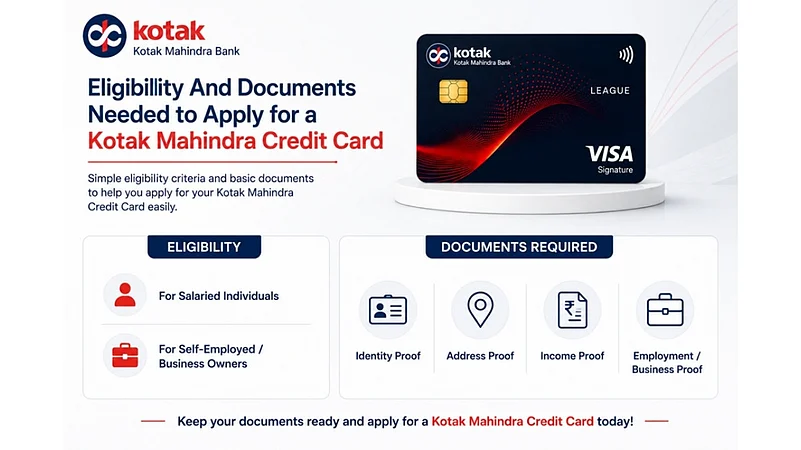
At a basic level, applicants need to fall within the eligible age range for the card they choose. Applicants need to be at least 21 years old and below 65.
That sounds straightforward, and it is. The catch is that this is only the entry filter.
Someone meeting the age criteria isn’t necessarily a strong applicant. It simply means the profile can be reviewed. The actual decision happens much deeper into the process.
Income
Income plays a role, but not always in the way people expect. Different cards target different users. Some are designed for first-time credit users or moderate spenders. Others assume higher spending patterns or frequent travel.
So income isn’t just “high or low”. It’s about whether it matches the card being applied for. A mismatch here is one of the quieter reasons applications don’t move forward.
Additionally, salaried and self-employed individuals are assessed on their monthly take-home income and annual income declared in tax filings, respectively.
Credit History & CIBIL Score
This is usually where two similar profiles take different paths. A steady repayment track record makes things easier. Missed payments, high utilisation, or too many recent credit applications can complicate things even if income looks strong.
For first-time applicants, this layer is missing. In those cases, other signals like income stability and documentation consistency start carrying more weight.
Furthermore, the minimum credit score to get a credit card is 750. Below this score, the credit application may be rejected.
Documents Required for Credit Card Application
Identity & Address Proof
Banks need clarity on who is applying and where communication will go.
Most applicants rely on common documents like PAN or Aadhaar for identity. In some cases, a passport or driving licence is also accepted.
Address proof may overlap with these documents, but not always. Utility bills, bank statements, or other supporting records may still be required if details don’t match exactly.
Small mismatches here can delay verification more than people expect.
Income Documents
This is usually where closer scrutiny happens.
For salaried applicants, recent salary slips and bank statements help establish consistency. For self-employed individuals, income tax returns or business-related records tell a similar story differently.
It’s less about one document and more about whether the income profile looks stable and verifiable.
Application Process
The users can apply via Kotak Mahindra Bank’s official website. The application moves through a few checks. After selecting the right variant, the applicants need to fill in personal details, submit documents, and wait for the internal assessment.
Sometimes it moves smoothly. Sometimes the bank comes back with a request for clarification. That difference often comes down to how complete the application is.
Common Reasons for Application Rejection and Tips
Rejections often feel random, but patterns do show up over time.
Incomplete information is one. Something as small as a mismatch between documents can pause the process.
Another common issue is applying for a card that doesn’t align with the applicant’s profile. Premium cards, for example, come with different expectations even if it isn’t obvious upfront.
Then there’s credit behaviour like missed payments, existing debt pressure, or multiple recent applications. These don’t always block approval, but they rarely go unnoticed.
Before Submitting the Application
A short review at the end avoids unnecessary friction. Checking document validity, ensuring details match exactly, and choosing a realistic card can make the process smoother.
Most people focus heavily on getting approved. Fewer think about whether the card fits their spending once it arrives. That second part tends to matter more in the long run.
Conclusion
Credit card applications don’t usually fail because of one big issue. It’s often a mix of small gaps, documents not ready, profile mismatches, and unclear expectations.
When the basics are checked early, the process feels straightforward. Skip that step, and even a strong profile can run into avoidable friction. If future large purchases are likely, it can also help to understand how repayment flexibility works. Many cardholders use an EMI calculator for credit card purchases to estimate monthly instalments before converting eligible transactions into EMIs. This gives a clearer picture of the repayment commitment before additional spending is planned.
FAQs
I have a good salary. Does that mean approval is certain?
Not really. Income helps, but it’s not the only factor. Past repayment behaviour and documentation accuracy play a role, too.
Can I apply without a credit history?
Yes, though the options may be more limited. Entry-level cards or lower limits are common starting points.
Do all applications need income proof?
In most cases, yes. The type of document may vary based on the applicant’s profile.
My application was rejected. Should I apply again immediately?
It’s better to first understand what went wrong. Reapplying without fixing the issue can lead to the same outcome.
How does an EMI calculator for credit card purchases help?
Once the card is active, it helps estimate monthly instalments before converting a purchase into EMIs. Useful, but only if future payments are manageable.





