





Summary of this article
The Reserve Bank of India is reviving a pilot project to introduce plastic or polymer banknotes
It aims to cut long‑term printing costs and improve durability, considering cash demand.
Despite growth in digital payments, currency in circulation has also hit record highs.
The Reserve Bank of India (RBI) considers replacing paper notes with plastic currency notes. Despite the growing digital-first economy, paper currency, or cash, remains a cornerstone of the financial landscape in India. While physical cash is a bit cumbersome to handle, paper currency notes also get soiled or torn over time due to regular use. These notes are taken back, new notes are issued, and this is how the banknotes keep circulating. However, this involves costs. To address this, RBI seeks to use more durable alternatives.
The central bank is actively considering a pilot project involving plastic notes for public use, reported Business Standard. It may consider switching to plastic or polymer banknotes for general circulation. This is to reduce the long-term costs and increase the banknotes' shelf life. Reportedly, RBI believes that the means to manage this transition are in place, especially the technological infrastructure required to dispense such currency through the existing channels.



RBI noticed some currency trends and highlighted these in its recent board meetings held in Mumbai and Patna. It was noticed that the digital transactions are growing in the economy, and at the same time, the currency in circulation (CiC) is also high, recorded at Rs 42.86 trillion as of May 15. The CiC has expanded by Rs 1.15 trillion in just one and a half months of the financial year 2027. This shows a high demand for paper currency. However, the increase in CiC also means a higher volume of soiled notes. As per the report, in FY2025, 23.8 billion pieces were disposed of. This volume was more than 12 per cent higher compared to FY24.
To replace these soiled notes, new notes are printed and circulated in the system, but the financial cost of securely printing the notes is substantial. In FY24, it cost RBI around Rs 5,101 crore, whereas in FY2025, the cost increased to around Rs 6,373 crore, because of increased demand for printing.
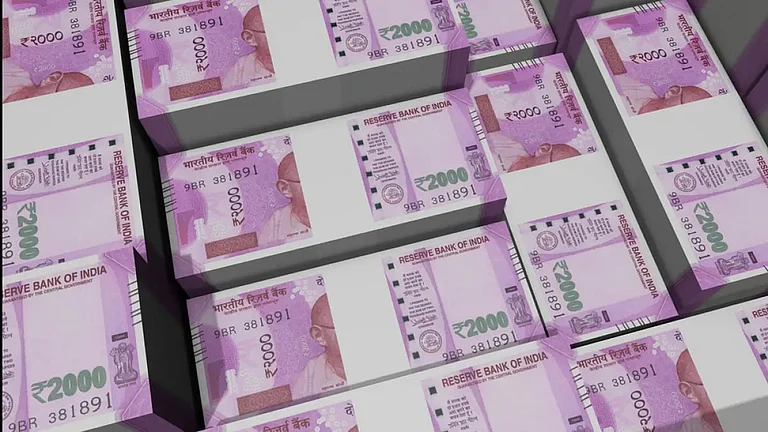
Most of the soiled notes that are being replaced are the Rs 500 and Rs 100 denominations. As paper currency is easy to carry, people prefer using it over coins. That’s why Rs 10 and Rs 20 coins have not yielded the results as expected, and the need for durable banknotes arises.
Previous Project
While the RBI is considering switching from paper currency notes to plastic or polymer currency banknotes, it is not the first time it has done so. In 2012, the then-government tried to pilot Rs 10 polymer notes in a few cities to test their durability. But, due to technological hurdles, the project was shelved. Now, as per the report, technology is no longer an issue, as modern solutions have come up during this time. The automated teller machines (ATMs) can now identify the polymer notes and process them with high accuracy.

Countries Using Polymer Currency
There are already around 60 countries that are using polymer notes in their financial system. These include Australia, the country that started the shift in 1988, and other countries like Canada, Singapore, Malaysia, the UK, New Zealand, Vietnam, and Romania, among others.
If the plastic notes are circulated, it would bring down the cost in the long term and, at the same time, reduce the risk of soiled notes and the hassle of exchanging such soiled notes for users.





