

Summary of this article
Tight Supply: Export restrictions from Indonesia and Myanmar are limiting tin availability
Fed Rate Bets: Expectations of lower US rates are boosting demand for hard assets like tin
AI & Tech Demand: Growth in AI, data centres, and EVs is raising industrial demand for tin
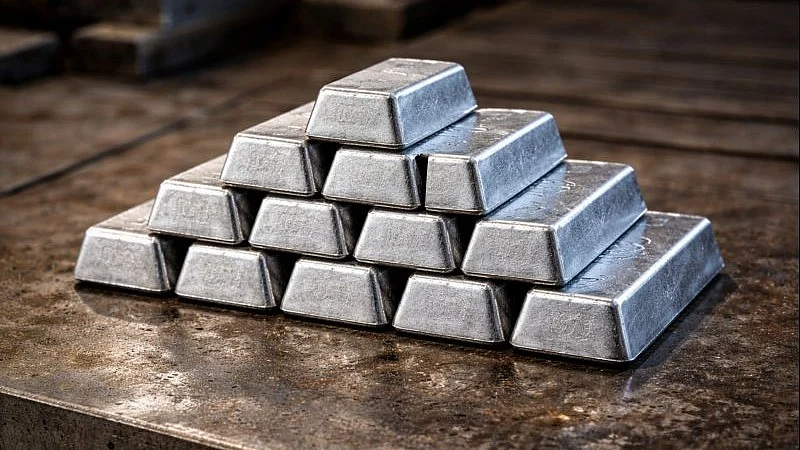
Tin prices are smashing new records almost every day, making the metal one of the best-performing commodities globally at the start of 2026. The rally comes amid a mix of supply disruptions and growing optimism over industrial demand for the metal.
February tin futures on the Shanghai Futures Exchange (SHFE), the world’s most actively-traded tin contract, surged more than 7.30 per cent on January 15, 2026 to scale a fresh all-time high of 443,380 yuan per tonne. The contract has already rallied over 37 per cent since the beginning of the calendar year. January tin futures on the London Metal Exchange (LME) also jumped more than 10 per cent on January 14 to hit a record high of $54,760 per tonne. As on today, the contract traded at $53,890 per tonne.
So far in 2026, the LME contract has gained more than 35.30 per cent, mirroring the strength seen on the Chinese exchanges.
Why Tin Prices Are Increasing
Here are the reasons why Tin prices are rising.
Tight Supply Conditions
The surge in tin prices comes amid a broader rally in base metals, driven by expectations of tighter supply in 2026. Global mines and smelters are struggling to keep pace with the demand, while disruptions in key producing regions have raised concerns over availability. For tin, constrained exports from Indonesia, one of the world’s largest suppliers, have significantly tightened global balances.
Sachin Jasuja, head of equities and founding partner at Centricity WealthTech told Outlook Money, “Mine disruptions and export restrictions have hit key producing countries. Myanmar, which supplies 10–12 per cent of global mined tin, has imposed prolonged restrictions on tin mining and concentrate exports from the Wa state, sharply reducing feedstock availability for Chinese smelters. At the same time, Indonesia, the world’s largest refined tin exporter, which accounts for 25–30 per cent of the global export, has faced licensing delays and tighter export approvals, which has led to shipments running 20–30 per cent below normal levels. This has reduced refined tin availability and tightened inventories on the London Metal Exchange and the Shanghai Futures Exchange.”

Increasing US Fed Rate Cut Bets
Prices of metals, such as copper, nickel, tin and aluminium, along with precious metals like gold and silver, have rallied recently, as investors increasingly bet on a more dovish US Federal Reserve later this year.
According to the Chicago Mercantile Exchange’s (CME’s) FedWatch, there is a 97.20 per cent probability that the US Fed will leave rates unchanged at its upcoming meeting on January 28 and only 2.80 per cent probability that the Fed will cut rates by 25 basis points (bps) to the 3.25-3.50 per cent range.
At present, the key interest rate is in the range of 3.50-3.75 per cent. However, this probability increases to 26.80 per cent in the March meeting, and to 34.40 per cent in the April meet. June and July meets shows a probability of 47.90 per cent and 41.90 per cent, respectively, of a 25 bps cut. A low interest rate environment generally weakens the dollar and bond yields, which is fuelling the so called ‘debasement trade’, an investment strategy where people shift their capital away from currencies and bonds that depend on government backing, and instead invest in assets with inherent limited supply.
AI and Data Centre Demand
Tin is a critical input for solder used in semiconductors, electric vehicles (EVs), renewable energy systems, and artificial intelligence (AI)-related electronics, said Jasuja, adding that “The continued expansion of data centres, EVs, and advanced electronics has lifted consumption faster than new supply can respond to.”
Tin’s extensive use in soldering has made it a direct beneficiary of rising investments in AI infrastructure and data centres. Growing spending in these areas has increased industrial demand for tin.