

Summary of this article
Bitcoin surges as investors react to US-Iran tensions globally.
Institutional demand and ETFs support crypto price momentum steadily.
Future gains depend on support, resistance, liquidity, market conditions.
With the US-Iran tension escalating, traditional assets, such as gold and stocks have experienced fluctuations in the global market, while Bitcoin has shown notable price movements. Gold, which is often seen as a safe haven asset, has experienced fluctuation since the conflict began on February 28, 2026. MCX gold futures moved from Rs 166,074 on March 2 to Rs 156,601 at the time of writing on March 17, reflecting ongoing market uncertainty. In comparison, Bitcoin rose from approximately $66,996 on February 28 to approximately $74,234 by March 17, a gain of about 10.8 per cent, showing strong upside momentum in crypto markets amid the ongoing war.

Recent Cryptocurrency Performance
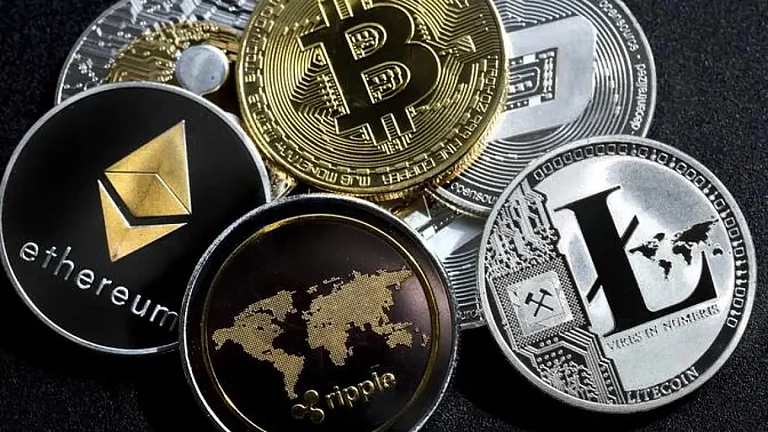
According to CoinMarketCap, Bitcoin has risen by 1.33 per cent in the last 24 hours to $74,234 and gained 6.02 per cent over the past week.
Other major cryptocurrencies have also seen significant weekly gains. Ethereum rose 2.41 per cent in the last 24 hours to $2,320.11, gaining 13.44 per cent over the week. XRP increased 2.85 per cent to $1.52, up 10.08 per cent in the week, while Solana rose 0.56 per cent in the past 24 hours to $94.13, or 8.89 per cent gain over the week. Incidentally, other tokens have also registered significant weekly gain.
What’s Driving Bitcoin Amid Geopolitical Tensions?
Crypto experts attribute the recent movement in Bitcoin to a combination of broader market factors, rather than geopolitical tensions alone.
Akshat Siddhant, Lead Quant Analyst at Mudrex, said Bitcoin’s recent rise was driven by geopolitical uncertainty and strong institutional demand. He says: “The US-Iran conflict has increased concerns around oil supply and inflation, prompting investors to shift capital towards assets outside of traditional financial systems.” He added that sustained institutional participation, including inflow of over $783 million in exchange-traded funds (ETFs) and large allocations, has continued to support Bitcoin’s price momentum.
Ashish Singhal, co-founder, CoinSwitch, said, “Investors should recognise that geopolitical events tend to influence short-term sentiment rather than long-term fundamentals.” He added that strong institutional demand, consistent ETF inflows, Bitcoin’s growing perception as a geopolitical hedge, and derivatives positioning around the $75,000 level are supporting the current price momentum.
Nischal Shetty, founder, WazirX, said, “Increased inflows into Bitcoin ETFs show growing investor confidence, while the crypto fear and greed index has shifted to neutral.” He added that the upcoming US Federal Reserve meeting remained a crucial factor.
What’s Next for Bitcoin After the Recent Rally?
After the recent rally, attention is shifting to whether Bitcoin can sustain its momentum.
Siddhant said that geopolitical tensions have fuelled short-term gains. On the near-term outlook, he said: “Historically, consolidation phases after corrections are followed by upward movement. If Bitcoin holds above key support and breaks the $85,000 resistance, it could signal a longer-term bullish cycle.”
Shetty added: “Bitcoin has crossed its latest resistance level of $73,500, and if it sustains above $74,000, a bullish run could take over the cautious market stance. Bitcoin tends to rise in periods of higher liquidity as seen in the past.”
While geopolitical tensions may drive short-term volatility, experts say Bitcoin’s trajectory will largely depend on institutional demand, liquidity, and broader market conditions.