





Summary of this article
After years of planning and revisions, the notification of the Delhi Master Plan 2047 has brought a degree of certainty to the Capital’s real estate market.
The plan seeks to accommodate a growing population while changing how Delhi uses its limited land, develops housing and connects residential areas with jobs and public transport.
The success of MPD-2047, however, will not be measured by the number of policies announced. It will depend on whether land, infrastructure, transport and housing agencies can work together to deliver them.
Delhi has finally got its long-term urban roadmap. The notification of the Delhi Master Plan 2047 gives the Capital’s real estate sector something it has been waiting for years: greater clarity on where and how the city can expand.
With a target of more than 40 lakh additional homes, nearly 200 sq km of planned expansion through land pooling and a stronger focus on transit-oriented development, the plan could reshape the city’s housing and commercial landscape over the next two decades. But for developers and landowners, the real test will begin now - turning an ambitious planning document into projects on the ground.
Industry experts say that after years of planning and revisions, the notification of the Delhi Master Plan 2047 has brought a degree of certainty to the Capital’s real estate market. The plan seeks to accommodate a growing population while changing how Delhi uses its limited land, develops housing and connects residential areas with jobs and public transport.
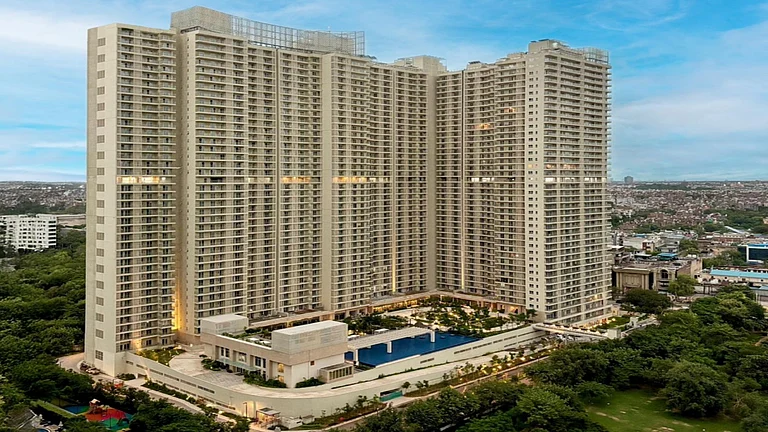
At the heart of the plan is a massive expansion in housing supply. The government expects the new framework to facilitate more than 40 lakh additional homes, including around 18 lakh affordable homes along metro corridors and nearly 12 lakh homes through land pooling. Redevelopment of existing group housing, DDA and government housing areas is expected to add another around 7 lakh dwelling units.
For the real estate industry, however, the significance of MPD-2047 goes beyond the headline housing numbers.
“After nearly a decade in the making, a notified Master Plan for Delhi 2047 gives the industry the certainty it has long been waiting for,” says Amit Goyal, Managing Director, India Sotheby's International Realty.
He sees the clarity around land pooling as particularly important because it could unlock large parcels of land for organised development and provide Delhi with room to expand. The notified plan envisages nearly 200 sq km of planned urban expansion through land pooling, along with a 600-km road network.
But Goyal cautions that land pooling will be difficult to execute. “Its success will hinge entirely on implementation,” he says, stressing the need for a transparent and institutionally disciplined process.
The plan also puts transit-oriented development at the centre of Delhi’s future growth. Higher-density development around metro and RRTS corridors could gradually shift the city away from car-dependent expansion and make well-connected residential locations more valuable.
Rahul Purohit, Co-Founder & Chief Business Officer, Square Yards, says the plan marks a move towards a more integrated approach to Delhi’s growth, bringing housing, mobility, infrastructure, economic development and environmental considerations into a common framework.
From a property-market perspective, he expects transit-oriented development, mixed-use growth and regeneration of older areas to influence both the location and format of future residential projects.
The implications could be particularly significant for established parts of Delhi. MPD-2047 relaxes minimum area for redevelopment of group housing, DDA housing and government flats from 40,000 sq m to 3000 sq m which will create more opportunities for smaller redevelopment projects. The plan also encourages plot-based redevelopment by waiving the earlier area-level requirement of four hectares.
For homeowners and residents of unauthorised colonies, the changes could be equally consequential. The plan provides for regularisation of residential buildings in 1,511 unauthorised colonies on an “as is where is” basis, potentially improving property ownership security for around 45 lakh residents.




The plan is also opening the door to more flexible commercial development. Commercial centres can be redeveloped on plots of at least 1,000 sq m with incentivised FAR, while mixed-use development is proposed along roads with a right of way of 30 metres and above. Industrial areas will also be able to accommodate activities such as warehousing, big-box retail, e-commerce, co-working spaces and data centres.
Goyal, however, points to some important differences between the draft and the notified plan, particularly in relation to low-density farmhouse areas. He notes that the one-acre farmhouse norm that was part of the DDA-approved draft does not find mention in the final gazette.
He also flags concerns over the requirements retained for farmhouse development, including an 18-metre road width and minimum plot size of 10,000 sq m, saying these could leave a large proportion of existing farmhouse development unauthorised.
Another element that Goyal says was present in the draft but does not appear in the notified plan is the Green Development Area policy, which had proposed development combining residential and commercial hubs with green spaces across around 69 villages.
For the wider property market, the biggest opportunity may ultimately lie in how these different pieces come together. Land pooling can create new development areas; TOD can concentrate growth around public transport; redevelopment can unlock underutilised land in established neighbourhoods; and higher FAR can allow more homes and commercial space to be created within existing urban areas.
The plan also earmarks certain growth engines. Narela is envisioned as an education hub, with 138 hectares allocated for universities, while Dwarka is being built as an international gateway, with possibilities ranging from IT to start-ups, data centres and industrial parks.
Purohit believes the closer integration of homes and employment centres with public transport could eventually influence buyer preferences, making connectivity an even stronger factor in property decisions.
But the success of MPD-2047 will not be measured by the number of policies announced. It will depend on whether land, infrastructure, transport and housing agencies can work together to deliver them.
As Goyal puts it, the plan’s headline opportunity is clear: Transit-Oriented Development could change how and where Delhi lives and works. The challenge now is to make that vision work on the ground.





